Warning!
You are entering a re/de/constructi n site
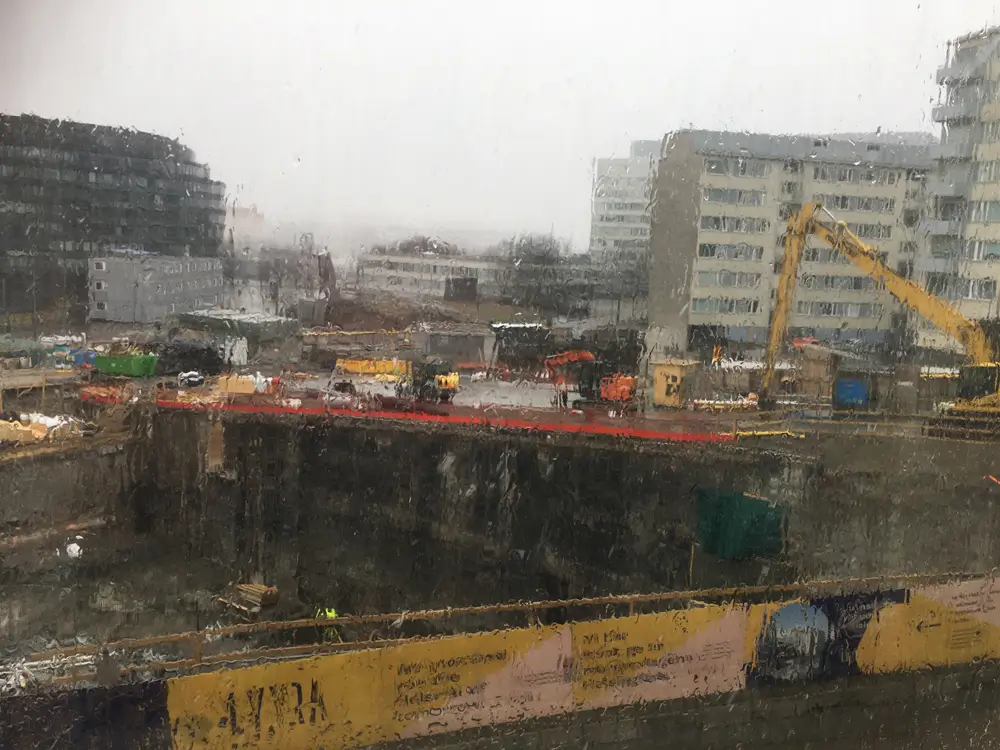
In this research, the construction site functions as a metaphor for the research process itself, symbolising the re/de/construction of knowledge. The particular site I reference was located next to our home, where an old government office block was dismantled while I was planning the pre-examined artistic component. This site also serves as a visual reference for the timeline of the process of realisation and implementation of the pre-examined artistic component.
I approach the metaphor of re/de/construction through a posthuman framework, shifting from a linear act of assembling and disassembling toward an ongoing, relational process of becoming. Barad’s (2007) diffractive methodology offers an alternative to traditional understandings of deconstruction as mere analytic breakdown. Instead, a diffractive approach emphasises entangled relations in which materials and ideas intra-act, mutually shaping one another, thereby creating new assemblages and generating new knowledge. From this perspective, re/de/construction no longer implies closure or finality. This view aligns with my aim of developing an intra-active dance pedagogical orientation as a shared ground of values and concepts to think-with—an open base on which each educator can build their own practices, rather than designing a pre-constructed space that requires following a set of predefined methods. Instead, re/de/construction is a process of emergent choreography, spatial and temporal conditioning, and intra-action of agential forces.
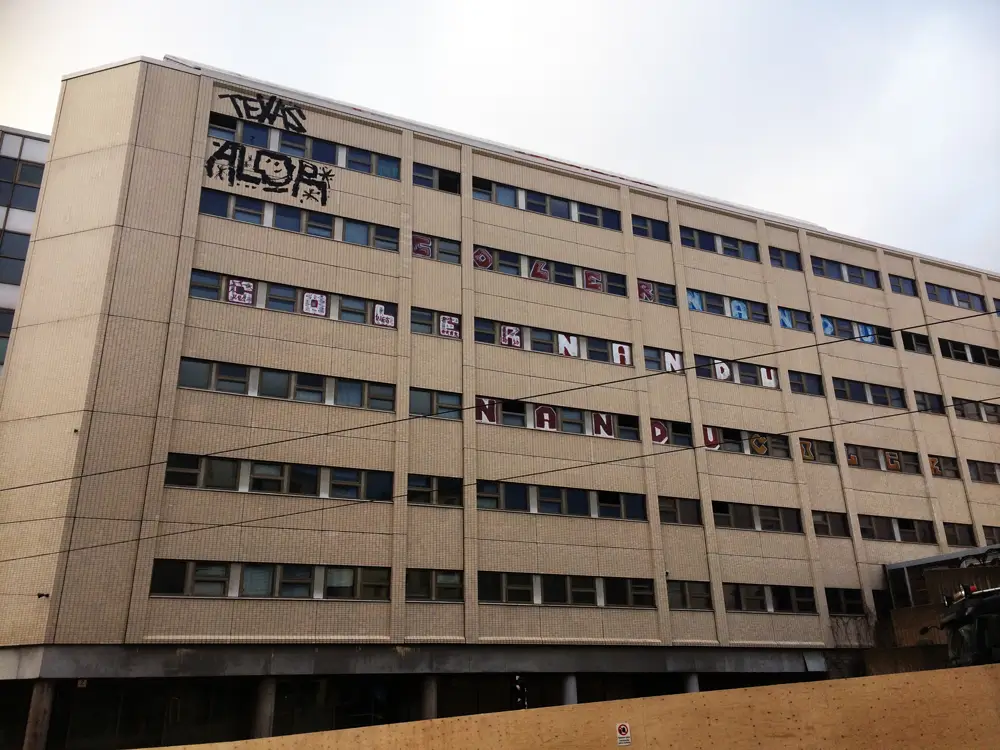
The initial stage of the deconstruction site at the outset of the artistic component process.
Pre-examination of the artistic event
Spring 2020
Research year 3/8
I meet with the pre-examiners and a small group of other participants, including my supervisor and a few interested colleagues, at a designated meeting point in an urban suburb of East Helsinki. Together, we stroll along a long, straight pathway that is lined with blocks of flats. Upon our arrival at the daycare centre, we are warmly welcomed by a group of guides: six children and one staff member, who will lead us on an exciting adventure into the world of daycare and our imaginations.
The route takes us through various areas within the daycare centre, including the lobby, the group activity room, the multipurpose space, and the corridors. We encounter multiple stops along the way, with suggestions for engaging with diverse proposals. We explore how to connect without words, transform a drawn storyboard into a dance using only our arms in a confined space, and engage with the art exhibition displayed beneath a bench. We see, hear, and relate. We learn to trust our guides and their expertise as they take us through a dark tunnel adorned with sea creatures and an increasingly immersive soundscape.
Eventually, we arrive at the gymnastics hall, which has been transformed into an underwater environment, where the guides perform a dance that transforms them into sea creatures. They invite all the participants to join in the dancing sea. The dance unfolds in various ways—gently, playfully, invisibly, and surprisingly. The event concludes with an opportunity to construct a nest using mattresses, pillows, blankets, and scarves, fostering a moment of rest. We listen to the sounds inside and outside our bodies, sensing and attuning.
Finally, we share a collective moment of expression through words, drawings, movements, and silence. As the event comes to a close, the visitors depart from the daycare centre, and the guides return to their respective groups, carrying on with the day’s activities as usual.
Except, none of these events actually occurred.
This version of the pre-examined artistic component exists only in my imagination, a result of the pandemic and the abrupt termination of my research process at the daycare centre in March 2020. Nevertheless, my narration of the imagined event constitutes a methodological moment, generating knowledge that informed my work toward a pandemic translation of the pre-examined artistic component. During the planning phase, uncertainty was so deeply embedded in the process that I could not be certain whether this second production for the pre-examination would also remain merely imaginary. Ultimately, however, it materialised as planned.
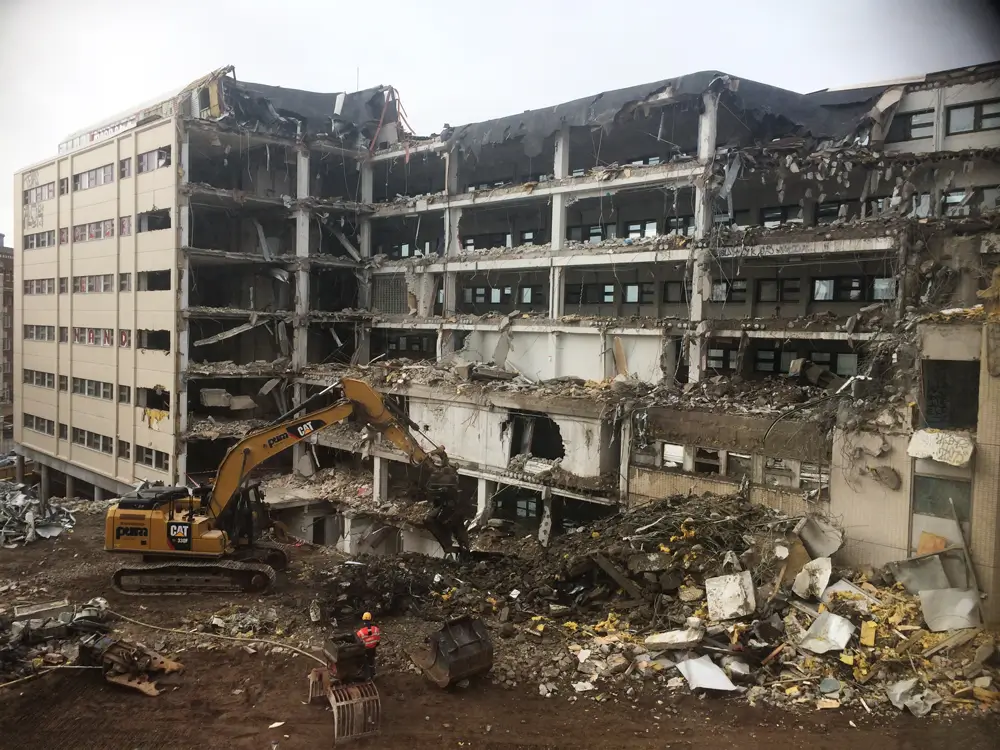
By the time I began working on the pandemic translation of the pre-examined artistic component, the government office building on the construction site had already been dismantled. The physical deconstruction of this structure powerfully mirrored the mental deconstruction of my own sense of safety, which was deeply unsettled by the pandemic and compounded by serious personal health concerns that restricted my physical activity. This situation resonates with Manning and Massumi’s (2014) theorisation of the paradigm of creating an artistic event, which they conceive as a matter of conditioning rather than framing. Conditioning, as they describe it, refers to the process of relating co-causes so that participation generates outcomes that exceed what any single cause could produce on its own. In this sense, the emphasis is placed on a complex and emergent process, rather than on organisation through predetermined planning (Manning and Massumi 2014).
The viral and medical more/other-than-human forces, along with the frameworks and requirements imposed by the academic institution, did not merely serve as external scaffolding for the creation of the artistic component. Instead, they deeply permeated the process, much like the heavy machinery permeated the structures that once served as a frame, for instance, for the Helsinki City Education Division offices. In this way, the more/other-than-human agencies created a boundary condition that became a central force guiding my thinking and artistic creation—at once limiting and generative—which can be understood as generative constraints (Manning and Massumi 2014) or through the lens of opportunities-and-challenges (Jusslin et al. 2024). I sought to engage with the situation in alignment with my generous and emergent research approaches. Although I sincerely discussed in the linking paper[1] how this conditioning brought many aspects of posthuman and new materialist theories into reality, it was often hard to find anything positive in the circumstances. Later, the lyrics of Anthem by Leonard Cohen (1992) seemed to capture the beauty in the rupturing transformation that went on during the process of developing the pre-examined artistic component.
Ring the bells that still can ring
(Cohen 1992)
Forget your perfect offering
There is a crack, a crack in everything
That’s how the light gets in
Diffracting this poetic expression through my theoretical framework underscores that deconstruction entails not only a process of breaking apart but also an opening for the emergence of new perspectives. This is what I seek to articulate through my extended formulation of deconstruction as re/de/construction. From this perspective, cracks—whether disruptions, deconstructions, breaks, or even mistakes—can be approached more generatively, reminding us that such moments are not exceptions but intrinsic qualities of the world we are intra-actively becoming-with. In the following subsection, I will narrate the process of becoming-with the uncertainties that both challenged the work and created unique opportunities for it.
5.1.1 The Project Becoming a Home-based Family Affair
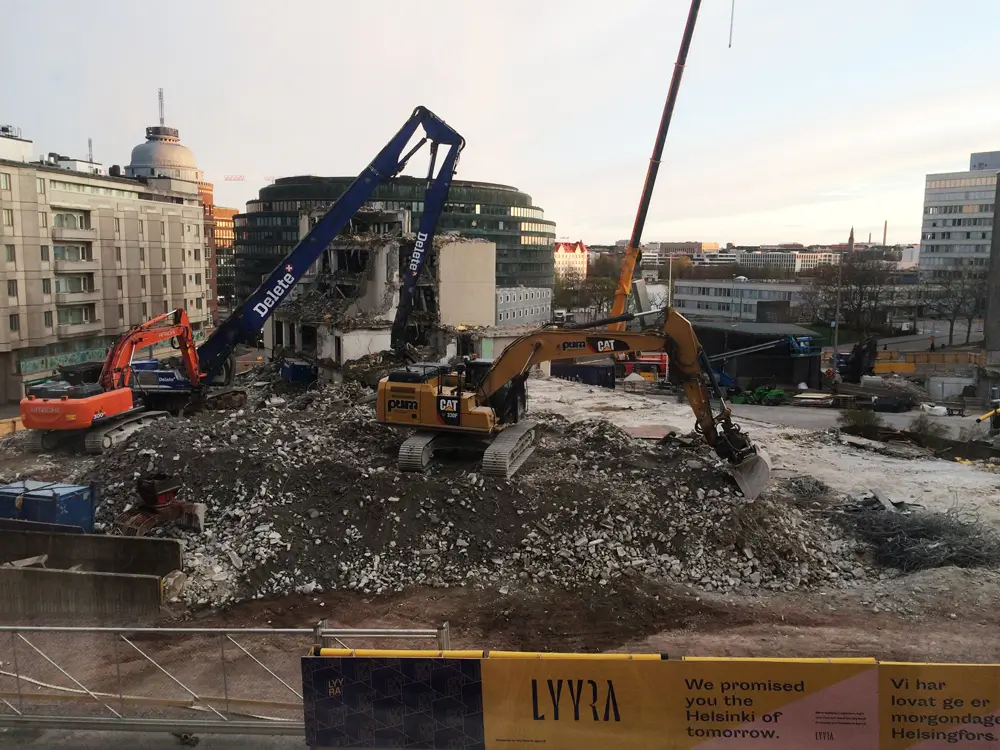
The replanning of the original event and the implementation of the pandemic translation of the pre-examined artistic component occurred during the academic year 2020–2021, a period further complicated by my personal health issues. Daily life was significantly conditioned by a variety of constantly evolving restrictions and recommendations. Despite the challenges, I was resolute in my decision to proceed with the artistic component for several reasons. Foremost among them was my hope that at least some of the children who had participated in my fieldwork would be able to attend the event. Regarding this aspect, the artistic component gained particular urgency, as the children were growing towards transitioning from preschool to school—an inevitable change that even the pandemic could not halt. Simultaneously, the deconstruction on the construction site unfolded slowly yet inexorably, mirroring the pace of my artistic process.
During the planning, I yearned for the input of children. Initially, I collaborated with participating children at the daycare centre, but now I had lost contact with them. As a result, I decided to plan the event with my own children, my 4- and 9-year-old sons, who enthusiastically helped brainstorm ideas and engage in artistic explorations, which I presented as playful moments of experimentation. This approach offered valuable insight into how children might perceive my ideas and experiences. Working with children I knew so well provided much-needed support for my approach, enabling a more intimate and deeply reflective engagement with our creative work. At the same time, it generated moments of ‘in-betweenness’ (Summers and Clarke 2015), in which I simultaneously embodied the roles of mother, academic, and artist, with my family and professional lives continuously shaping each other. This dynamic aligns with Summers and Clarke’s (2015) discussion on the intersection of these roles in hybrid spaces, exploring how they influence one another and the tensions and potentials that arise from overlapping identities. Rather than exercising maternal authority, I sought to act differently by prioritising the researcher’s subjectivity and a stance that honours children’s self-determination. Therefore, certain experiments were cut short because my children refused to continue, yet we still achieved several fruitful insights.
The artistic component evolved into an even deeper family endeavour as I enlisted my husband to contribute as a composer–musician–sound engineer, while his older brother took charge of video recording and photography. Involving the family in this project fostered seamless collaboration and represented a creative way to circumvent the challenges brought about by the pandemic and its restrictive conditions. These restrictions arose not only from institutional and governmental guidelines but also from my own diminished sense of safety.
However, the demolition of a large office building and the excavation of a rocky area into a deep, block-sized pit, which later became the foundation for new buildings, provided ongoing inspiration for our collaborative work. During the time we planned the activities for the artistic event, the site underwent rock blasting. This process ignited intense fascination with the construction activities in my children, and intertwined our lives with the various demolition processes.
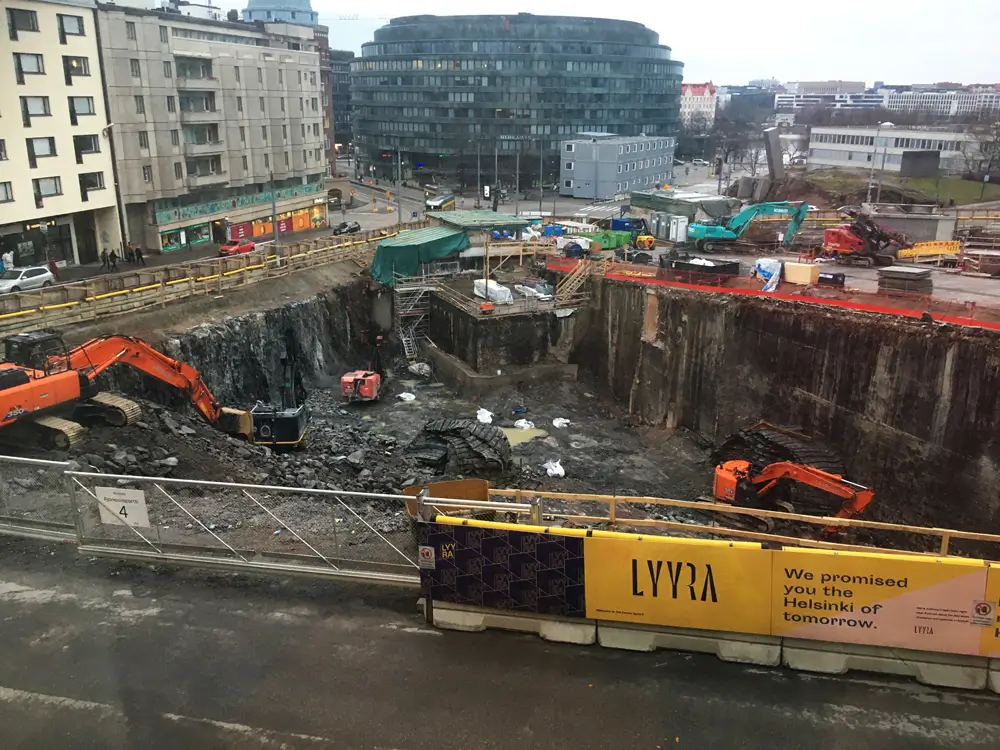
The explosive work punctuated our daily routines. At regular intervals, whenever the blast warning beep sounded, we would rush to the window of the children’s room to observe and film the blasts.
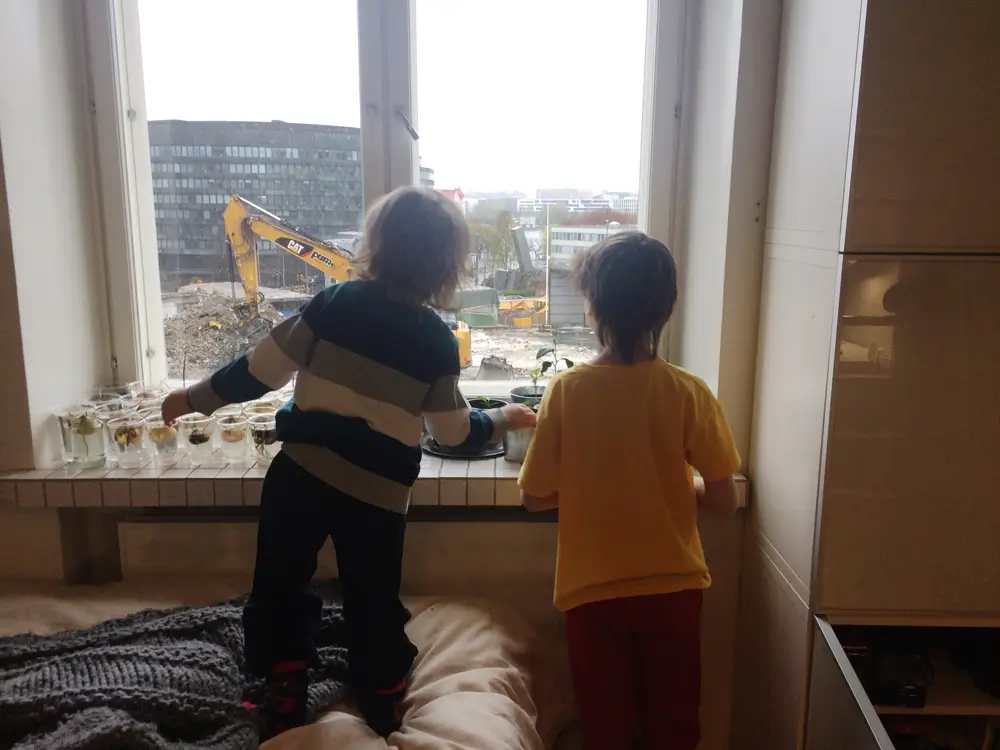
There was an undeniable excitement and allure to the explosions, despite the stark contrast in how children and adults perceived them. The children were thrilled by the transformative power of the explosions, while the adults lamented the noise, the destruction of the landscape, and the potential impact of the vibrations on the structure of our apartment building. Nevertheless, the children’s enthusiasm was infectious, and I found myself drawn in, eager to witness the dynamics of the explosions. This experience highlights the powerful impact that a child-like excitement and curiosity toward even mundane events in everyday life can have. The presence of play and a playful attitude may enhance an adult’s ability to view events from a broader perspective, allowing for various interpretations and, consequently, more diverse ways of responding in those situations.
Throughout the challenging process of planning the event under exceptional circumstances, those very conditions functioned as conditioning generative constraints, which Manning and Massumi (2014) describe as limitations that can produce unexpected results. Rather than restricting creativity, such constraints challenge us in ways that draw creativity to the forefront and open up new possibilities. In a similar manner, what I initially experienced as limitations at times gave rise to unique moments of inspiration. One especially joyful surprise came my way during playtime with my younger son, Nikolas, as I was pondering a better strategy to guide participants along the route within the event space.
We played with a helium balloon with an elongated tail, similar to the one used at the event. Our play reminded me of contact improvisation as we pushed, pulled, hugged, and released the balloon. Nikolas then took the balloon and drifted from one room to another, soon vanishing around the corner, leaving the elongated plastic-ribbon tail trailing on the floor as their trace. Suddenly, I realised that following this tail would lead me to them, yielding a glowing moment and a key insight.
Working diary reflections
2nd May 2021 at 10.34 a.m.
Research year 4/8
Yesterday, I engaged in some serious and playful thinking, and while playing with Nikolas, the missing pieces suddenly appeared and found their place in my mind, completing the big picture of the event.
At this time, I was forced to stay at home instead of going to the daycare centre or my office at the Theatre Academy, and to play with my son instead of doing ‘proper’ research work. Because of these constraints, I was working on the research without even realising it. In that spontaneous and playful moment, I realised that the tail could function as a guide for participants to follow, becoming both an effective means of orientation and an invitation to engage with the proposed route through the event space. The emergence of new knowledge through play had a profound impact on my understanding, representing a pivotal moment in which the theoretical framework I was exploring was fully embodied. Retrospectively, the incident effectively demonstrates the utilisation of postqualitative research frameworks, supporting nonconventional spaces of research and allowing an entangled artistic agency to surface. Furthermore, it demonstrates that insight emerged not through hard work alone, but by entering a bodily engaged mode of being present in the moment through play, highlighting the power of creative play as a valid mode of working in research.
Six months later, in my PhD course Writing as Artistic Practice, I had the chance to revisit this pivotal moment through a writing exercise assigned by Adrian Heathfield (24 November 2021). We were tasked with crafting a brief text about a learning experience related to our research, featuring alternating perspectives of two agents. This text underwent several editing stages, and was ultimately distilled down to the most significant phrase. Here I present the original text, the intermediate version, and the final essential phrase.
Writing as Artistic Practice doctoral course
24th November 2021
Research year 5/8
Original text:
Amid a heavy cloud of uncertainty, I find myself responding to a demand by Nikolas, cleverly disguised as a proposal, to engage with a helium balloon. This moment, seemingly clichéd as ‘playing with materials’ or ‘staying with the trouble,’ becomes my attempt to be a ‘proper’ researcher, even though I feel more like a fearful wastrel.
He is eager to play—whether it’s playing ball, playing with the ball, or simply getting the ball rolling. He seeks joy, connection, engagement, and a way to channel his vibrant energy. He stands in stark contrast to me: a bold little man brimming with ideas. Reluctantly, I push myself to join in. At home, every day feels like a deep dive into the heart of ordinary life.
Semi-erased version:
Heavy uncertainty and a demand disguised as a proposal to play with materials.
The fearful wastrel is at the heart of ordinary life.
Final outcome:
To play.
The most significant contributor to this insight was my act of playing, despite my initial reluctance to embrace this approach. The final outcome was not related to agencies or materials ‘at play’, but the enactment of responding to the situation, an active doing. This experience aligns with my emerging methodology of ‘doing research without researching,’ which I define as a playful approach to research. At its core, this methodology highlights the need to strategically navigate the research process in a way that accommodates the unplanned, fostering a playful and spontaneous mindset that allows research to unfold naturally. This approach transforms research into a process analogous to artistic creation, thereby enhancing enjoyment and engagement. This transformation is particularly significant in extraordinary and challenging contexts, such as the pandemic and the current global circumstances.
5.1.2 Challenges while Working towards the Event
Working toward the event during the pandemic proved complex and overwhelming, and my abilities often felt insufficient compared to my ambitions. The tight preparation schedule in the studio space at Theatre Academy reminded me of a similar contrast I had observed during fieldwork, as the heavy investment in preparations created pressure to be efficient and productive, while simultaneously I felt it was important to remain creative and playful. I also observed a connection to the cultural clash that had emerged during the fieldwork, where participants struggled to navigate the extensive freedom I had offered them, as it contrasted with what they were accustomed to. In a similar way, I found myself confronting a parallel challenge, though within a different institutional context.
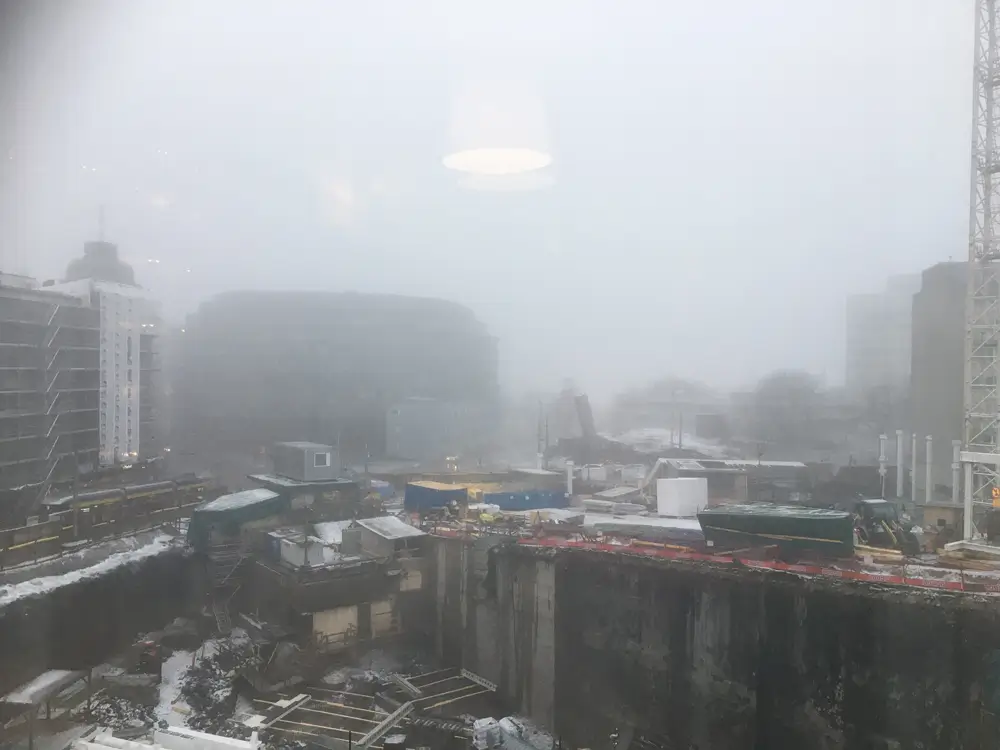
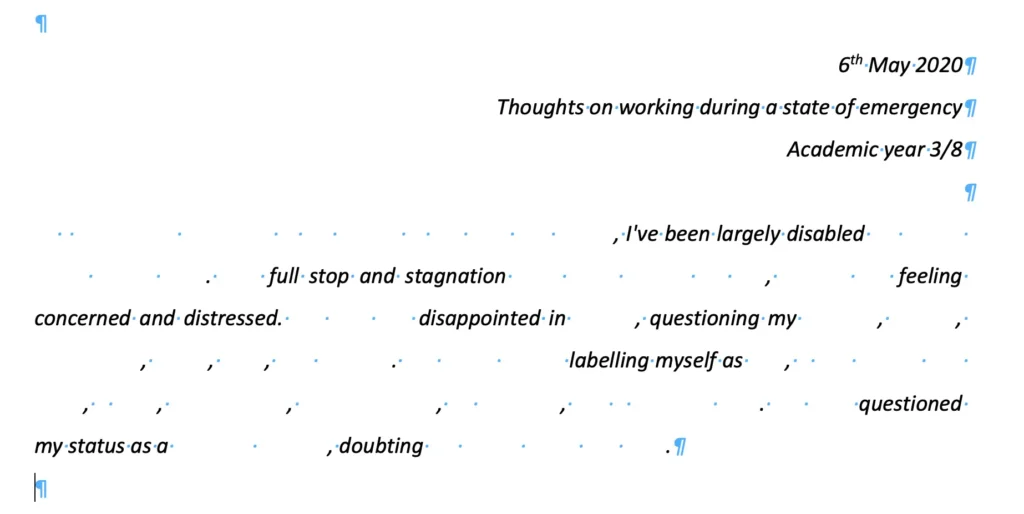
Fog not only surrounded the construction site at times, but also my brain. The notes in my work diary are shaped by circumstance, resulting in text that I can only publish by applying Heathfield’s (24 November 2021) writing technique of editing by leaving out.
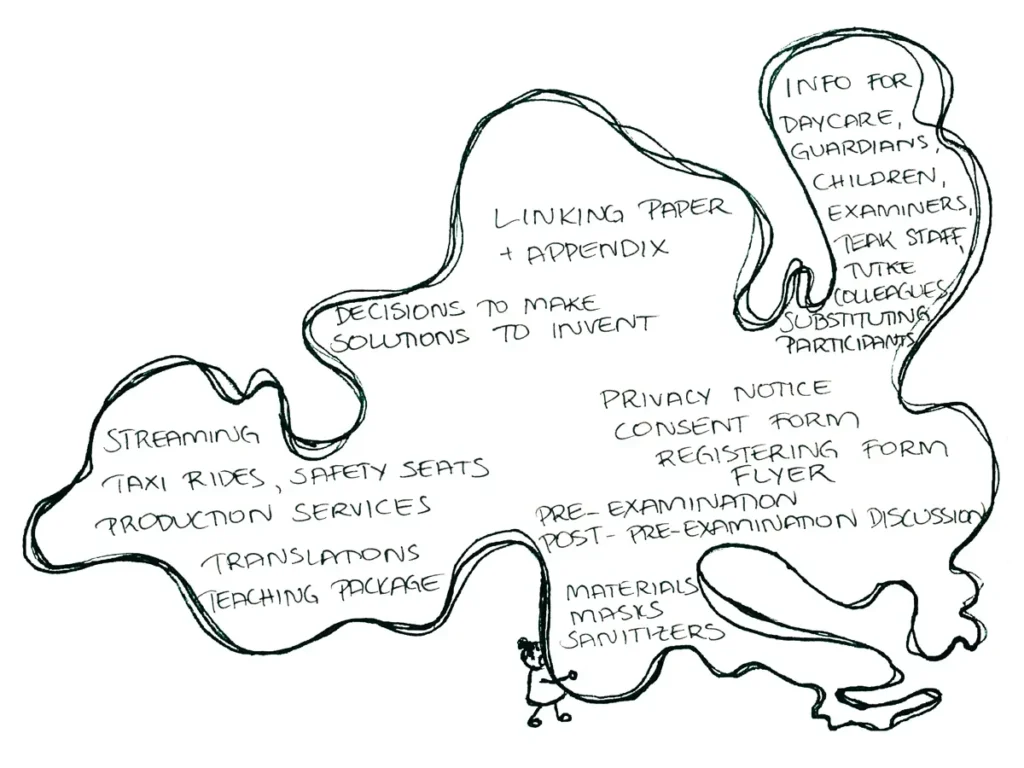
The pandemic translation of the pre-examined artistic component became mostly a solo effort, ultimately resulting in the development of an unintendedly large-scale event.
Theatre Academy adapted to the pandemic by establishing guidelines regarding the number of individuals permitted in spaces during performances. Consequently, only one or two children could attend the event at a time, accompanied by one adult. Encountering one child at a time was, in fact, equivalent to the situation I envisioned during my fieldwork as ideal. In my fieldwork insights report for the children, I described my aspiration to replicate myself, so that each child could have their own Tuire to dance with. In my experience, this approach would have better supported scenarios where multiple children needed to be acknowledged simultaneously. Additionally, having more Tuires would enhance opportunities to engage with techniques inspired by contact improvisation. During an artistic event, the concept of everyone having their ‘own Tuire’ became a reality.
I knew that participating in this event could be a rare and potentially valuable opportunity for both children and adults at the daycare centre. However, it would also introduce a completely new and potentially stressful situation for them. The participants would lack the support of peers to share ideas and experiences in a dancing assemblage of bodies, which is the foundational setting where all my dance pedagogical work begins. In the event, the assemblage would be very different, set in a new, potentially intimidating environment with unfamiliar adults behind cameras and masks. By the time I recognised the profound impact of these restrictions on the dynamics of my event, I was already deep into planning, so I chose not to cancel the implementation. I accepted that this situation would not permit me to work within my area of expertise—working with groups of children in a close bodily contact—but rather with one or two children at a time, in an environment filled with safety precautions, strikingly characterised by masks, hand sanitiser, and the guideline for people to remain a safe distance of two metres apart.
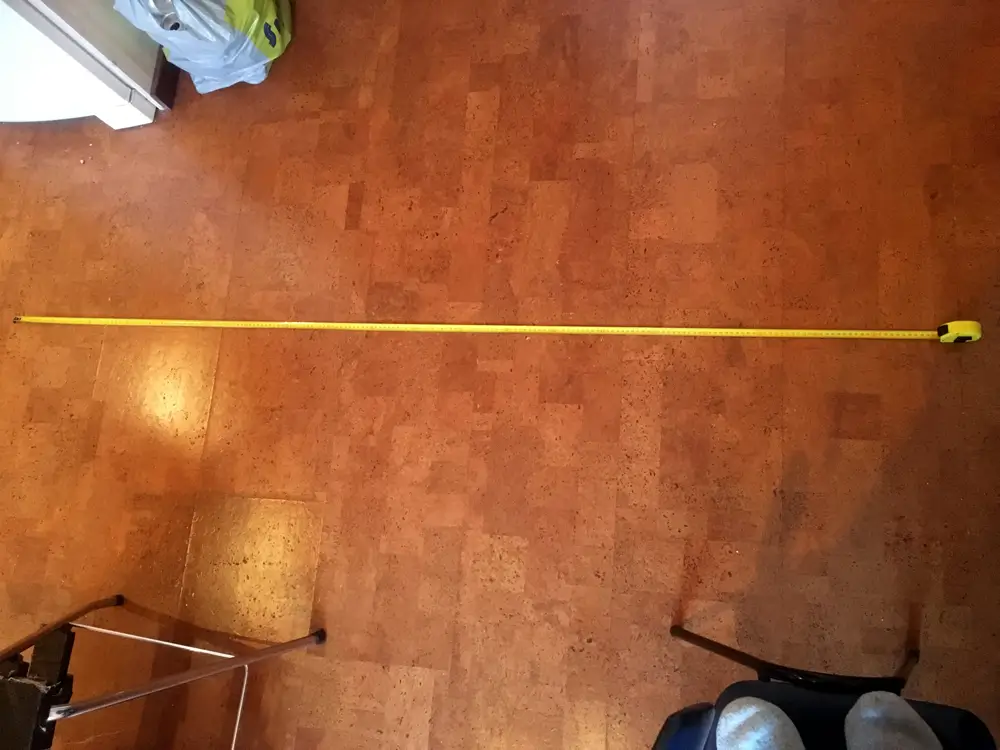
I explored and visualised the recommended safe distance in our kitchen at home.
Therefore, as part of my ethical response-ability toward the participants, I aimed to create an event that included easily accessible, familiar activities to make it feel safe enough for the participants to join the activities. This understanding guided my planning and method choices, though I ultimately compromised the research by overplanning and leaving too little room for spontaneous playfulness and the joy of co-researching during the event. However, at the start of each visit, seeing the shy children cling to their accompanying adults in search of support and safety reaffirmed that I had made the ethically correct decision, even though it wasn’t the preferred solution I had envisioned. On the other hand, one spontaneous engagement with the affordances of the space occurred after the second pre-examined session, when the participating child repeatedly re-turned to the studio space while the adults were engaged in conversation. The moment revealed a child-led and playful mode of engaging with the event. It prompted me to realise that a dramaturgy beginning with a sense of safety and gradually expanding toward creative freedom might have been ideal, balancing security with exploration of the unknown.
Due to restrictions, the number of participants was significantly reduced to just eight children and eight adults, which was in stark contrast to the estimated 120–140 children and 20–30 adults who could have participated without such limitations. It appeared that the event, initially designed to be inclusive and make dance more accessible, was becoming an exclusive experience limited to a select few. This realisation prompted me to address several ethical considerations aimed at enabling participation in the most inclusive manner possible. Invitations were disseminated at the daycare centre to all children who had participated in my fieldwork. The invitations indicated that participants would be selected through a lottery system and requested that they specify preferred dates for their visits. Half of the visits were planned for daycare staff, while the other half would be attended by children with their guardians. An additional unforeseen practical challenge was encountered and subsequently addressed: the restrictions imposed by the City of Helsinki prohibited daycare centres from utilising public transportation for excursions. This obstacle was surmounted by coordinating taxi transportation for participants.
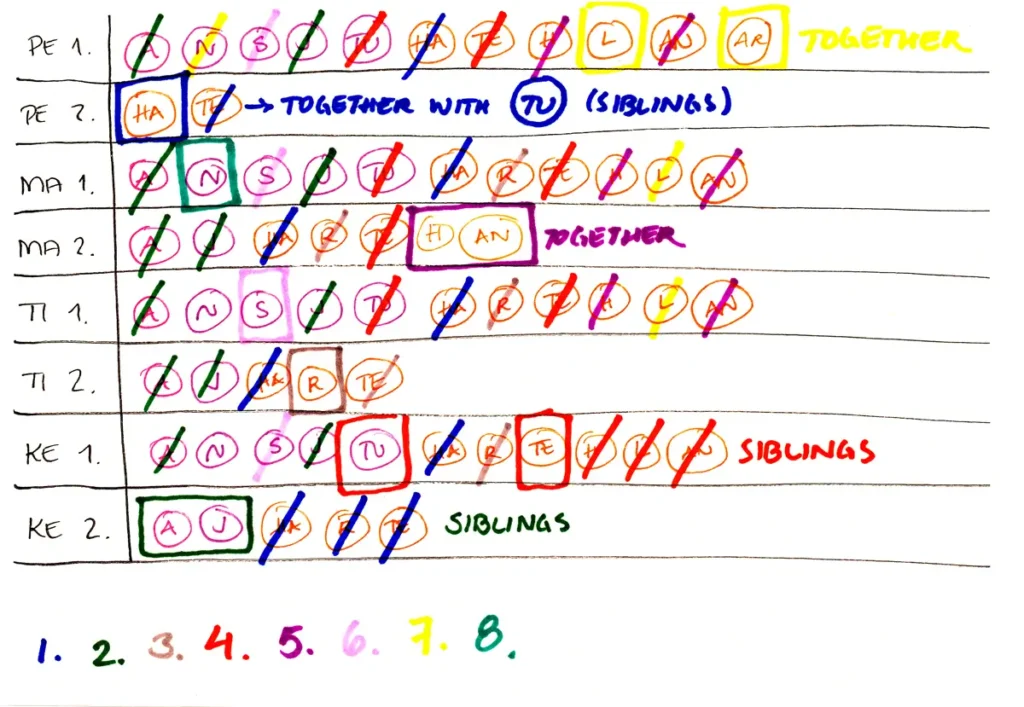
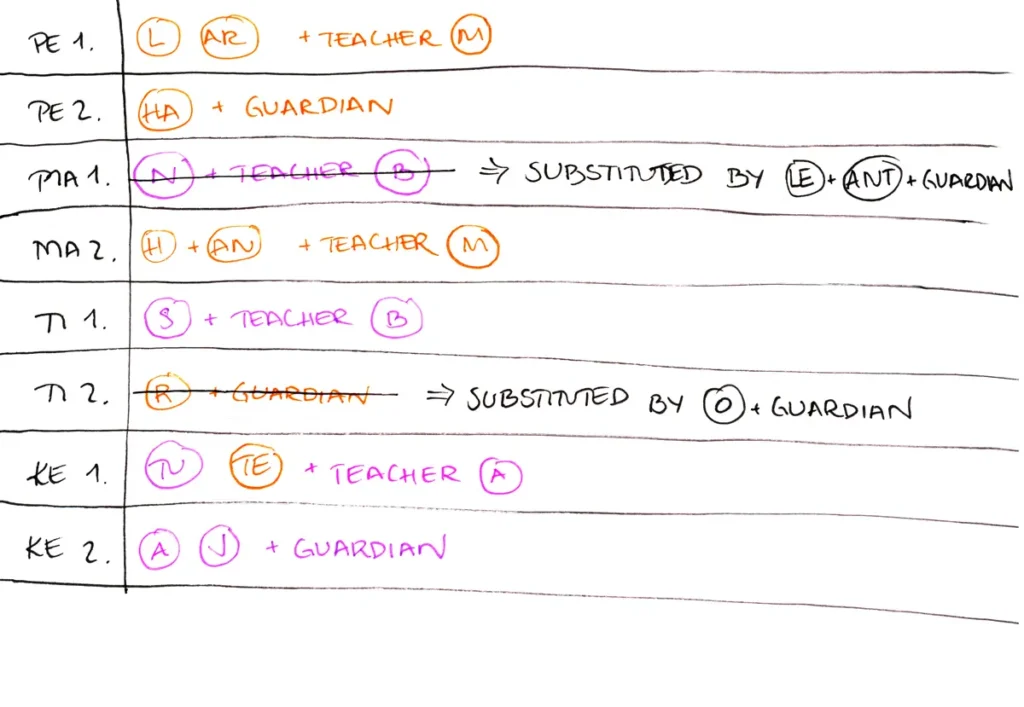
Reflecting on the selection of Käännöksiä – Transpositions visitors
23rd April 2021
Research year 4/8
The order of visits was meticulously established based on specific criteria that influenced the entire schedule: sibling relationships, preferred visiting times, and the necessity for certain adults to accompany particular children. I created a detailed list mapping out the names, and ultimately, there was only one way to accommodate all participants within the designated time slots. As I reviewed the final schedule, I found myself questioning whether the pre-examination would be truly ‘representative.’ Despite considering potential adjustments, I felt ethically uneasy about altering the arrangements of those who had already been carefully placed through this self-organising scheduling process, so I left them as they were.
When only twelve children registered, I decided to include all participants rather than proceed with the initially intended lottery process. This approach ultimately allowed the event to fulfil its objective of inclusivity. Despite overcoming the exclusivity of the event by including all registered participants, I realised that many children in the daycare centre would have loved to attend, but for various reasons, hadn’t been registered by their guardians. I felt a strong desire to ensure that all children could have some experience of the event. To achieve this, I developed a comprehensive package of dance workshop teaching materials, which included exercises similar to those showcased during the event. This package comprised an instructional video, music tracks, and other essential materials for conducting dance workshops. I then delivered it to the daycare centre, making it available for all groups. One year later, in the spring of 2022, I received an invitation to attend an artistic event organised by the daycare staff, inspired by these materials, along with the original plans for the event in the daycare centre. This event seamlessly combined elements of both the imagined and the transformed experience, merging the theme of the construction site in Käännöksiä – Transpositions with the structural concept of the original version.
5.1.3 Pre-examination of the Event: Wormholes, Ruins, and a Re/De/Construction Site
In light of the COVID-19 pandemic, the pre-examination had to take place remotely via live streaming. A three-member film crew equipped with the requisite technology was engaged, thereby intensifying the inherent pressures of the situation. The pre-examination encompassed two consecutive visits on the same day. I adopted this approach to minimise the risk of unforeseen circumstances—such as last-minute illness or unexpected refusal to participate—that could prevent the pre-examination from taking place. I also hoped that the visits would exhibit distinct structural differences; however, this differentiation was not significantly realised in practice.
The initial visit transpired as scheduled with a child and a daycare teacher who were involved in the fieldwork. However, for the second visit, the initially enrolled child became unwell, necessitating the last-minute engagement of a substitute child-guardian pair. Despite the atypical arrangements and challenges encountered, both the visits and the pre-examination were executed successfully. Here, I primarily refer to the institutional aspects of success, in that the artistic component passed the pre-examination, which enabled me to move forward with my research. I later identified the process to create a condition, where wormholes, ruins, and a re/de/construction site emerged, which I will share through the following diary notes and their diffractive analysis.
Notes on working with the video of the pre-examined artistic component: Wormhole
10th November 2021
Research year 5/8
As I began reviewing my work diaries, I realised that during the event, I hadn’t written a single note or reflection about my experiences—nothing at all. There were some notes from before the event, but nothing during or afterwards. It was as if I had vanished into a wormhole, only to be pulled back into this universe when the pre-examination report arrived, pushing me out of the hole.
The silence of my voice during that overwhelming period speaks more powerfully than words or drawings ever could. This stillness underscores the need to recognise the conditions under which reflection is no longer possible, thereby revealing its limits. The disappearance of my voice further reflects how also children’s voices often go unheard. Such stillness is an important moment to acknowledge and draw upon in pedagogical encounters involving silence. Rather than searching for the reasons behind silence, it may be more fruitful to ask what it enables and how it shapes the moment.
Notes on memories of the event before watching the videos of the pre-examined artistic component: Ruins
10th November 2021
Research year 5/8
Reflecting on the event, I see myself as a ruin. It reminds me of an exercise with The Other Spaces collective, in which we explored embodying collapsing structures. As I let go of control, the upright position, and the support of my muscles, the memory returns to my body. I follow the impulses that feed forward, gradually deconstructing, listening to the deconstructed state, and allowing myself to continue this process. I become silent and beautiful, with richly torn surfaces that bear traces of history. I realise that there is no separation between me and the artistic component. The pre-examination of us was a planned and long-anticipated event, with an unpredictable flow of impulses leading to an uncontrollable process of deconstruction. Its power resides in its ability to reveal something new.
There is a crack, a crack in everything
(Cohen 1992)
That’s how the light gets in
In this reflection, an embodied activity enables me to realise the importance of letting go of control, as the unfolding into a ruin is guided by sensations rather than conscious intentions or preformulated plans. Surrendering to the deconstructive force enables me to sense the breakdown as productive, without either the need to fight against it or know where it will take me. More broadly, this approach aligns with my reconceptualisation of the educator’s role in intra-active dance pedagogy. According to this view, it is important to create, even if only momentarily, spaces where adult—or more broadly, human—control does not attempt to guide the artistic process. Such a perspective offers an alternative way of working with children, regarding them as artistic colleagues, and may also hold value in educational contexts beyond the arts.
Letter to supervisors
October 2021
Research year 4/8
I am like the fillyjonk in the story The Fillyjonk Who Believed in Disasters by Tove Jansson (2018).
A huge storm destroys the fillyjonk’s house. As she watches the disaster, she thinks: ‘This is it. Now comes the end. At last. Now I don’t have to wait anymore.’ (Jansson 2018, 67.)
And the next morning: ‘The fillyjonk drew a deep breath. ‘Now I’ll never be afraid again,’ she said to herself. ‘Now I’m free. Now I can do anything’.’ (Jansson 2018, 74)
The fillyjonk becomes free as her abstract fear turns into a concrete event.
This is precisely how I feel right now. I did not even realise how much I feared the pre-examination. Fear of failure. Fear of not being accepted. Fear of being misunderstood. Fear of exposing myself. Fear of showing incompleteness and becoming vulnerable. All of these fears became embodied, but I survived. Stronger. More secure. Wiser. More experienced. Transformed. Thankful. This feels like a good position from which to proceed with the project.
The process of the pre-examined artistic component not only forced me to face my fears, but it also caused several cracks in my understanding of dance pedagogy and research, which initially felt painful. Yet over time, these breaks allowed light to enter and initiated a process of reconstruction. This reconstruction is further explored through my diffractive reading of the Lines of Flight activity in the following section. In this way, artistic practice not only draws on theoretical perspectives but also actively reshapes and generates new ones. This reciprocity reflects my methodological argument on artistic research, that knowledge is created within and through artistic practice, making the pre-examined component both a site of practice and a source of new knowledge and theory.
The process was supported by Koro-Ljungberg’s (2015) notion of research as productive failure, understood as failure to conclude or to deliver perfected or anticipated results. Rather than signalling deficiency, productive failure draws attention to partiality and absence, thereby calling for creativity and critical reflection. Its significance lies in resisting finality, closure, and excessive methodological predictability, while opening up alternative ways of engaging with knowledge production. (Koro-Ljungberg 2015) I will engage with these aspects of my analytical work in the following section.
Note
1 The linking paper is a document that the doctoral candidate prepares for the pre-examiners prior to the pre-examination. Its purpose is to outline the pre-examined artistic component in a way that clarifies what is being examined and how it relates to the overarching research. (Uniarts 2025)