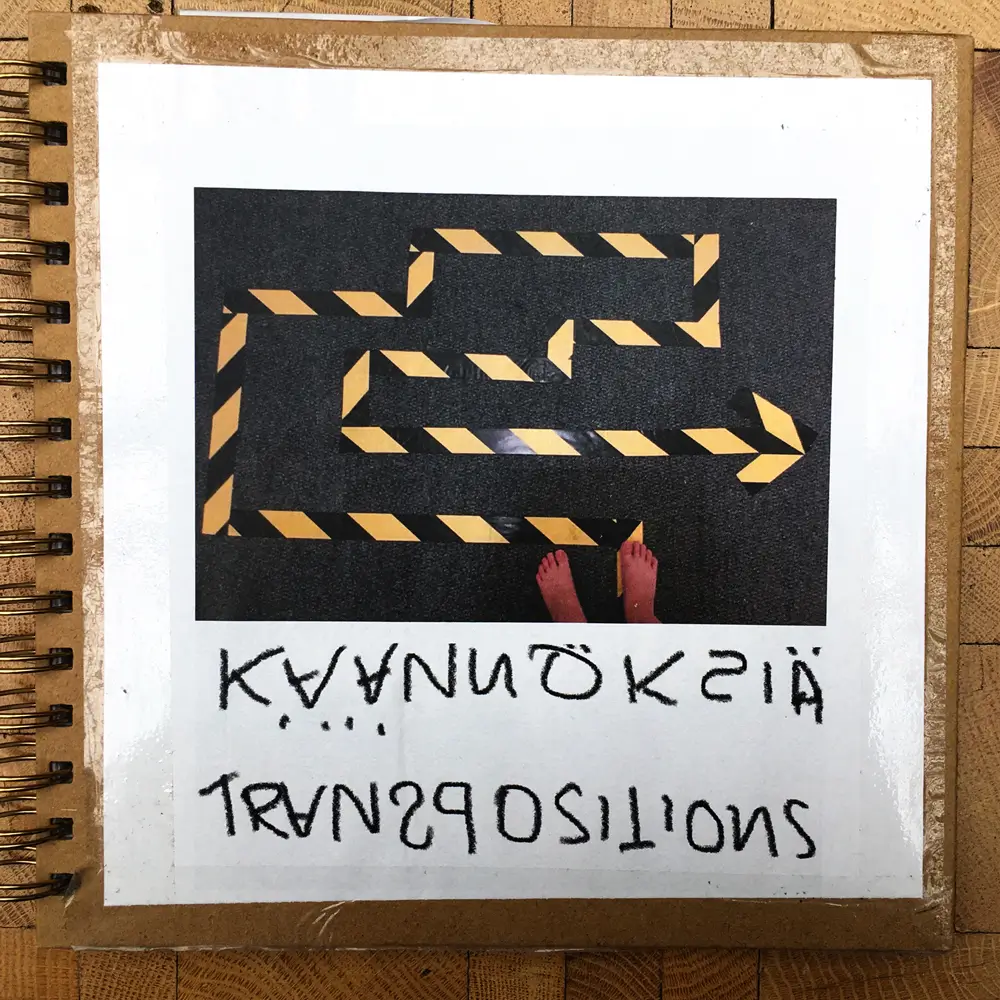
Despite the challenges, the pre-examined artistic component evolved into a pandemic translation, Käännöksiä – Transpositions, which was implemented as an artistic–pedagogical event in the spring of 2021 at the Theatre Academy. In the following outline, I will map the activities of the event and trace their connection to the fieldwork from which they were translated. The images included in this section were sourced from the two pre-examined sessions. The purpose of the images is not to function as supplemental figures, illustrative artefacts, or tools to verify the narrative. Rather, they are embedded within and inseparable from the text, intended to operate as equal forces of narration. (Myers 2019)
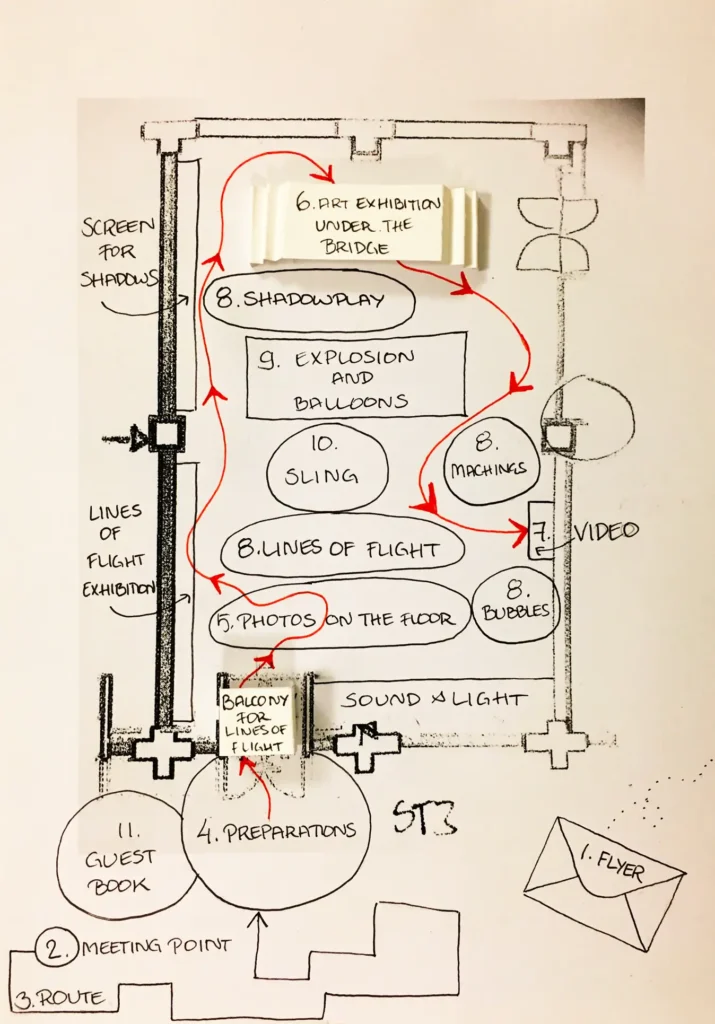
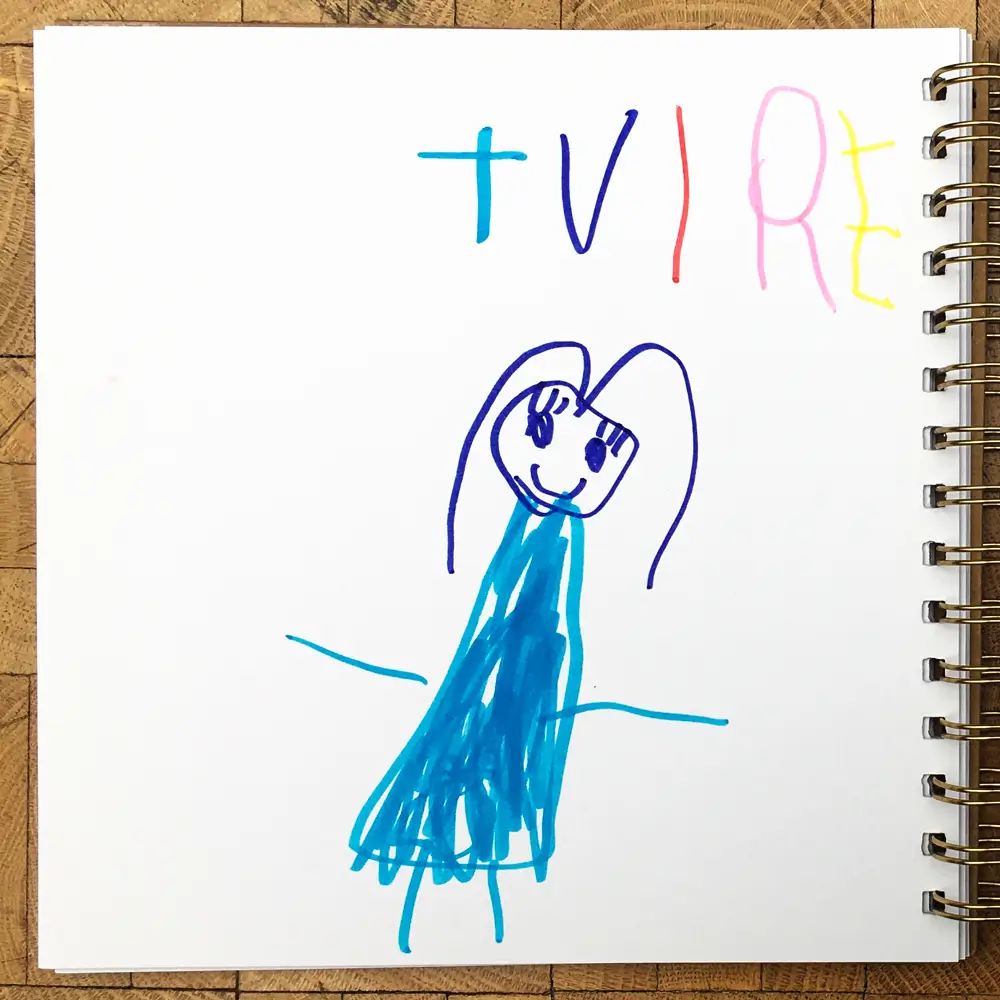
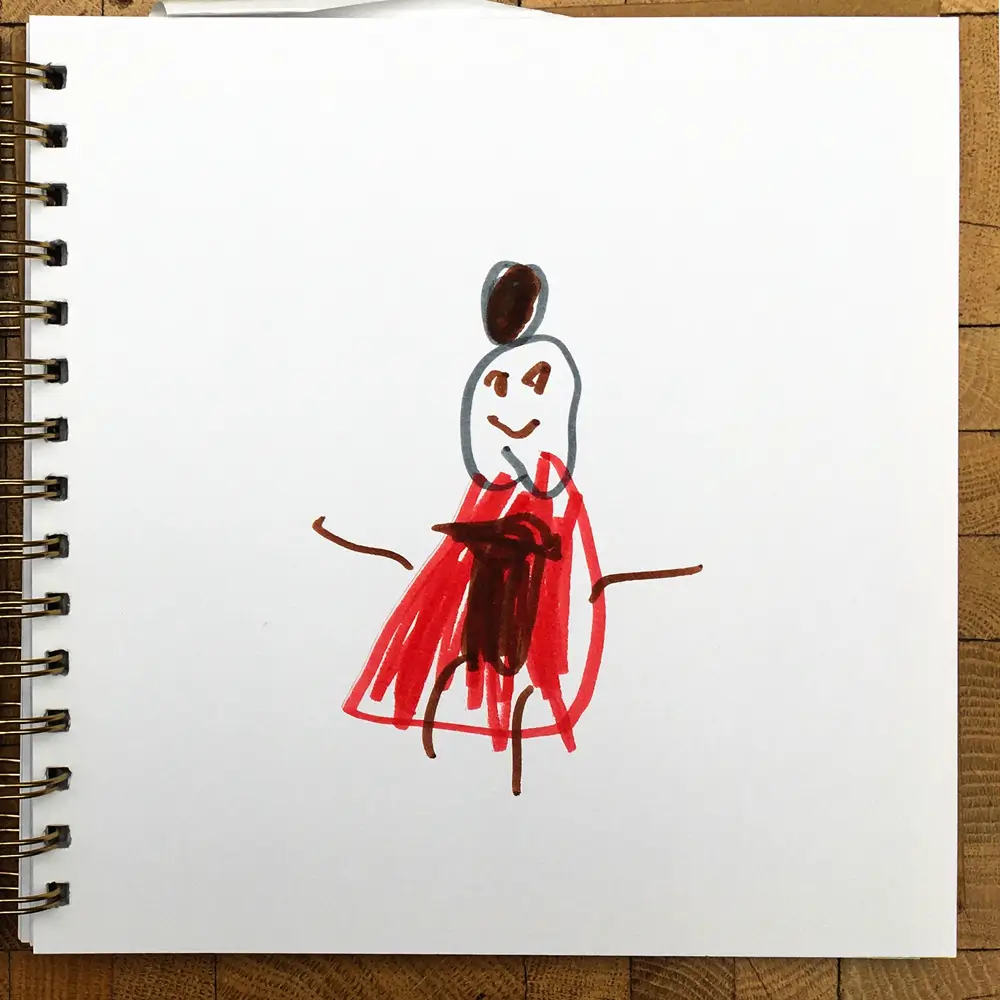
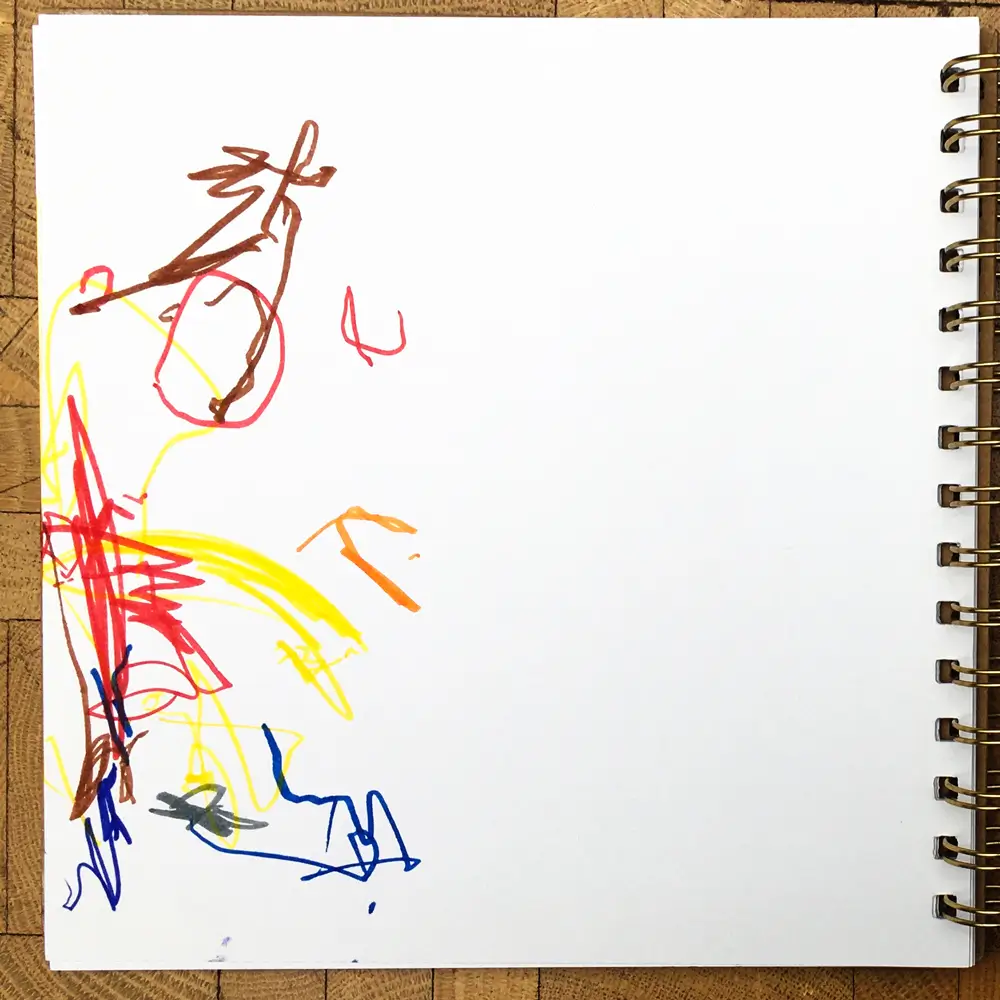
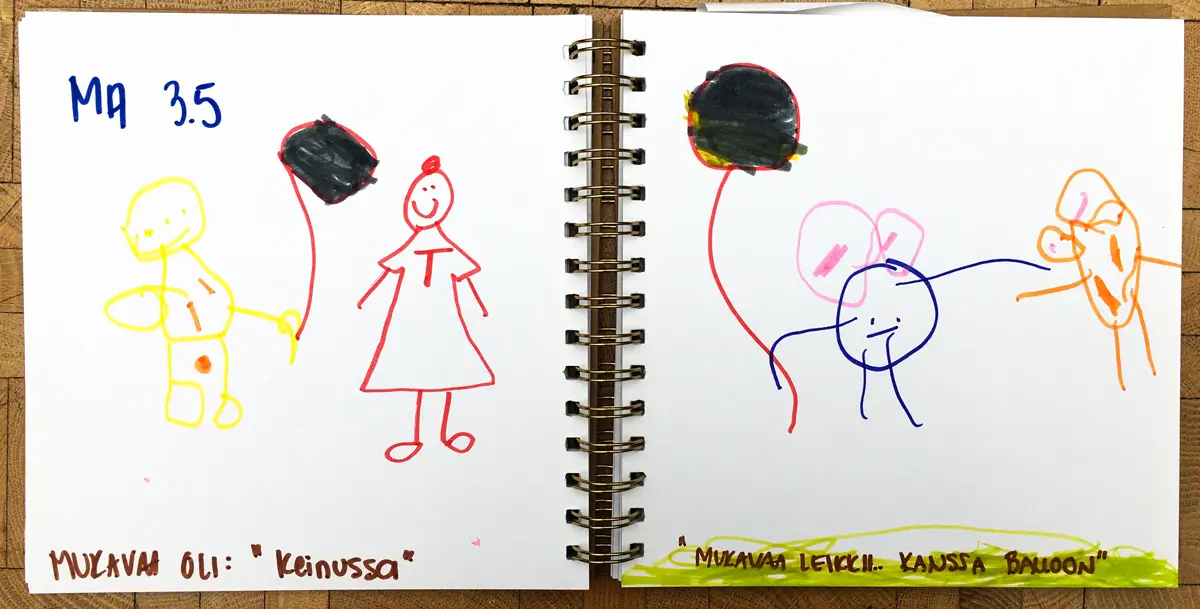
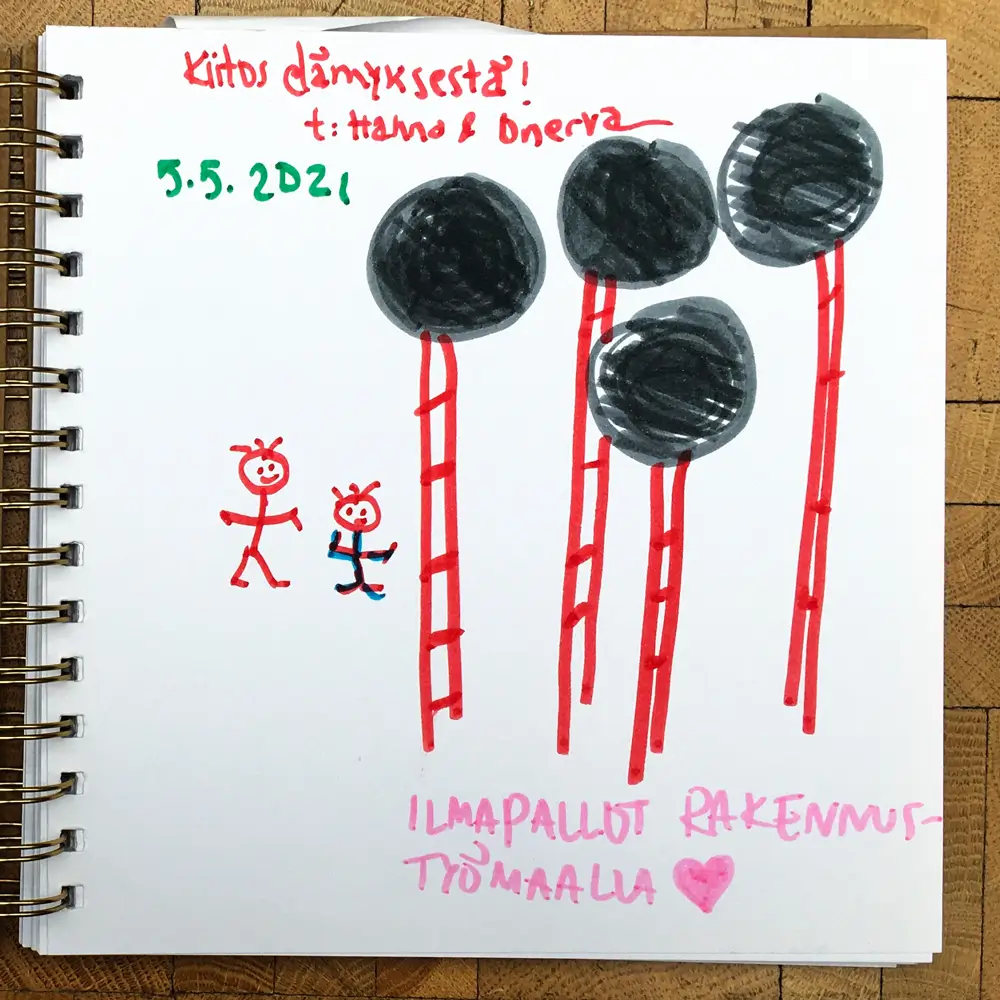
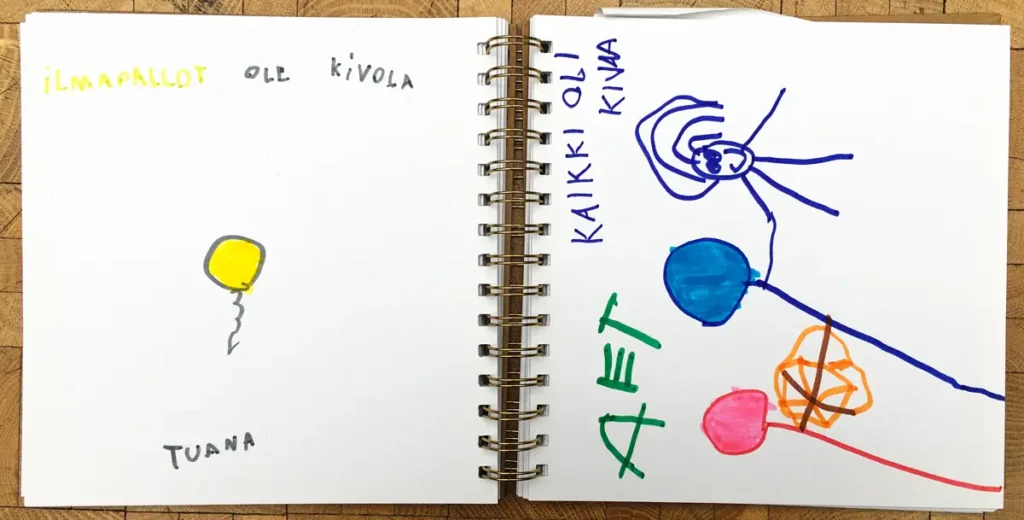
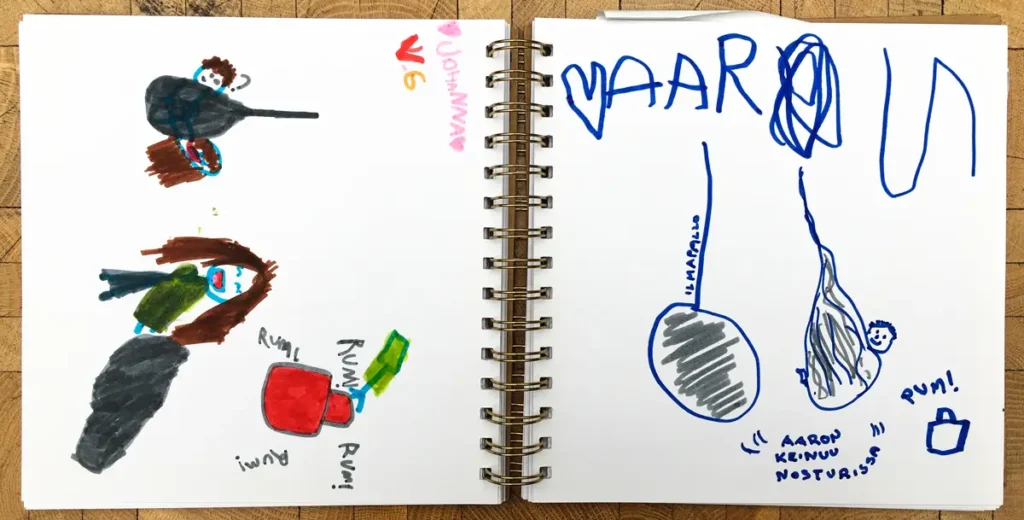
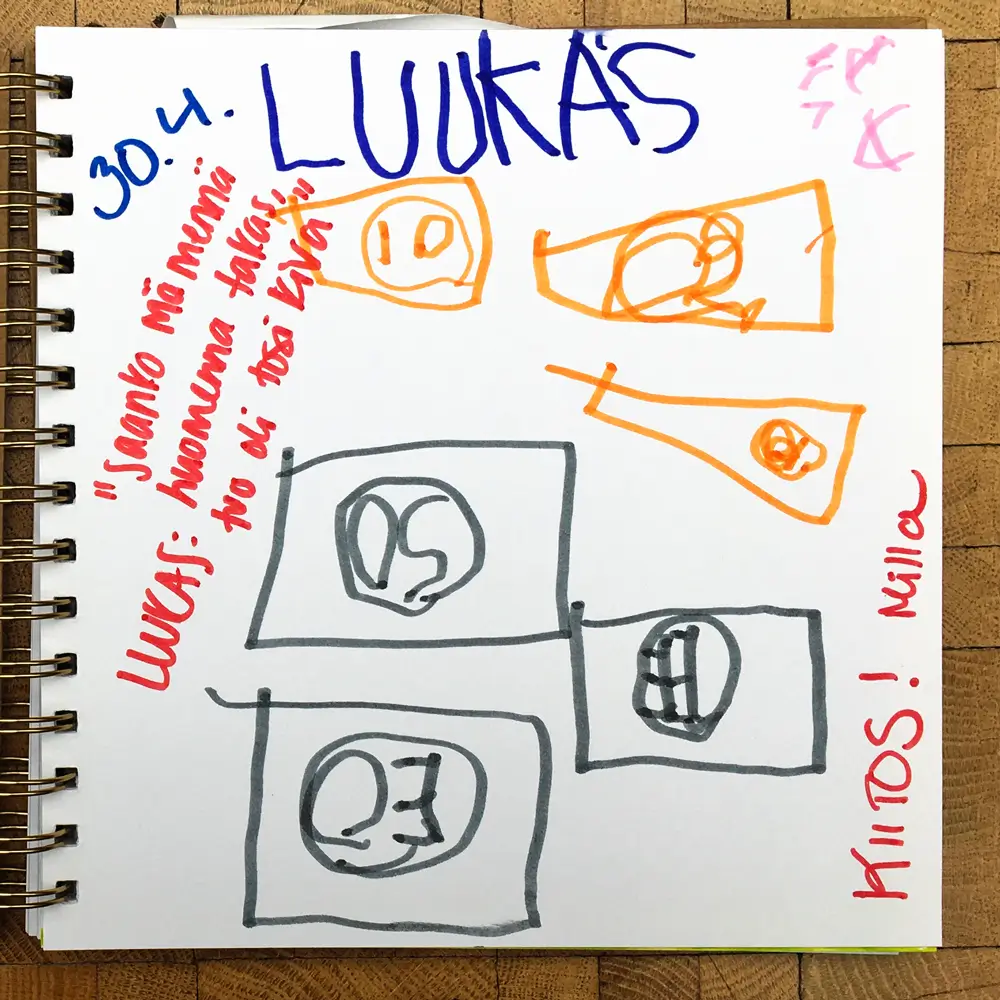
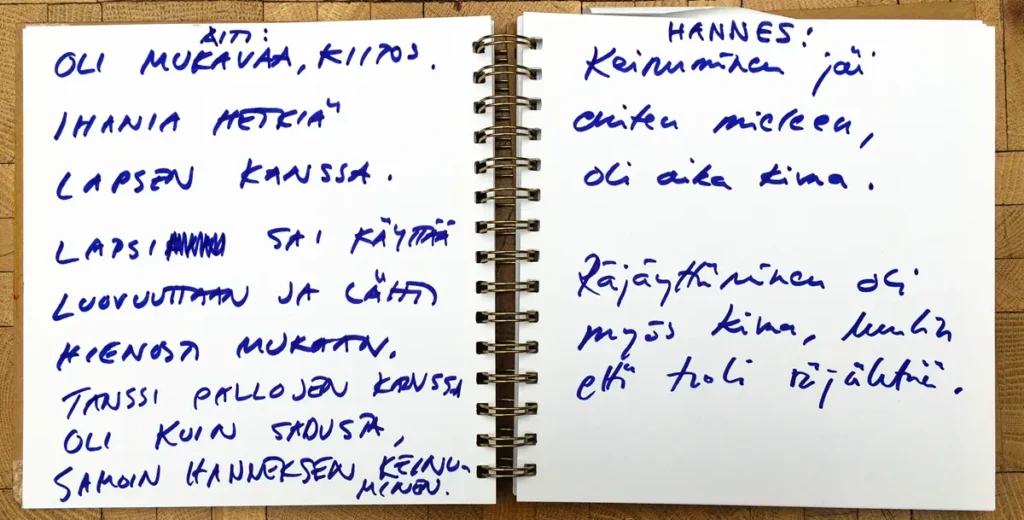
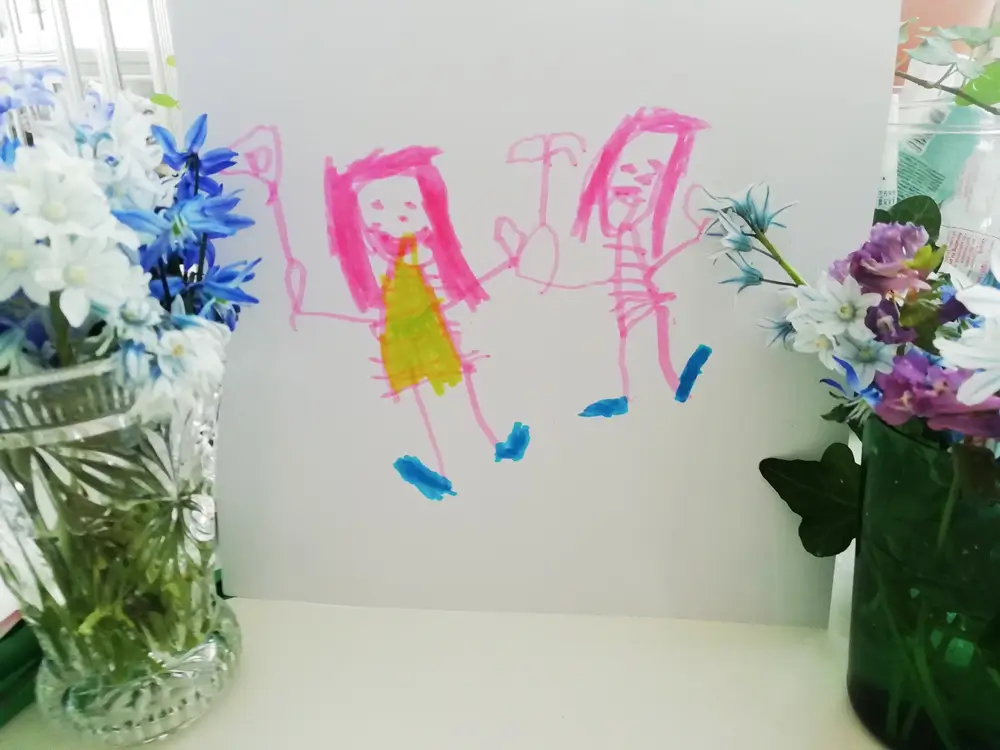
The numbering of the activities on the map serves as an anchor, situating them within the temporal and spatial narrative of the event. The red line marks the guided portion of the route through the event space, after which the activities unfolded non-linearly, evolving differently with each encounter. Children’s drawings from the Guest Book are woven into the descriptions of the respective activities, introducing their voices and perspectives into the narration.
1. Flyer
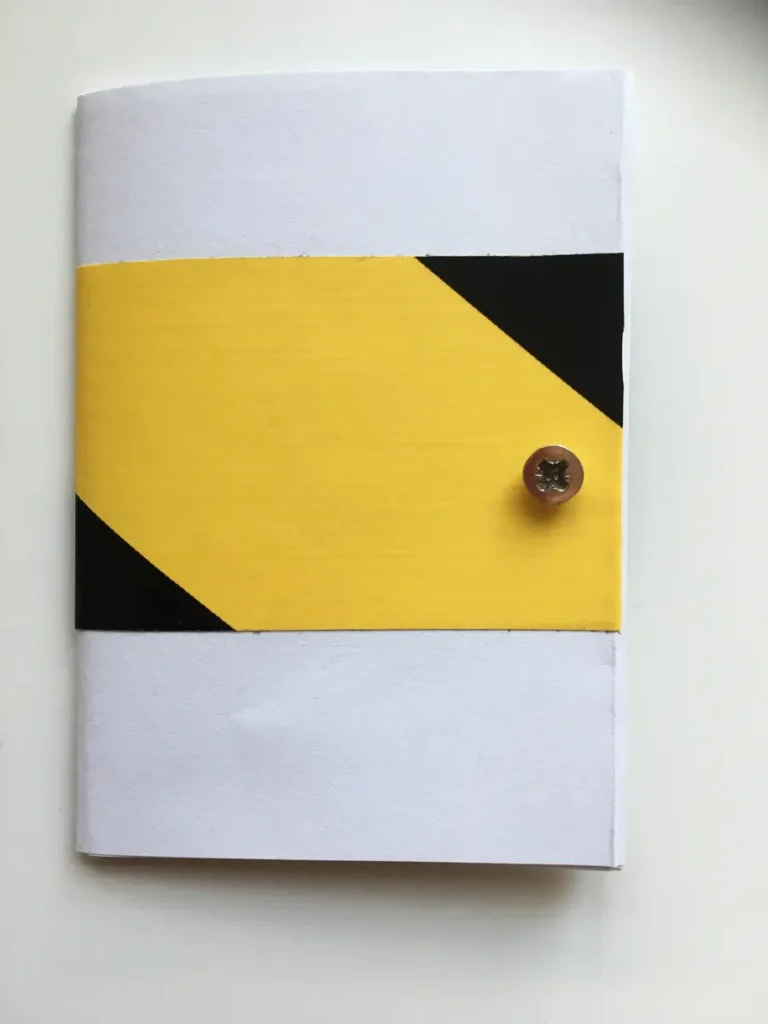
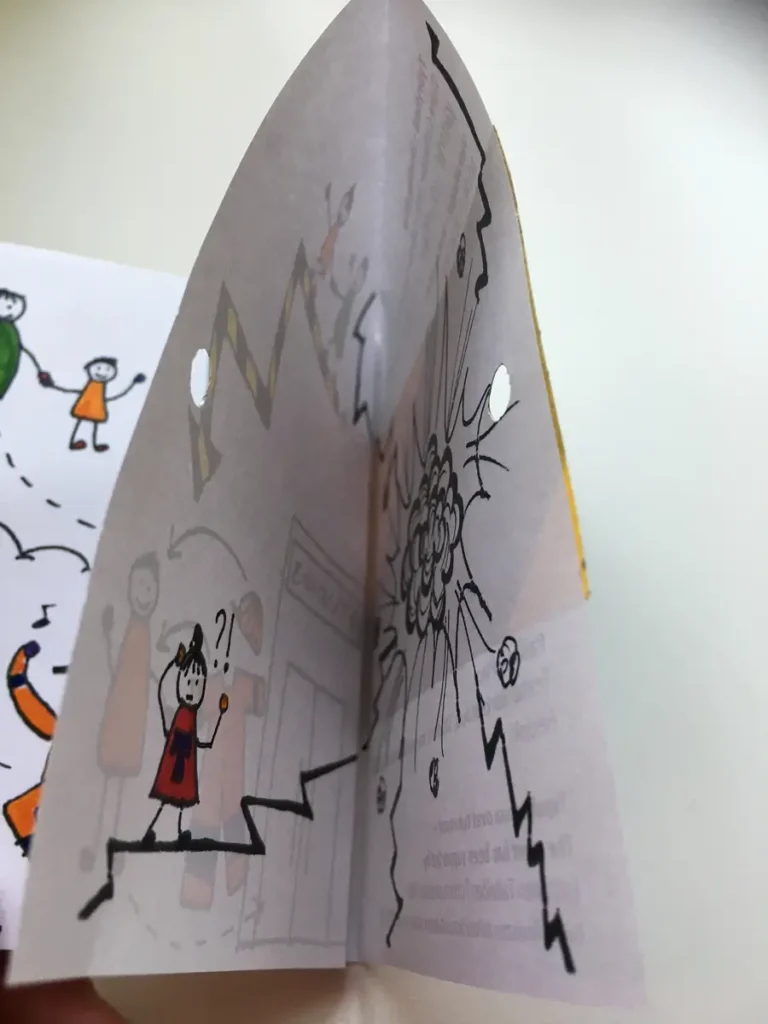
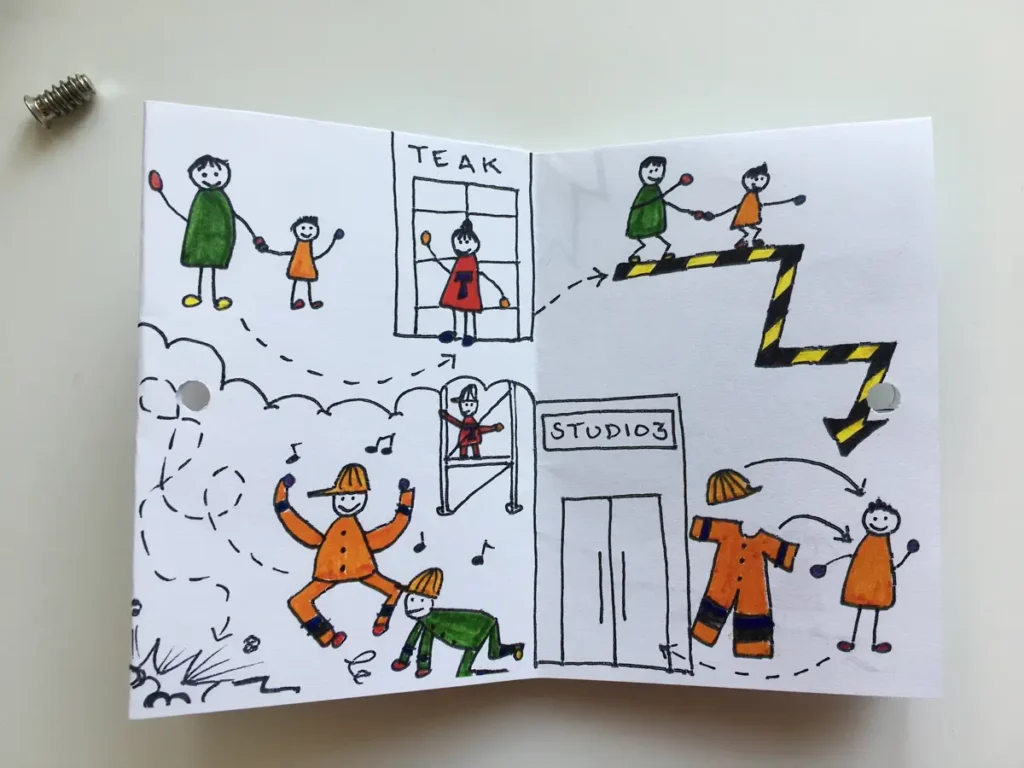
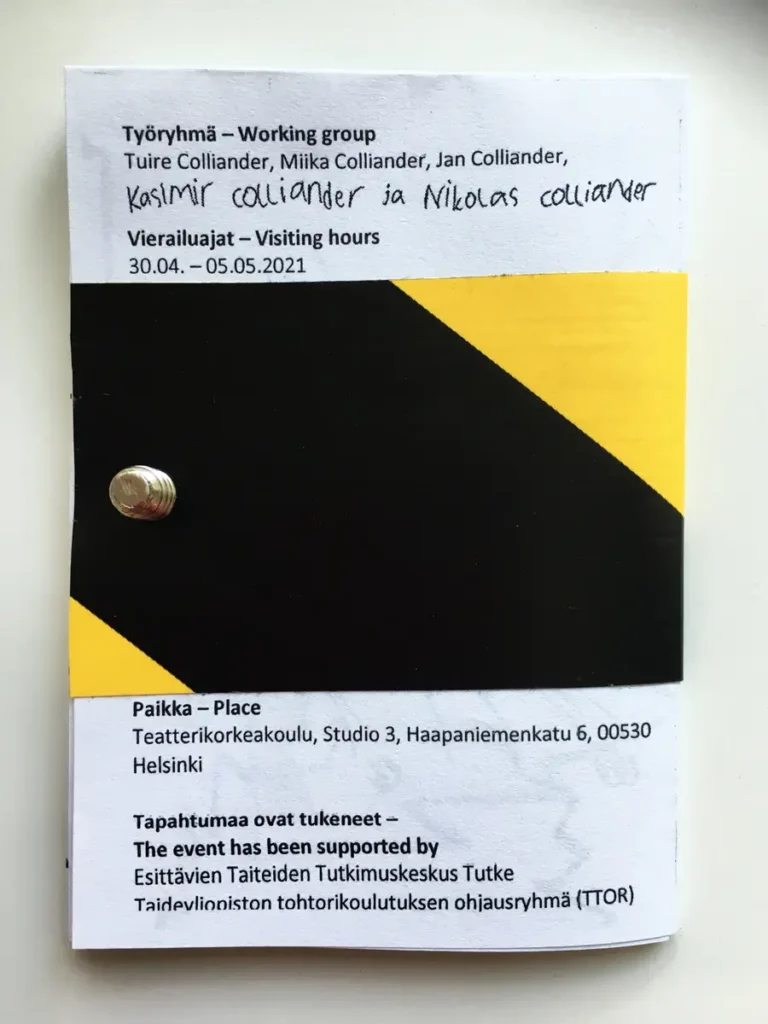
I employed drawing as a form of creative writing, together with the Storyboard Method, to translate the concept of the event into a written and illustrated flyer. Prior to the event, all potential participants—specifically, the guardians of the children who had participated in the fieldwork—were provided with a flyer, detailed guidelines on how to enter their child into the lottery used to select participants, and informed consent forms.
2. Meeting point
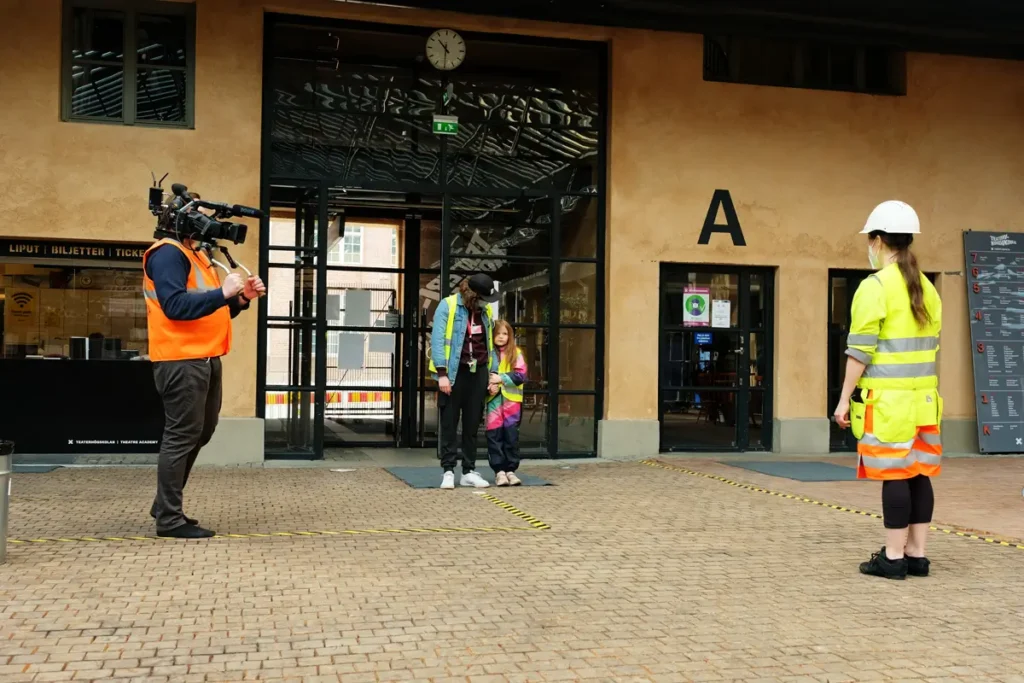
The event began with a meeting with the participants in the lobby of the Theatre Academy.
3. Route
I sent the participants off on a route guided by a tape, which was my translation of the insight gained from sharing agency with materials at the daycare centre.
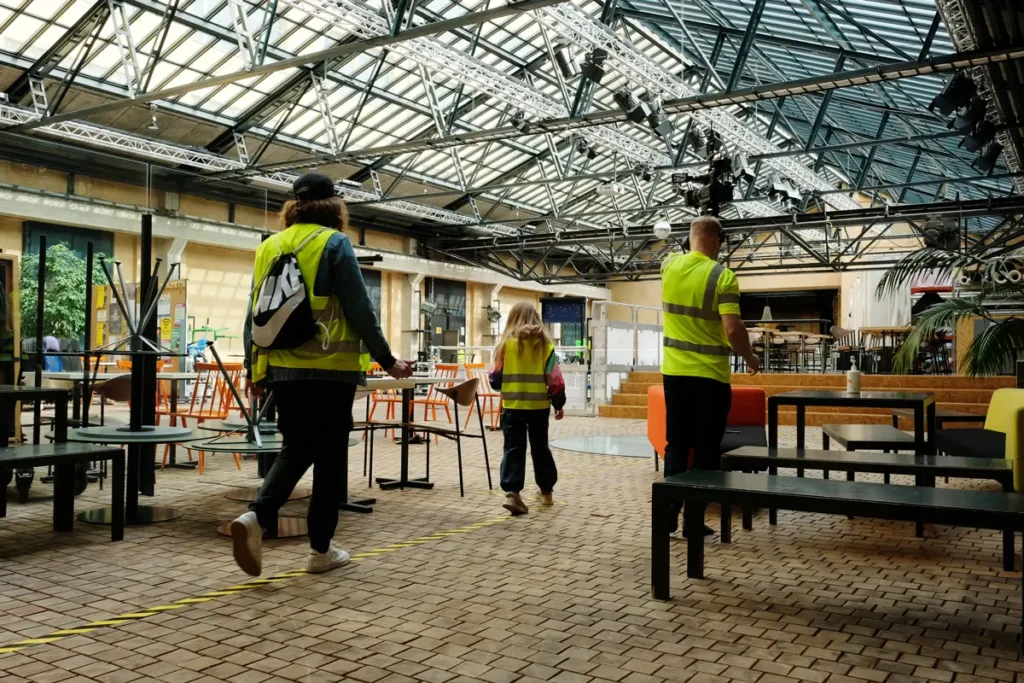
The route also allowed for playful and experimental use of spaces, translated from the idea of shaping spaces through activities.
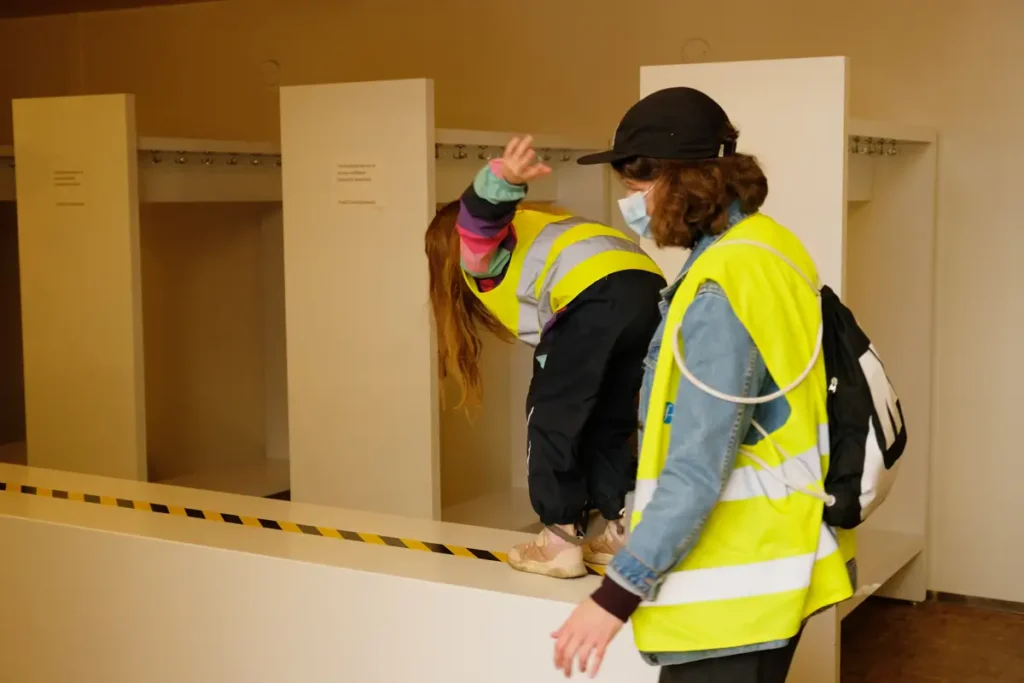
For hygienic/safety reasons, the route included a handwashing stop. It also showcased an exhibition on the deconstruction of the government building. This exhibition was creatively placed in an unconventional location on the stage floor, translated from the art exhibition situated under the bench.
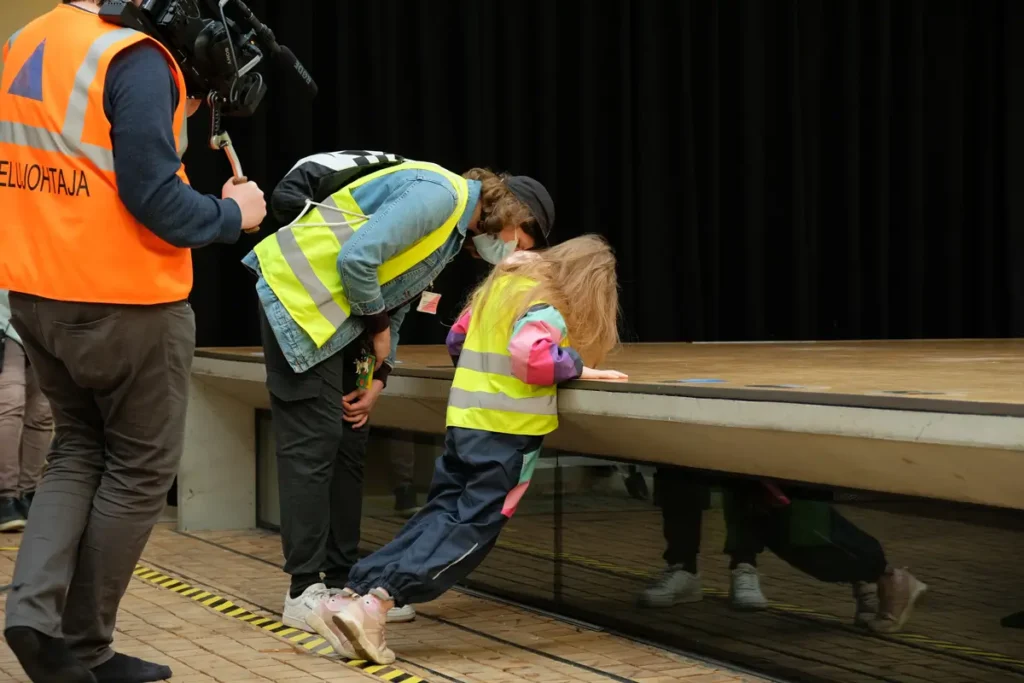
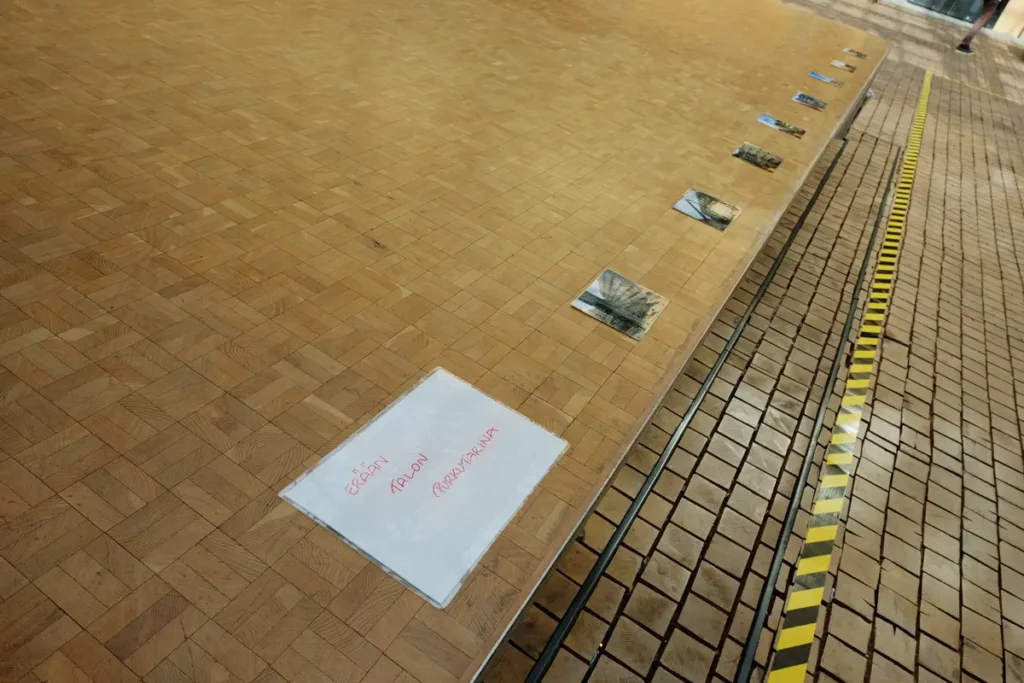
The exhibition was titled A House Demolition Story. Significantly, the deconstructed building had also previously housed a daycare centre. The child who participated in the second pre-examined event—substituting for another child who had fallen ill—had in fact attended that daycare centre. This unexpected connection introduced an additional layer to the affective dimension of the demolition and subsequent explosions, as pointed out by the child’s mother, who observed that it was not just any building being demolished, but the daycare centre itself.
4. Preparations
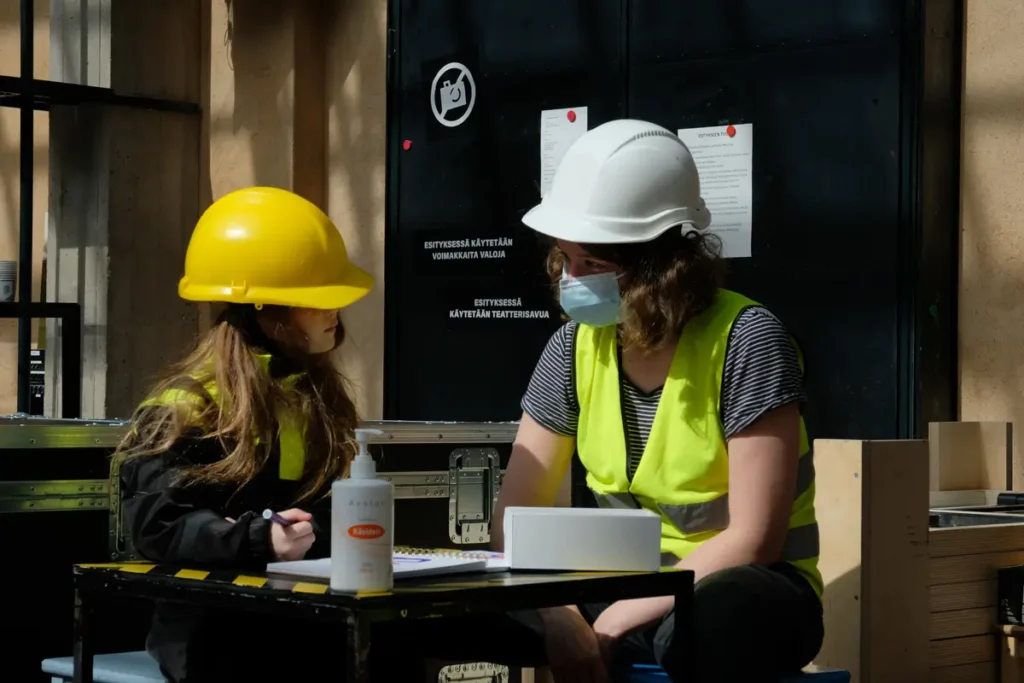
I gave the participants practical guidelines before they entered the construction site. I used a translation of the insight regarding the use of drawings to enhance communication.
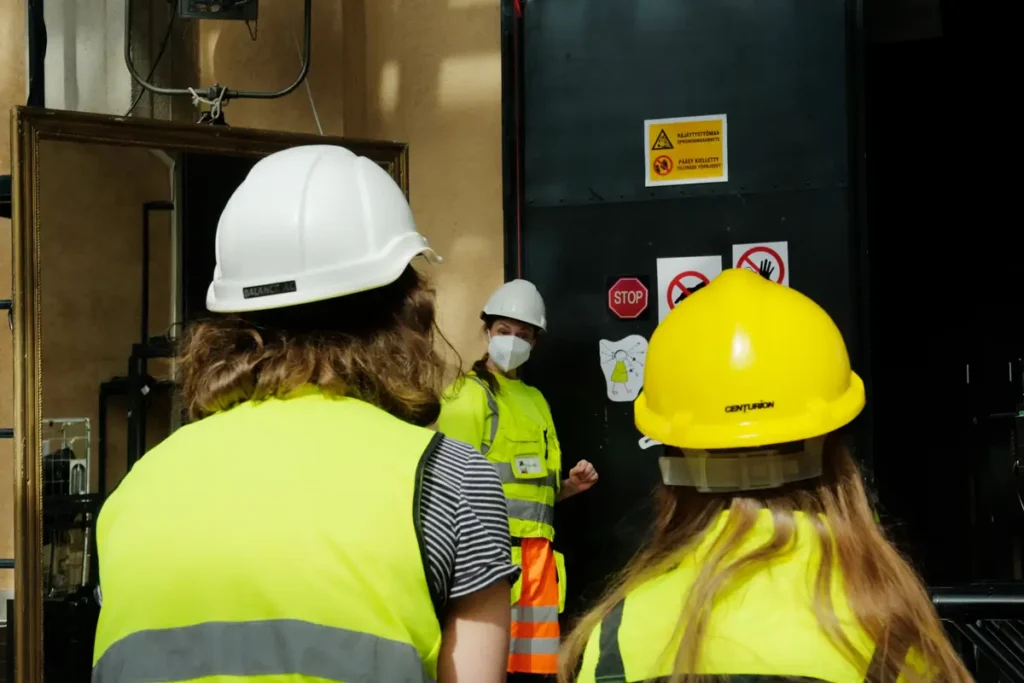
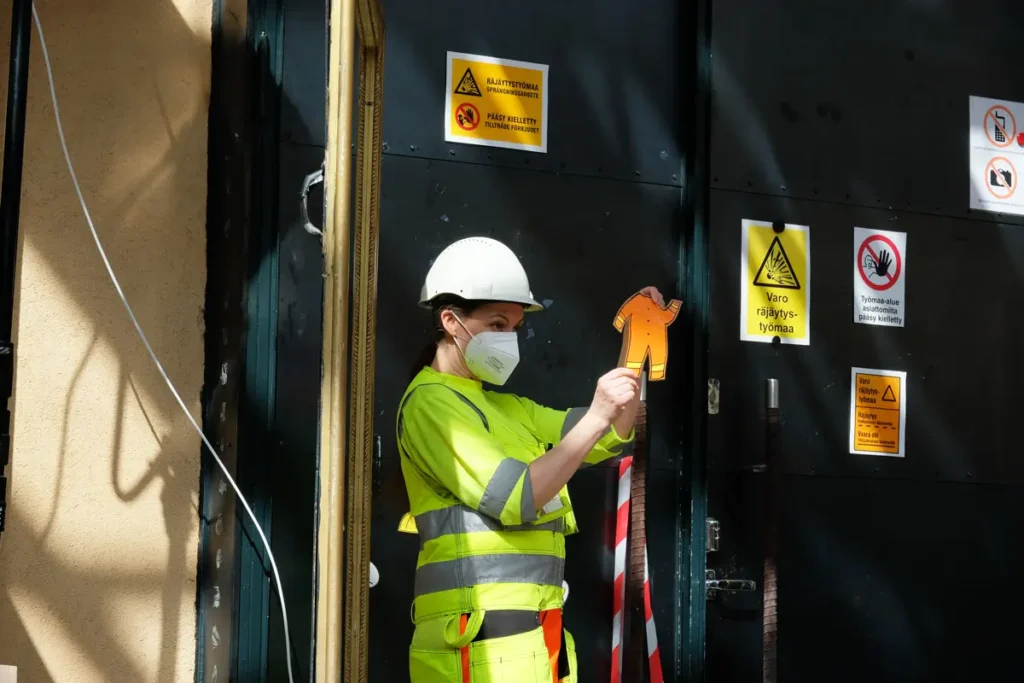
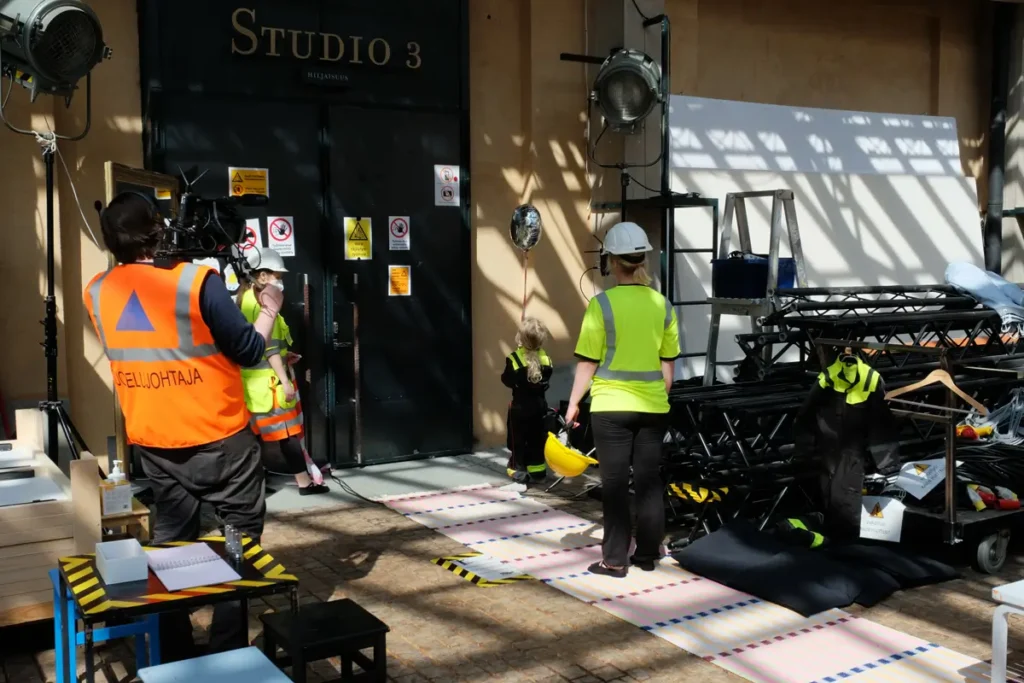
Additionally, the participants wore safety clothing, similar to the vests typically used during ECEC field trips, before entering the studio. Finally, I equipped them with torches and a balloon called Kille[1], which served as a navigational aid. Kille’s elongated tail helped guide them as they moved through the space.
5. Photos on the Floor
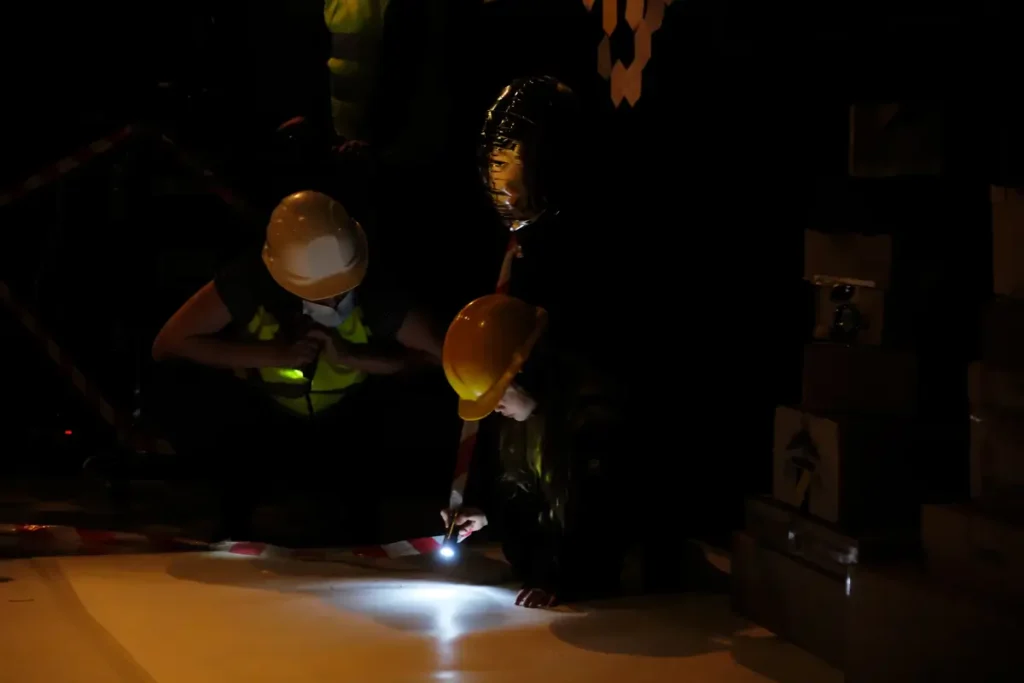
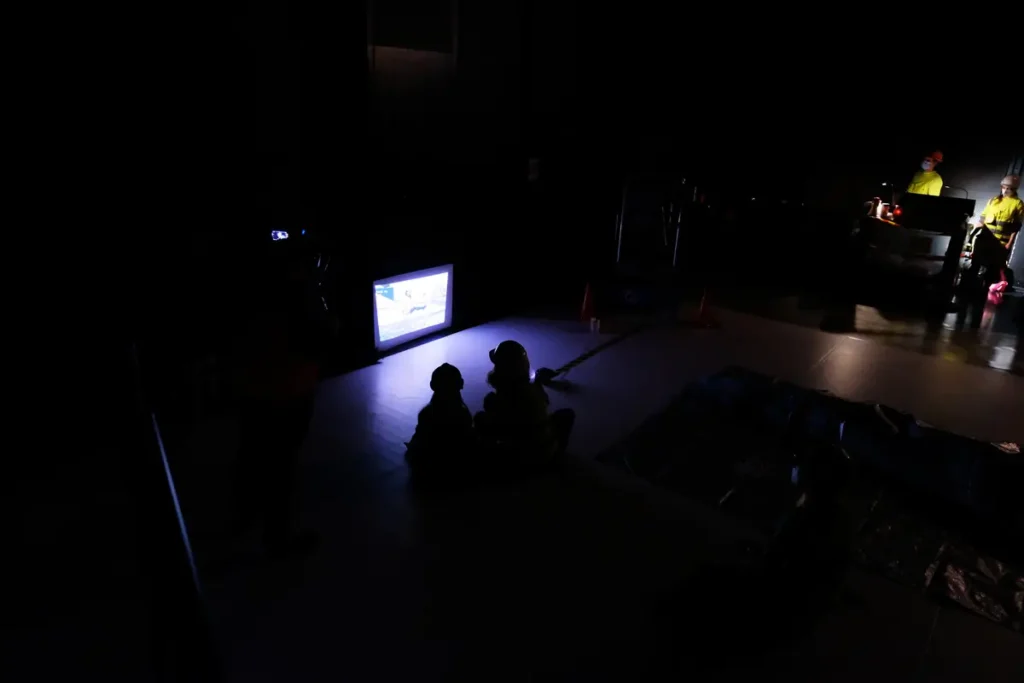
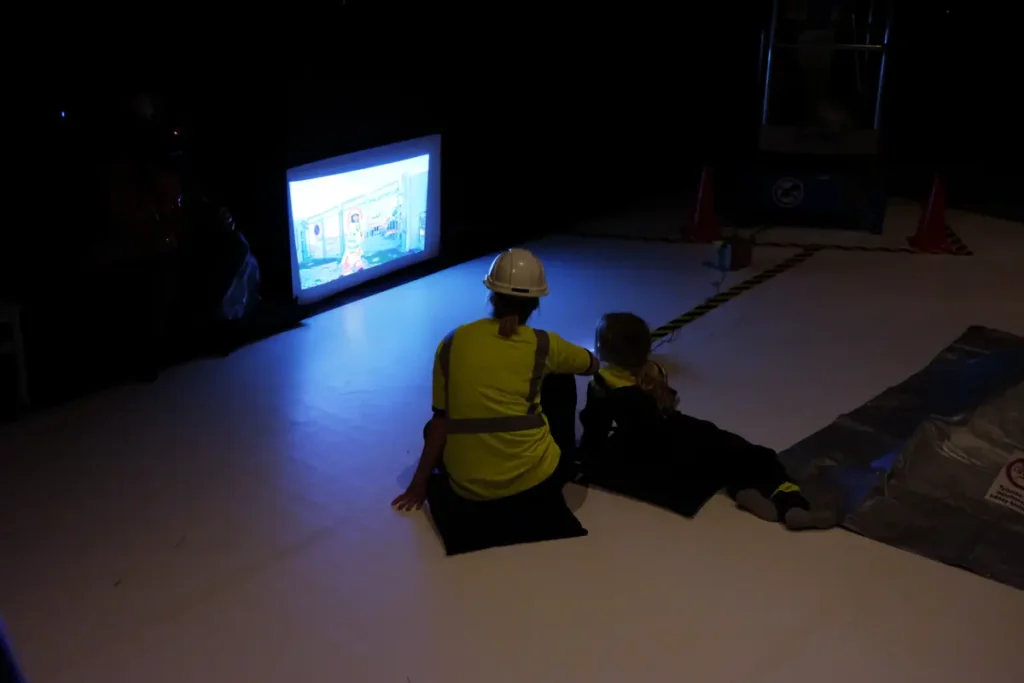
As we entered the space, we were met by dim lighting and a soundscape.
Description of the audio: A soundscape of ambient background music layered with construction-site sounds, including drilling, hammering, clattering, and vehicle noise.
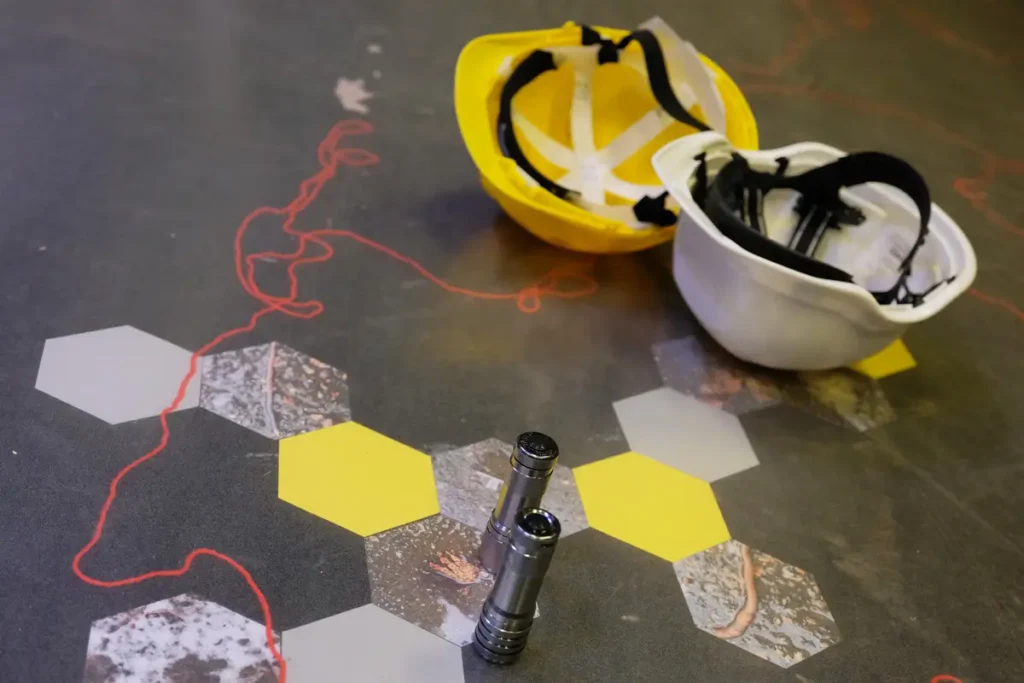
I had photographed artefacts from the daycare centre yard and surrounding neighbourhoods, which were then placed on the floor under a transparent Marley dance floor, creating inviting points of contact with the daycare environment and offering an engaging entrance into an exploration of the space using the torches. These photographs also provided participants with opportunities for discovery, echoing the experience of a dancing session during the fieldwork, where a Styrofoam ball became a site of exploration and playful engagement.
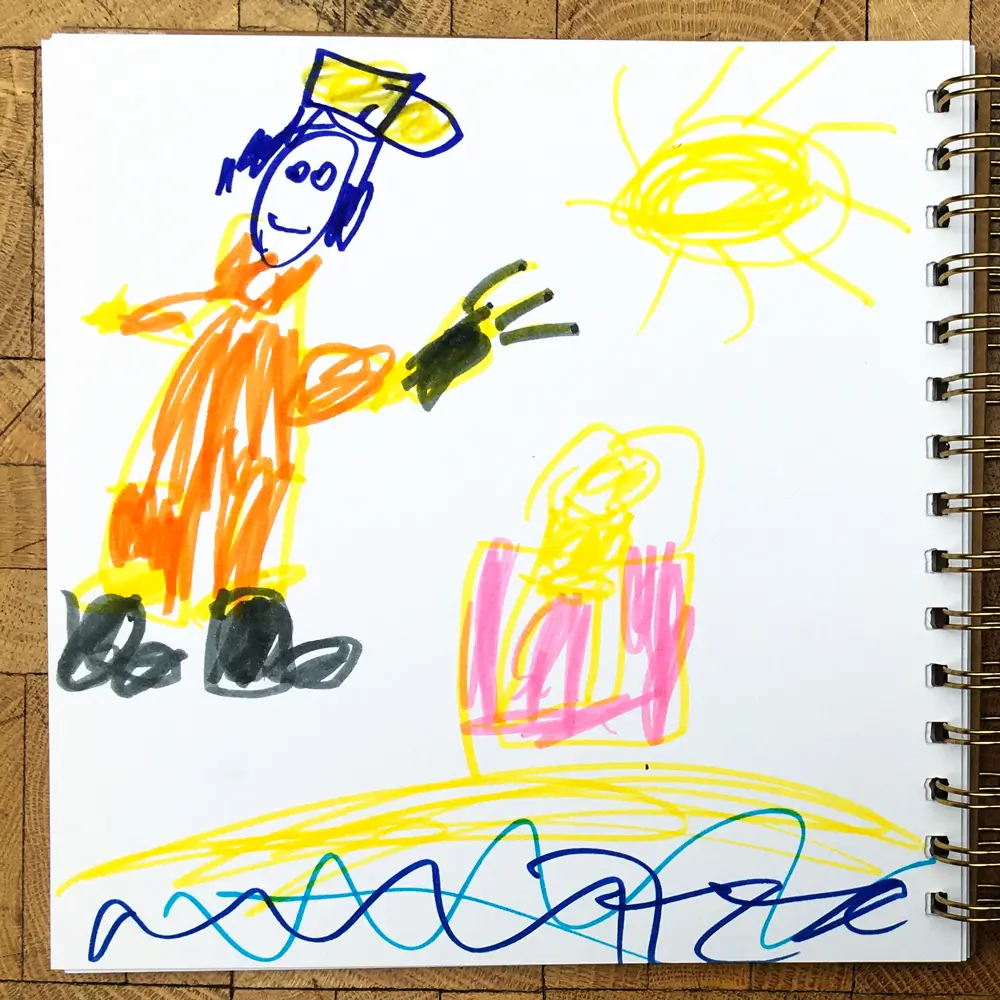
6. Art Exhibition under a Bridge
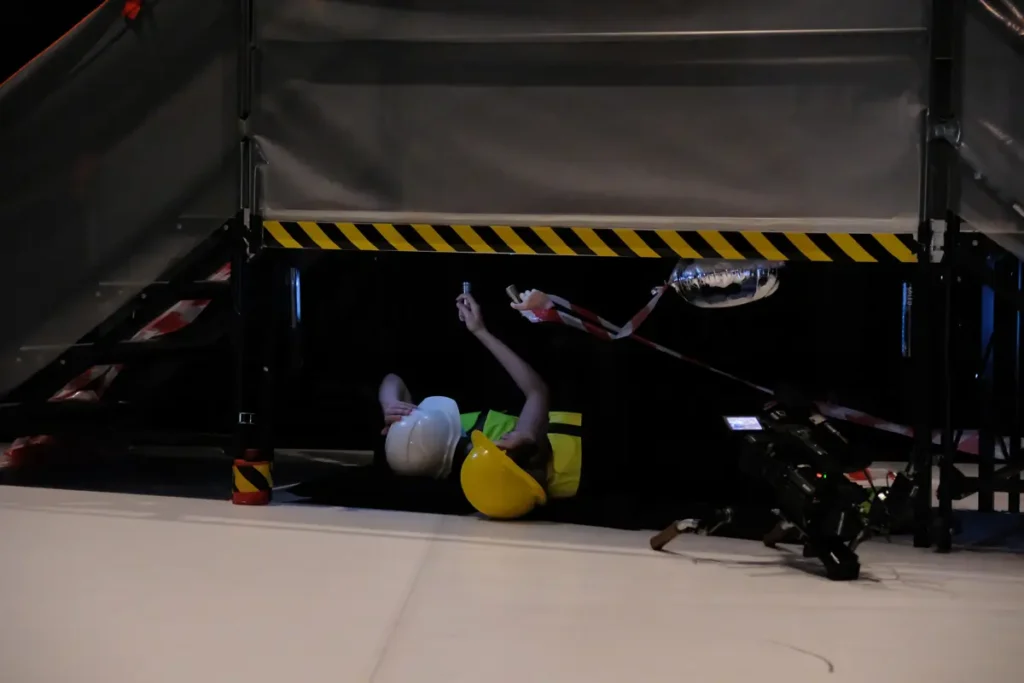
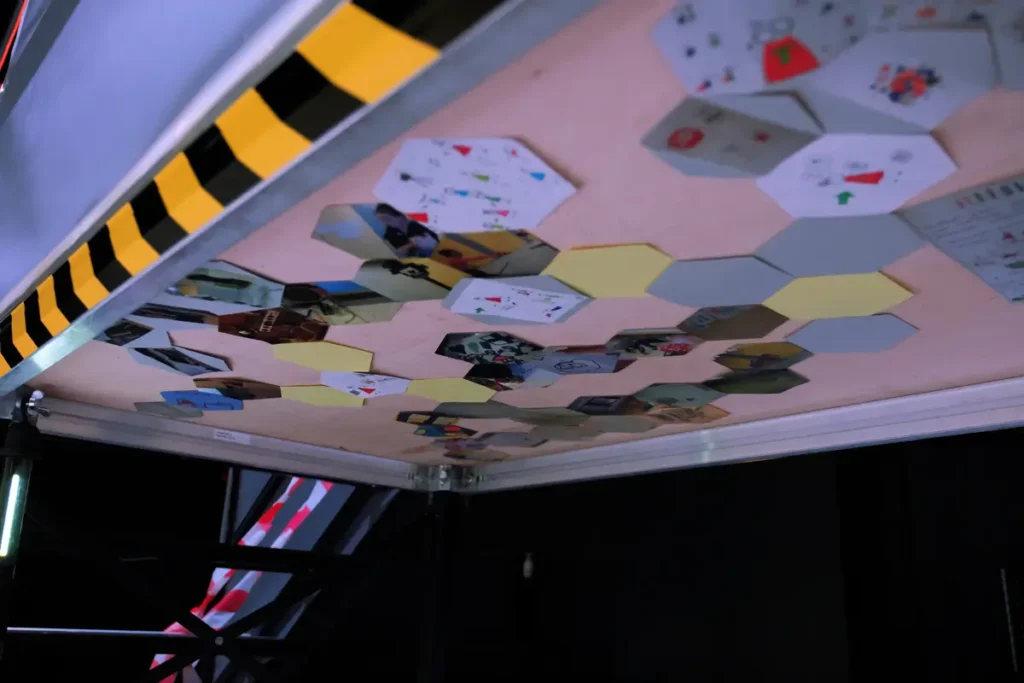
The art exhibition under a bridge was a translation of the art exhibition under a bench in the daycare centre. The exhibition under the bridge presented a collection of photographs from the original exhibition, expanded with images from the fieldwork, and was designed to invite reflection on the shared experiences of that period.
7. Video
View transcript
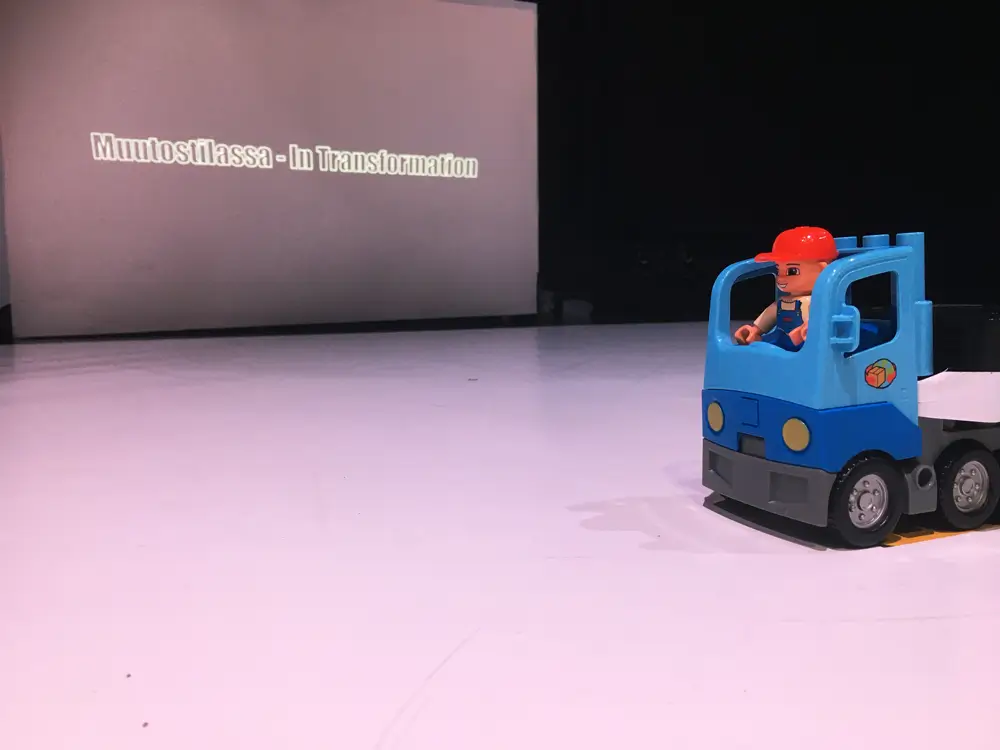
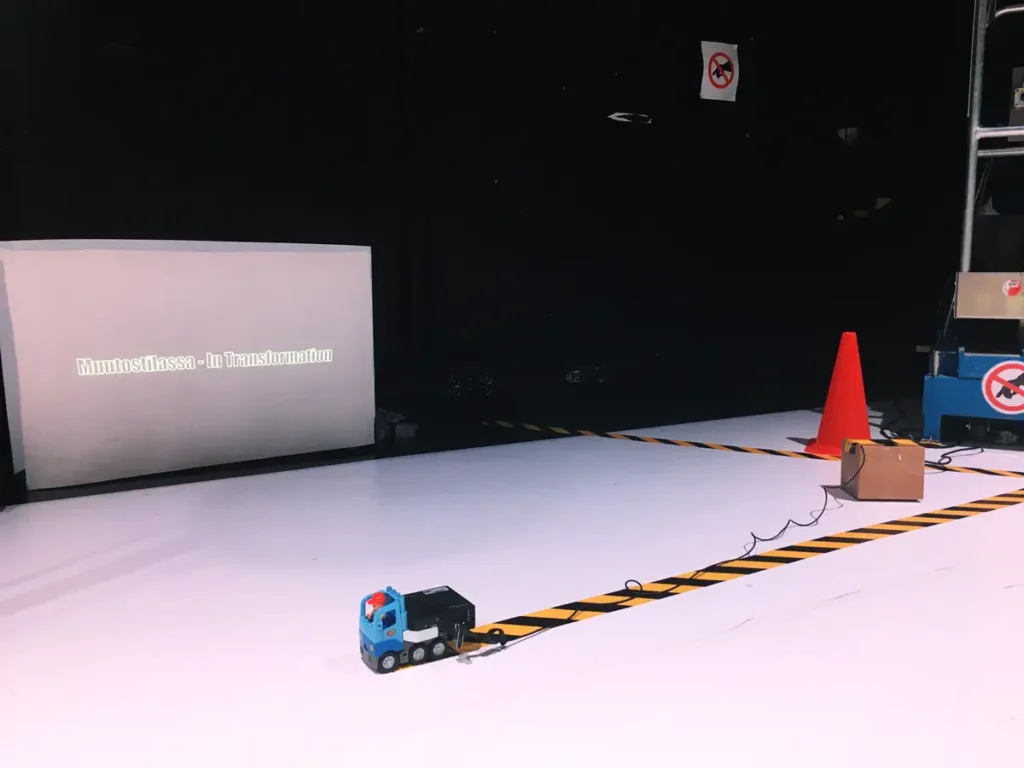
Title: Muutostilassa – In Transformation
Transcript: The contemporary dance video begins with the researcher in a red dress, working indoors at a desk on a computer. The soundscape includes video game sounds and keyboard typing. The computer screen spins, and the researcher is teleported outdoors, next to a construction site fence, wearing construction-site work clothes and a helmet. The researcher begins to dance. The music is electronic and rhythmic. At intervals, the video cuts directly, so the researcher appears to transform into two different children, with the bodies seamlessly changing from one to another. In the end, the researcher finds her red dress hanging from the construction site gate. She throws the coat high into the air, after which the image freezes and shifts to the researcher’s computer screen. The closing credits read: “Käsikirjoitus ja ohjaus – Manuscript and direction: Tuire Colliander”, “Tanssi – Dance: Tuire, Kasimir and Nikolas Colliander”, “Koreografia – Choreography: Tuire, Kasimir, Nikolas Colliander and Mahamed”, “Kuvaus ja editointi – Filming and editing: Jan Colliander”, “Peliäänet – Gaming Sounds: Kasimir and Nikolas Colliander”, “Musiikki – Music: Miika Colliander”, “Työskentelyä ovat tukeneet – Working has been supported by: Esittävien Taiteiden Tutkimuskeskus Tutke – Performing Arts Research Centre Tutke, Taideyliopiston tohtorikoulutuksen ohjausryhmä TTOR – Uniarts Helsinki’s Steering Group for Research and Doctoral Traning”.
The video Muutostilassa – In Transformationwas a translation of the Swan Dance performance and also an adaptation to circumstances, as I was unable to perform live due to my personal health situation. My entire family participated in the collaborative video production process, which was showcased at the event instead of a live dance performance.
8. Alternative Choices for Dance Activities
I selected one or more of these activities for each visit:
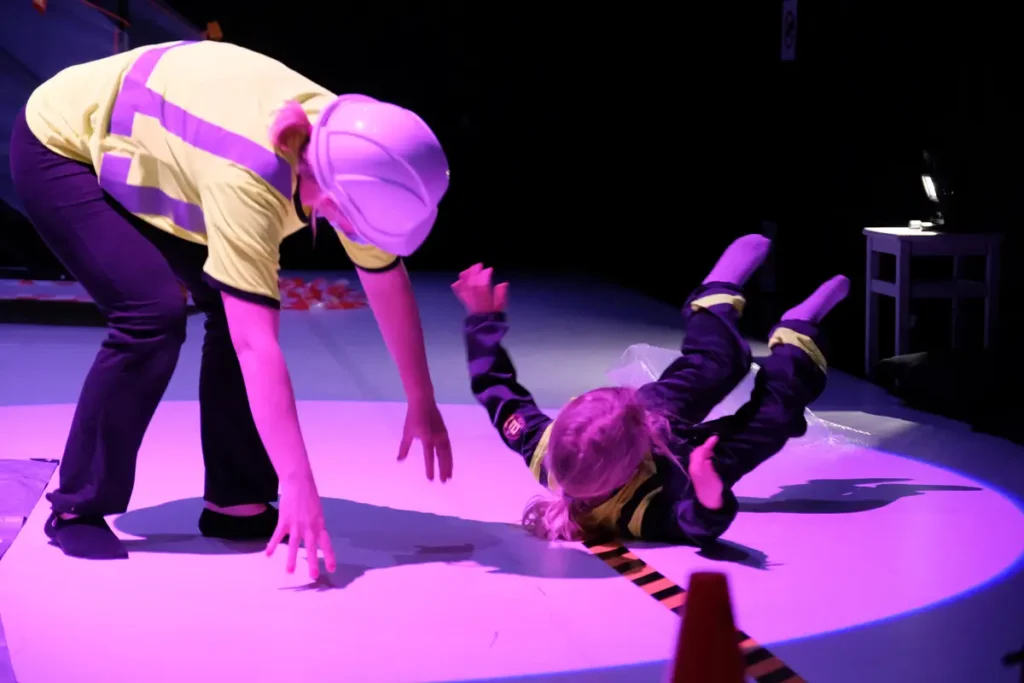
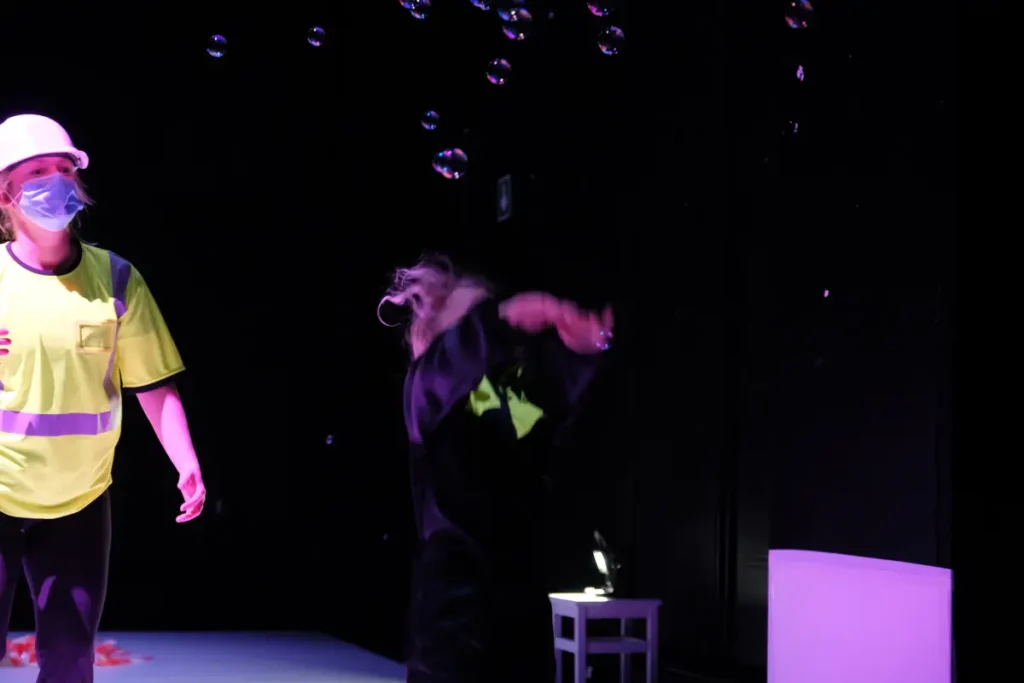
Bubbles
Dancing with bubbles was a translation of the use of music as a guiding element for dancing. Here, the theme of re/de/construction was introduced through translation into a small-scale explosion. Participants were invited to craft dances inspired first by bursting bubble wrap and later by bursting soap bubbles during their dance.
Machines
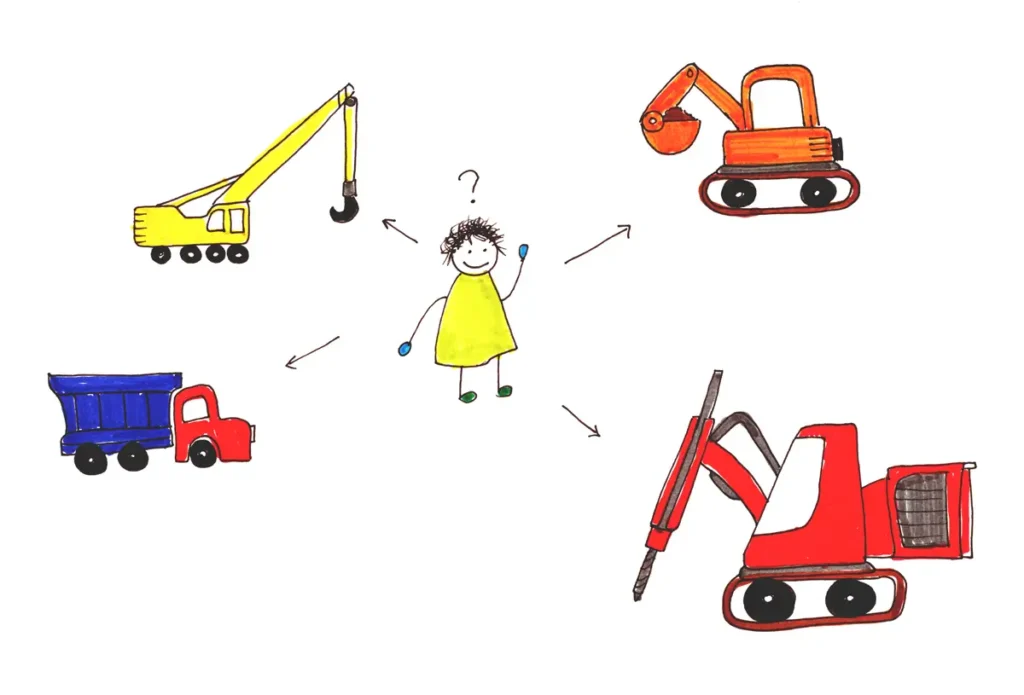
Transforming our bodies into dancing machines was a translation of the use of music as a guiding element for dancing, brought into the context of a construction site.
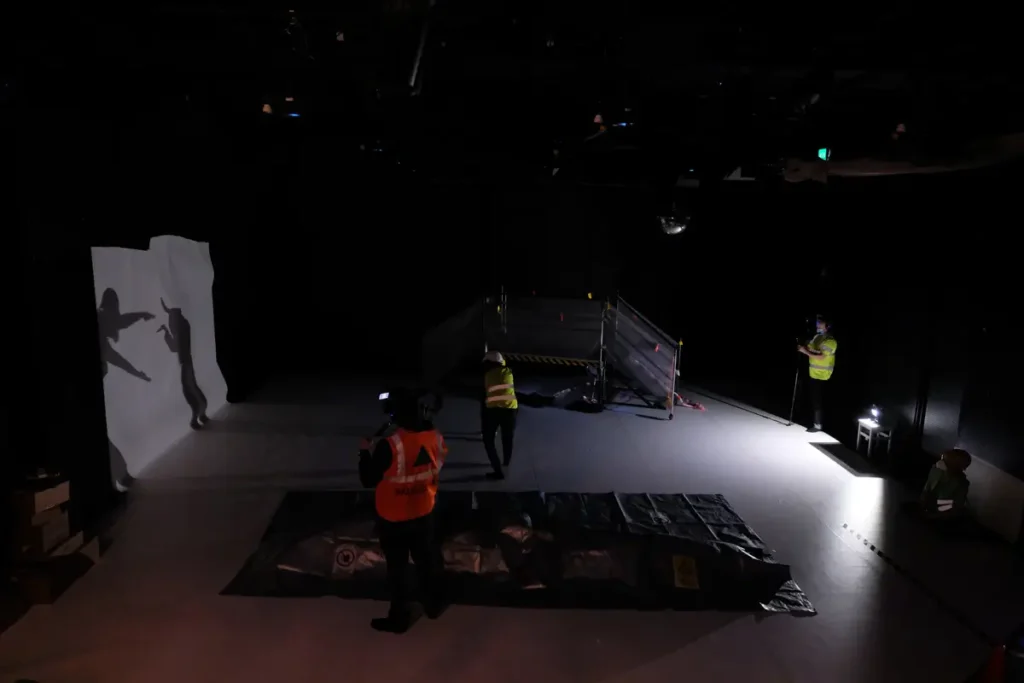
Shadowplay
Dancing with shadows projected onto the wall served as a translation of bodily transformations, intended as a playful exploration of the connections between bodies through their shadows without physical contact.
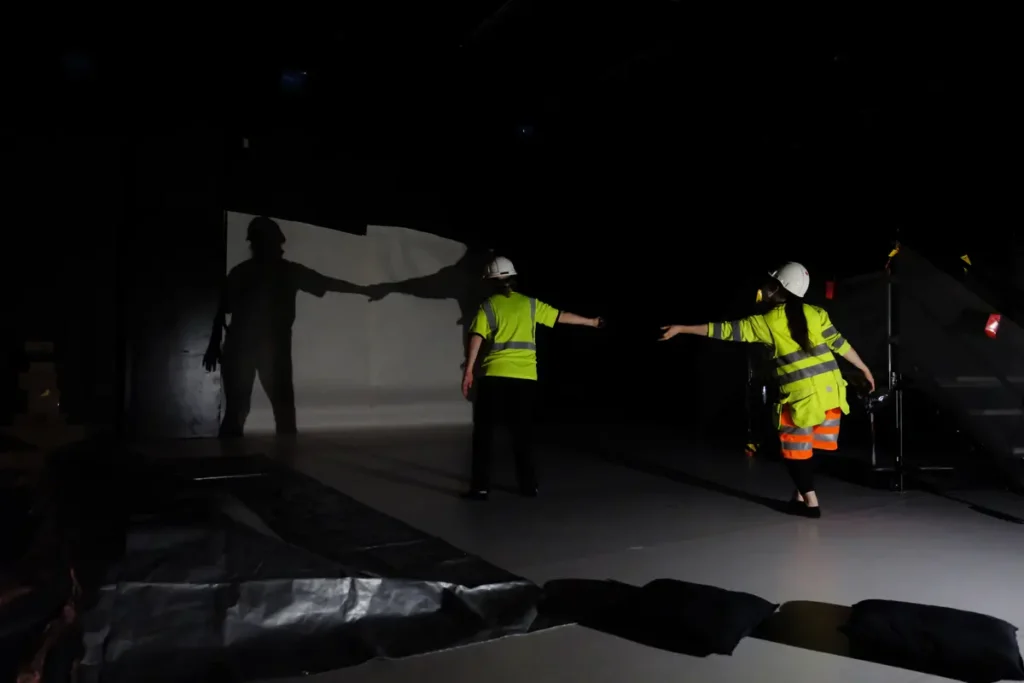
Lines of Flight
The embodied exploration of the philosophical concept of lines of flight (Deleuze and Guattari 1987) through dance emerged from my research interest in engaging the body and attending to embodied knowledge throughout all stages of the inquiry. This practice gave rise to an expansion of the approach of thinking with theory (Jackson and Mazzei 2023) into what I term dancing-with theory (Colliander 2024). The exploration was further supported by my diffractive engagement with drawing in pedagogical documentation and with the theory of lines of flight. During the event, the concept of lines of flight was briefly introduced, and participants were then invited to draw lines of escaping thoughts on paper. These lines were then translated into movement through a collective dance improvisation, accompanied by a live musician playing electric guitar, who simultaneously translated them into sound.
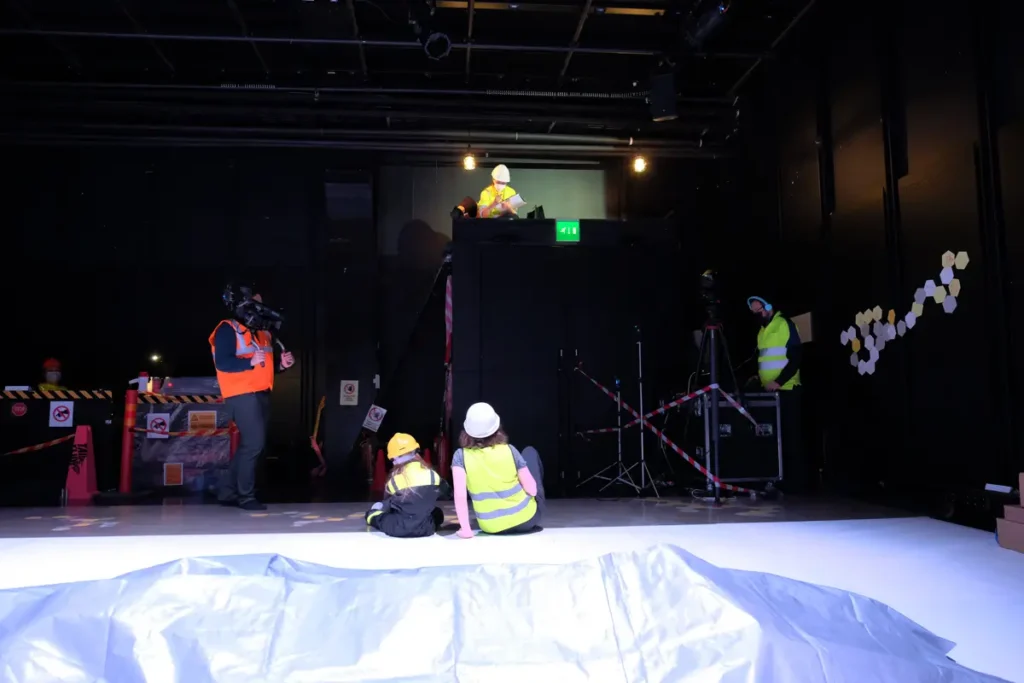
After the dancing, the sheets of paper were attached to a collective artwork on the studio wall, which expanded during the event.
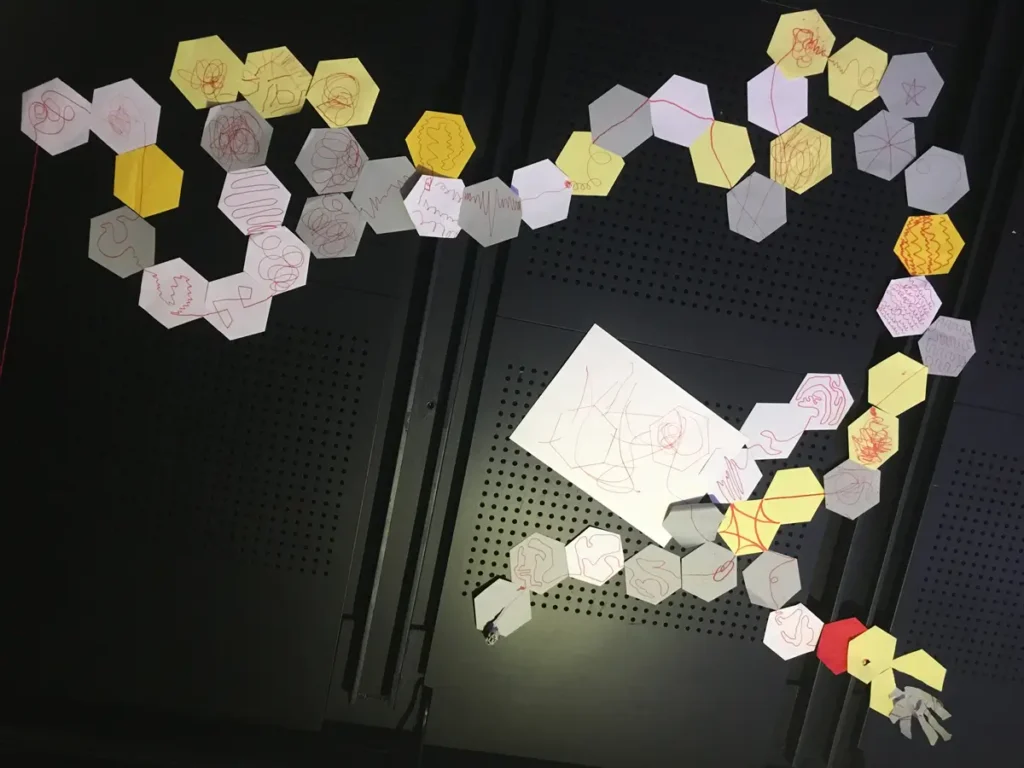
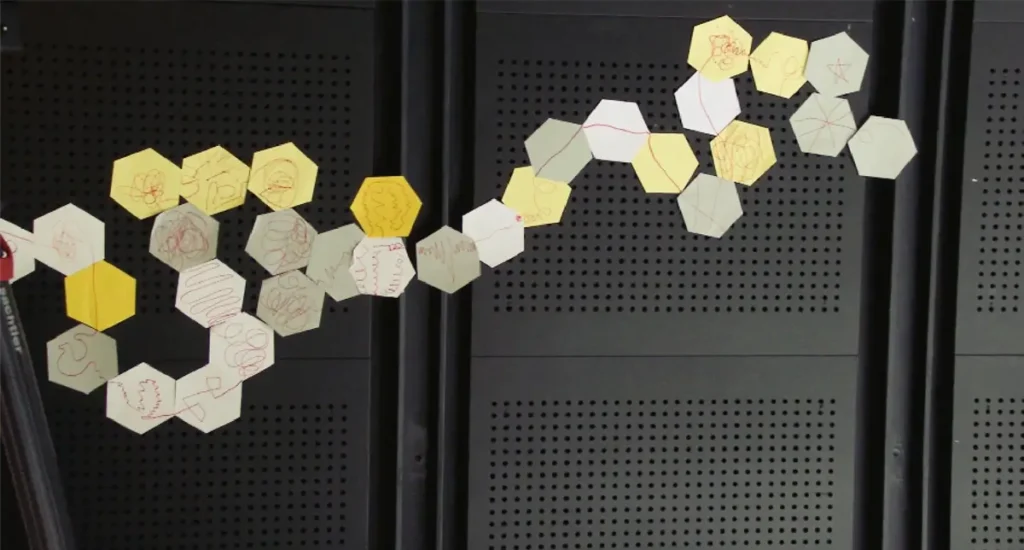
This exploration generated a substantial array of pedagogical and methodological insights. As such, this activity is examined comprehensively through diffractive reading later in this thesis piece.
9. Explosion and Balloons
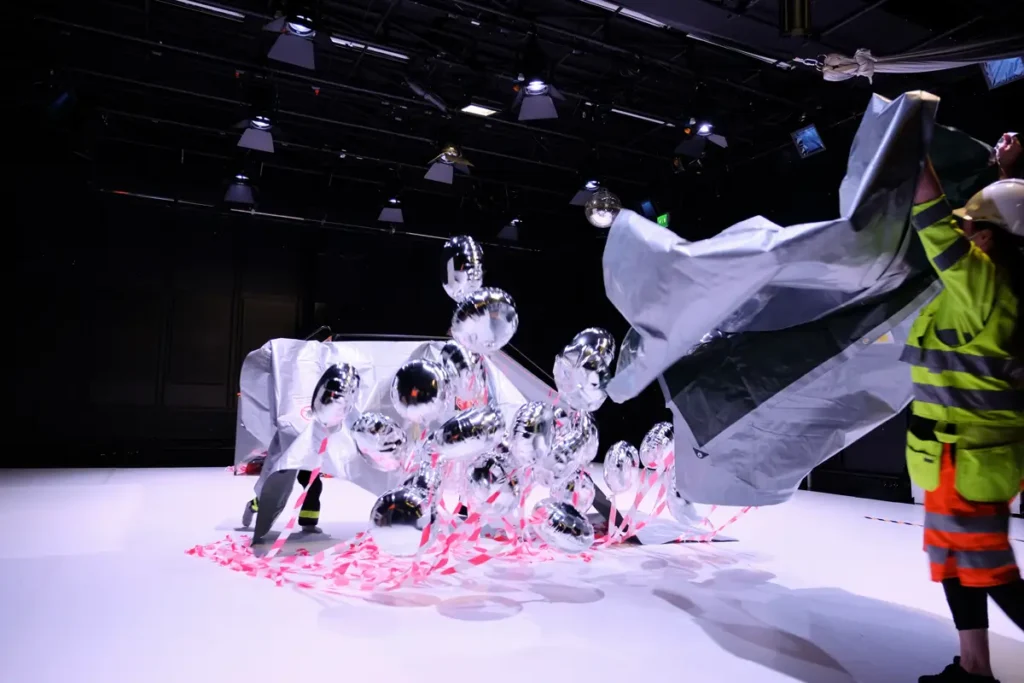
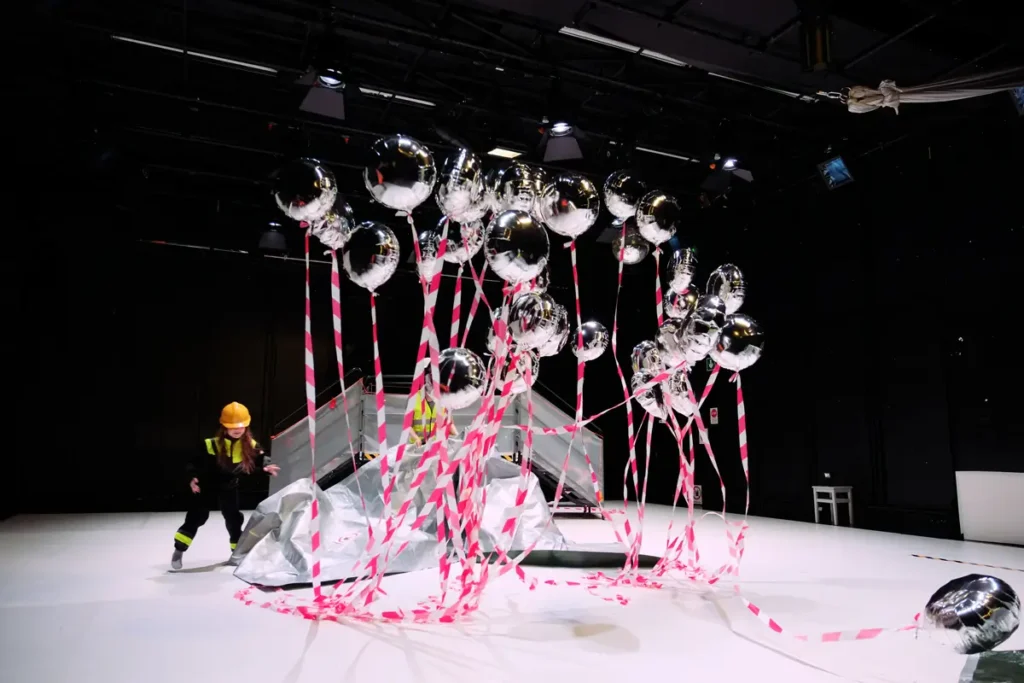
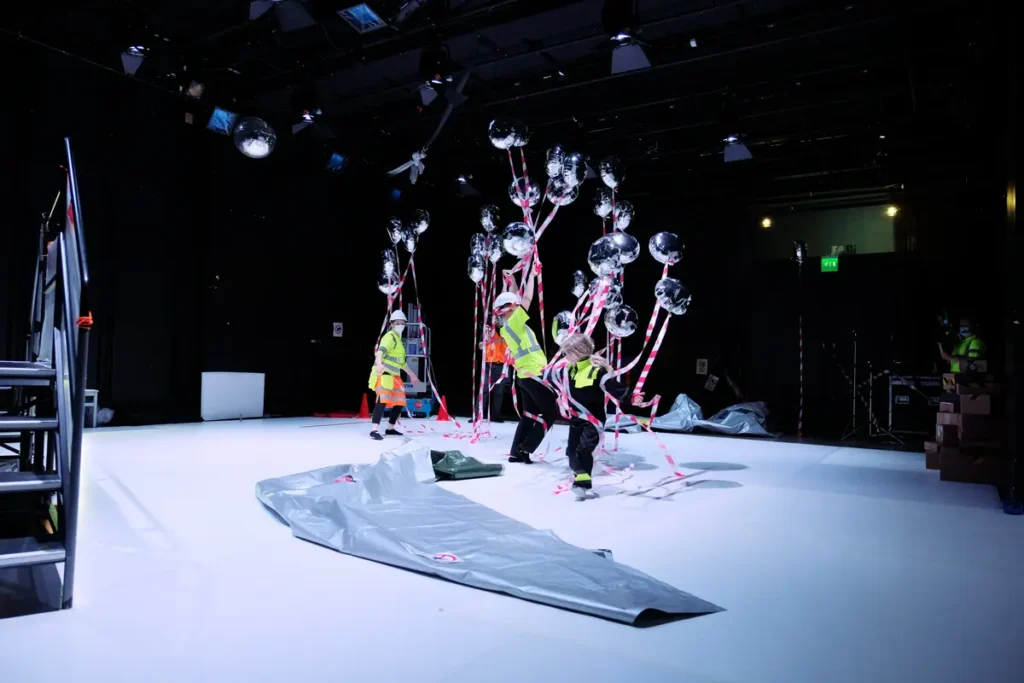
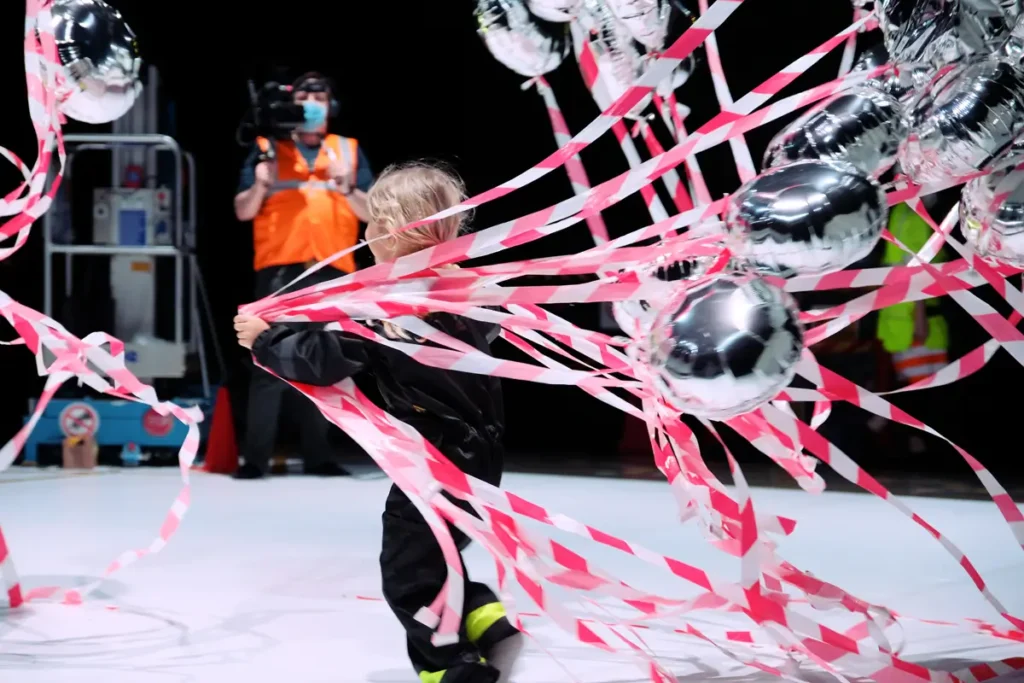
This activity entailed translating the methodology of transforming a space into an invitation to move-with a material. During the fieldwork, this objective was achieved by using yarn to create a configuration resembling a spider’s web. The theme of explosion for the transformation of the space was inspired by our daily experiences adjacent to the construction site. The process of creating embodied and material translations of the explosion involved multiple translations, as shown in this video.
View transcript
Title: Translations
Transcript: The video opens with a view of a construction site, where a warning signal sounds and a rock blast occurs. On-screen text reads: “The ‘Original’ Explosion at a construction site.” The next scene shows an indoor play sequence in which two children imitate an explosion using toys. On-screen text reads: “The first translation: Play.” The following scene shows the researcher and two children creating an embodied interpretation of the explosion. On-screen text reads: “The second translation: Embodied version.” Next, the video shows a six-step storyboard of the blasting process, drawn together by the children and the researcher. On-screen text reads: “The third translation: The Storyboard and choreography.” The researcher and the children then dance the choreography. After this, the screen reads: “Further translations: Creating explosions.” The video shows slow-motion footage of scissors puncturing an air-filled plastic bag, a close-up of children biting crispbread, a run through newspaper stretched across a doorway, and an empty juice carton exploding when stepped on. The closing credits read: “Working group: Tuire, Nikolas and Kasimir Colliander”.
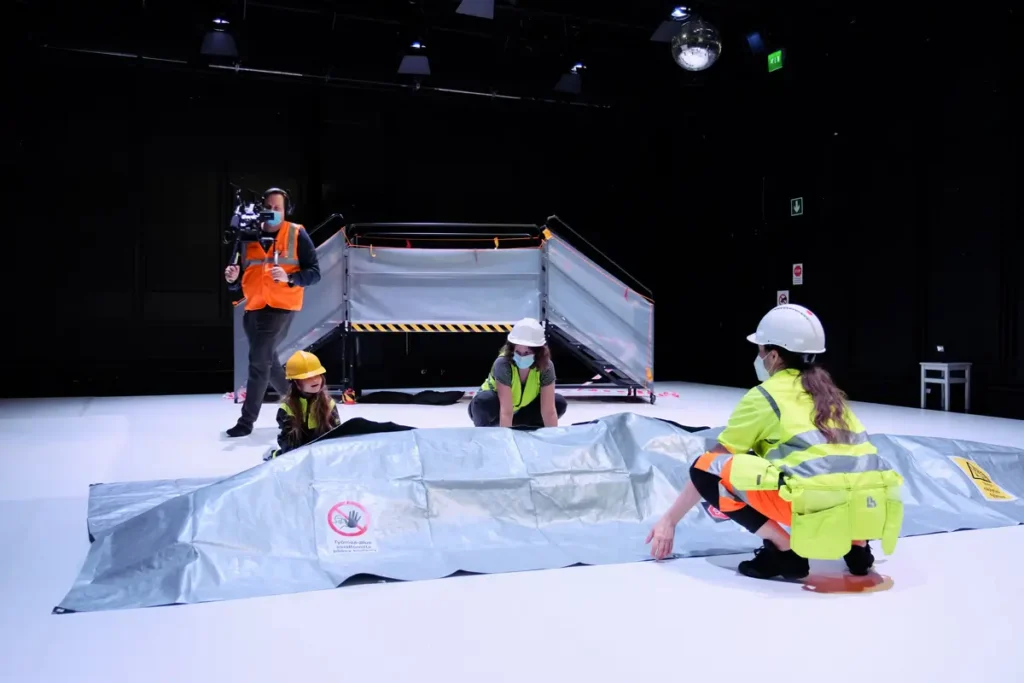
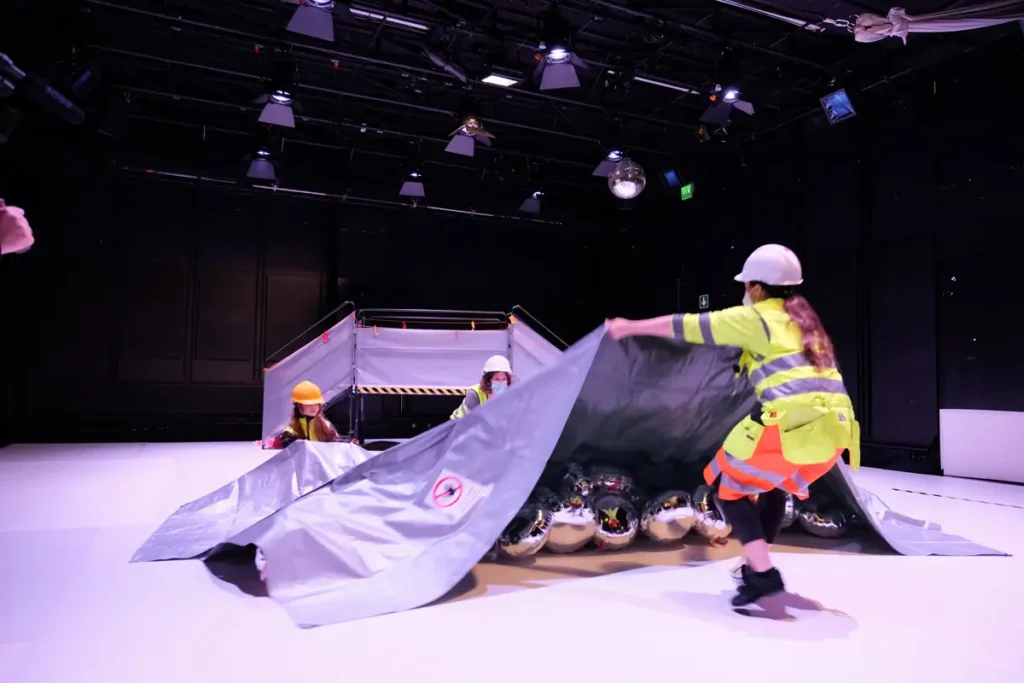
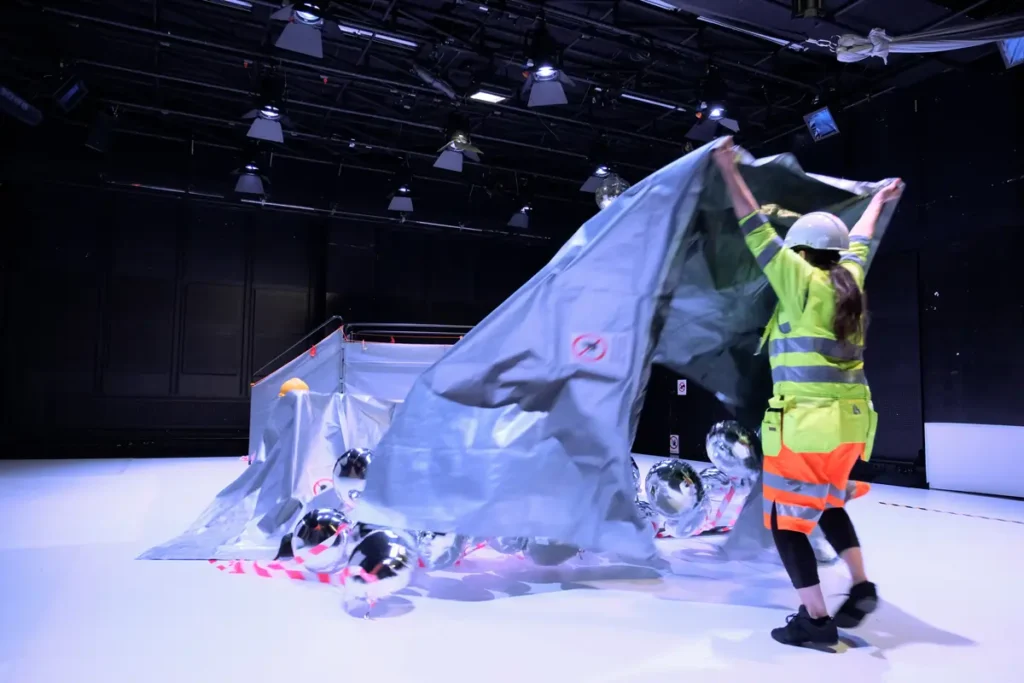
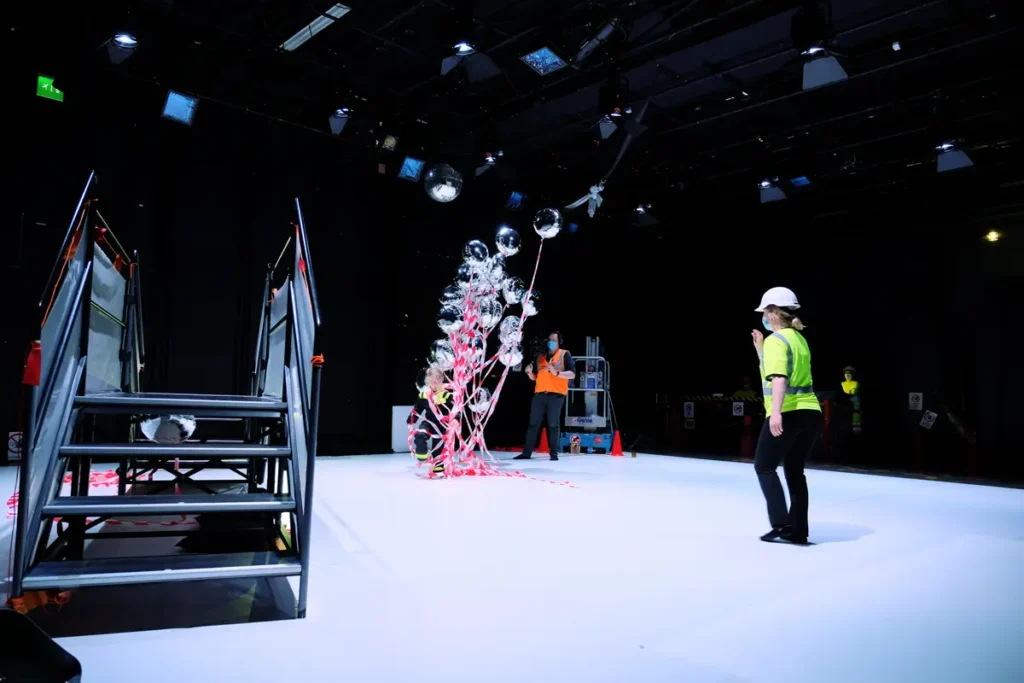
In the event, the participants were asked to help me with the explosion by pulling away the tarpaulin when they heard the sound signal triggered by a child pushing a ‘demolition button’.
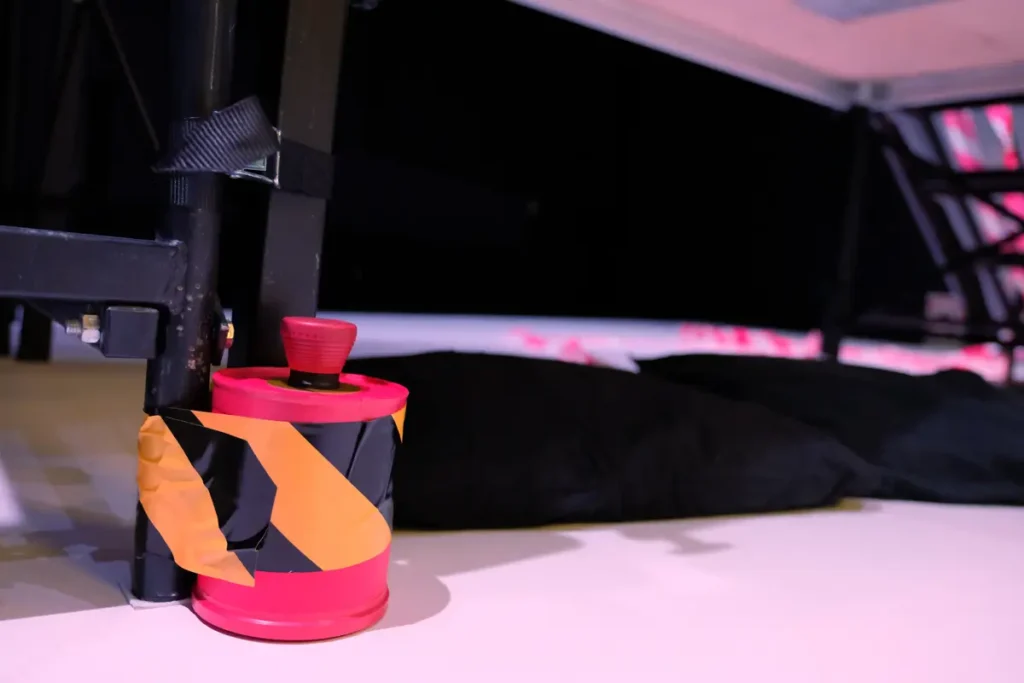
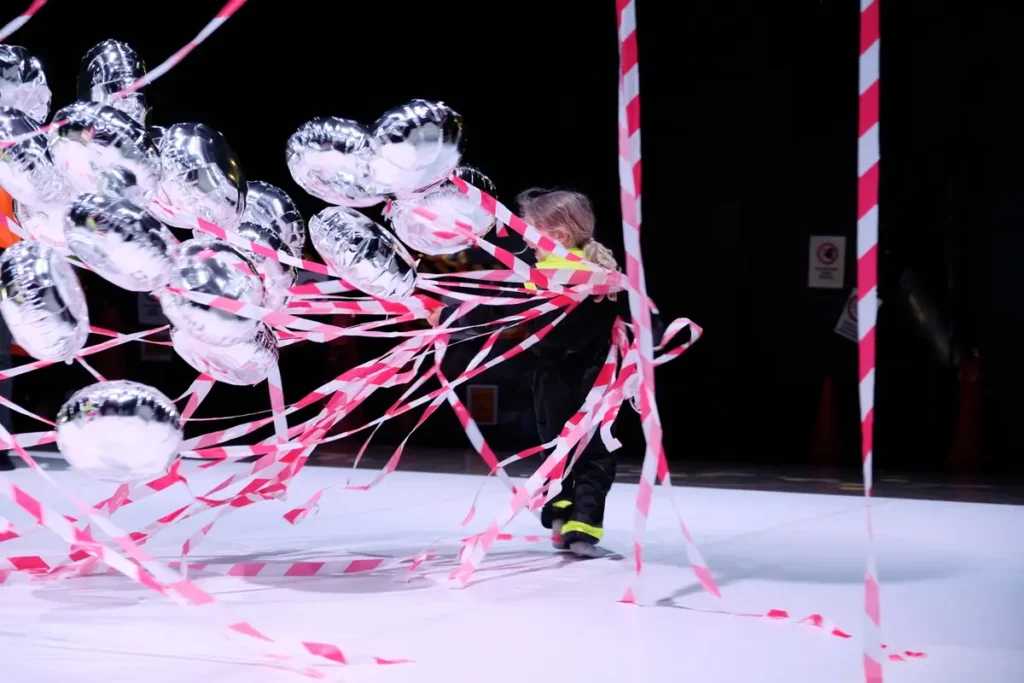
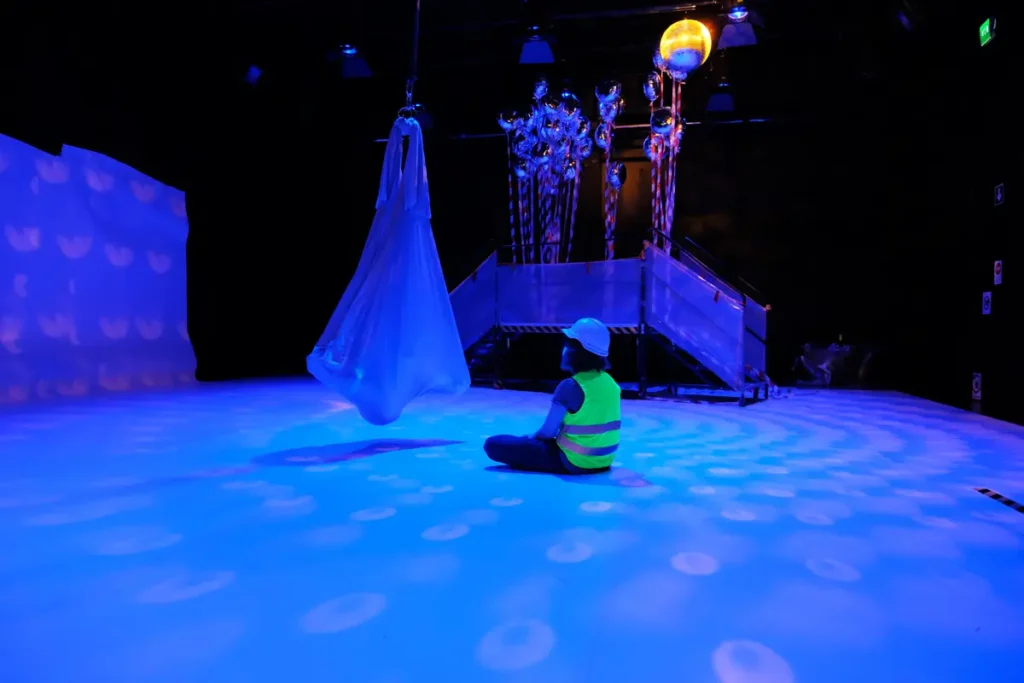
The participants were surprised when pulling the tarpaulin released many balloons, similar to Kille, with elongated tails; the aim was to transform the space into an invitation to move with the materials.
10. Sling
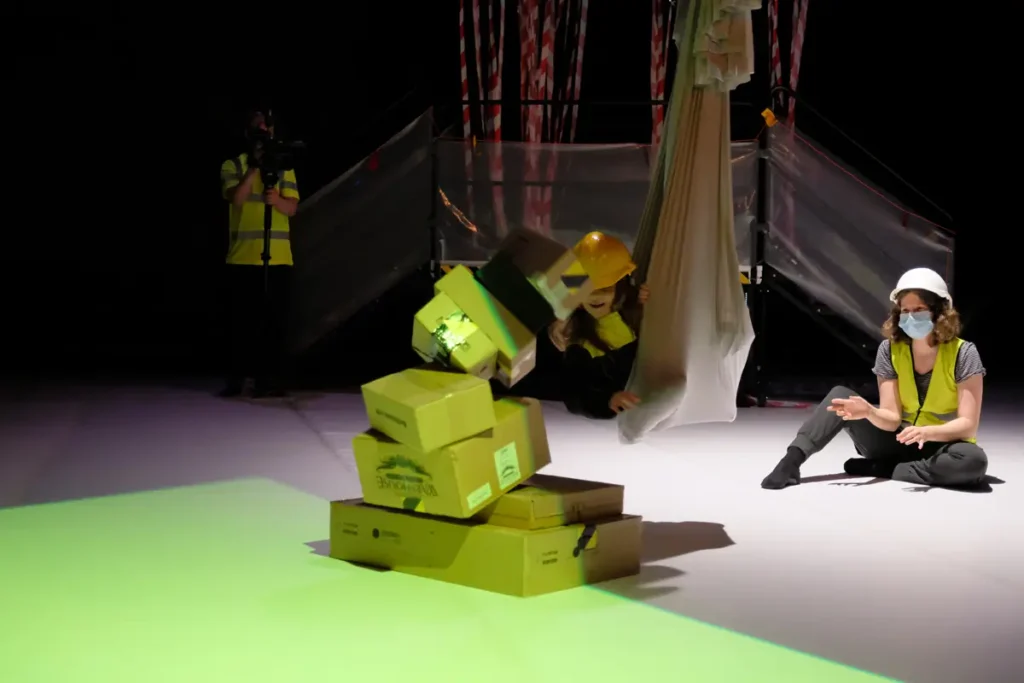
The sling was inspired by the common daycare activity of swinging in the yard, as well as the blanket swings that sometimes concluded dance sessions when another adult and I would lift and swing one child at a time. Together with the children, we also created similar swings for their baby dolls during play. I did not include these moments in the fieldwork section, as they initially appeared mundane and did not generate significant stories or a sense of glow (MacLure 2013). They emerged simply as part of our shared being-with in research and play, surfacing here as overspills (Millei and Rautio 2017) of the fieldwork, elements that neither fit within nor attracted attention according to the propositions. By leaving swinging outside the primary fieldwork chapter yet introducing it in this context, I aim to highlight how something meaningful may remain excluded from research accounts but nevertheless be included later as an overspill.
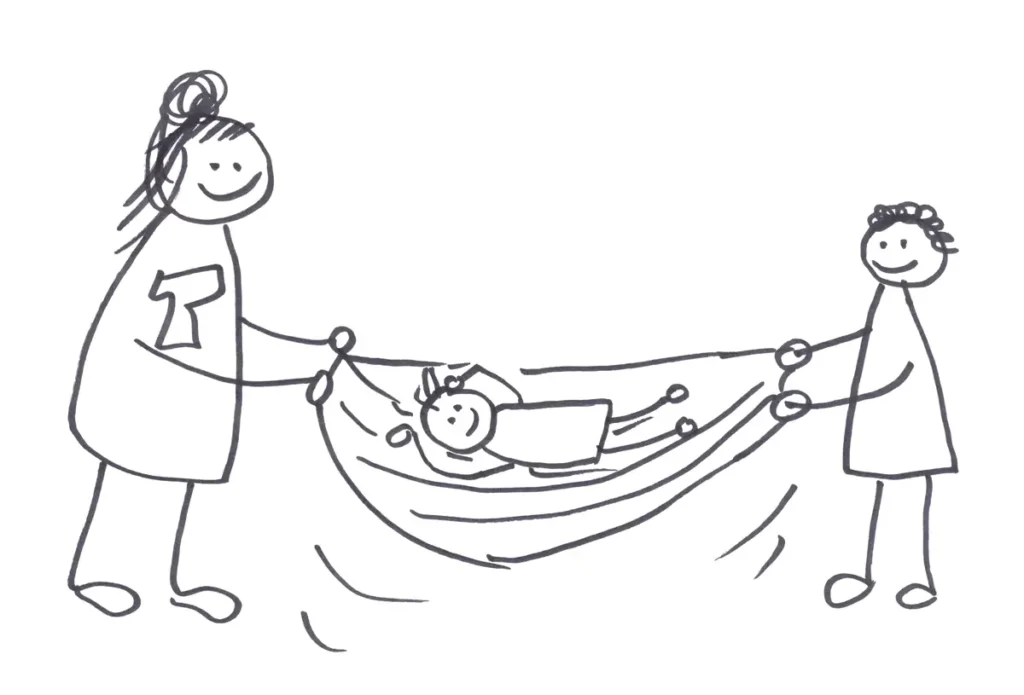
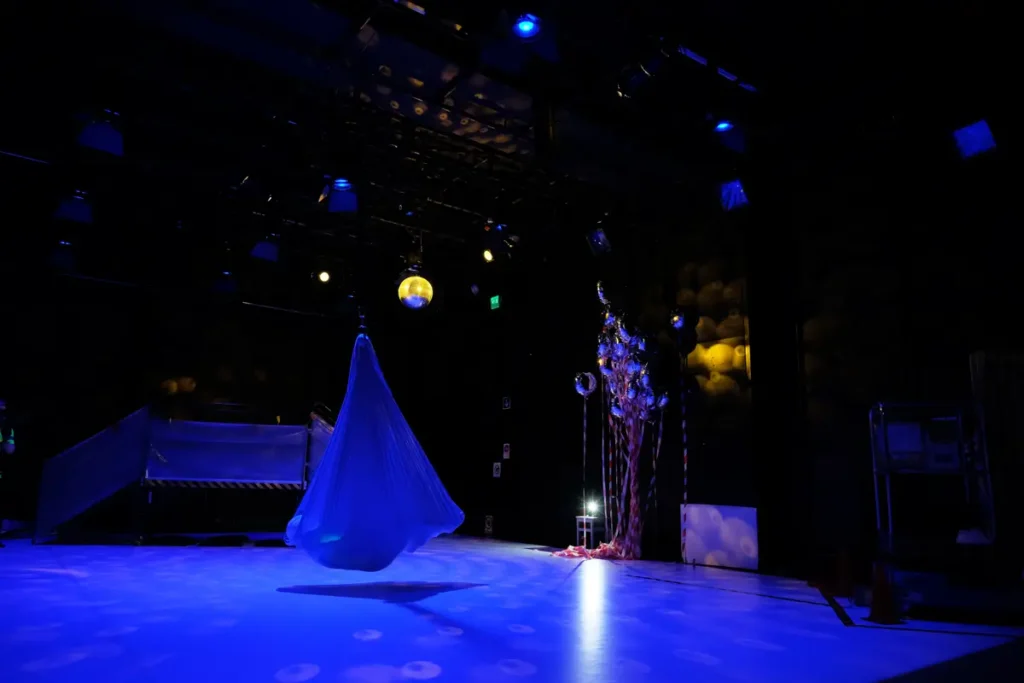
During the event, the sling was designed to encourage playful exploration of piles of boxes while swinging, and to offer a relaxing moment in a safe and supportive environment as the event came to a close.
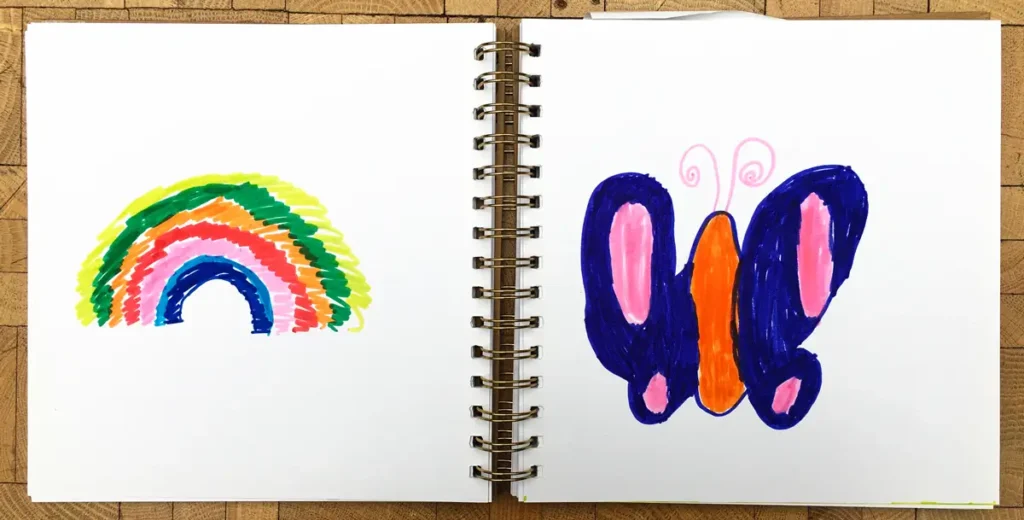
11. Guest Book
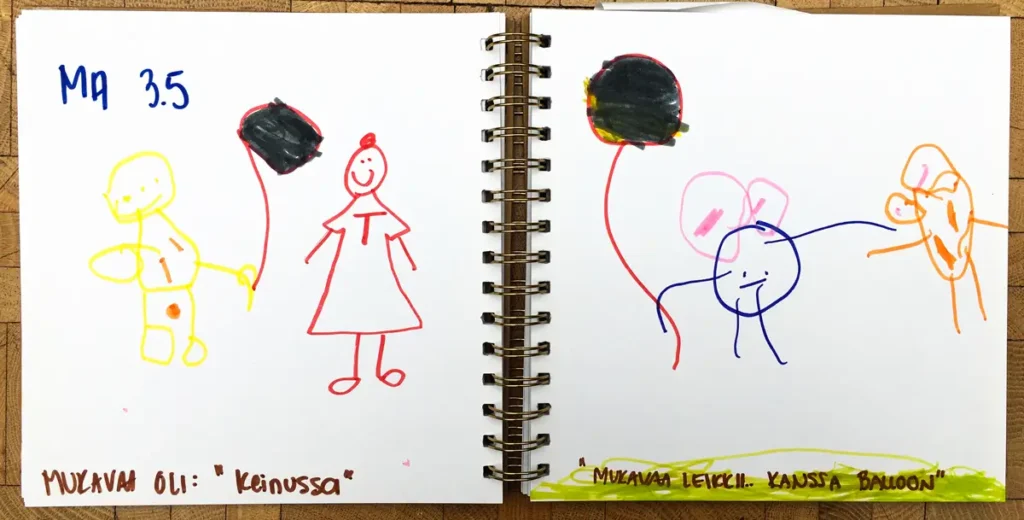
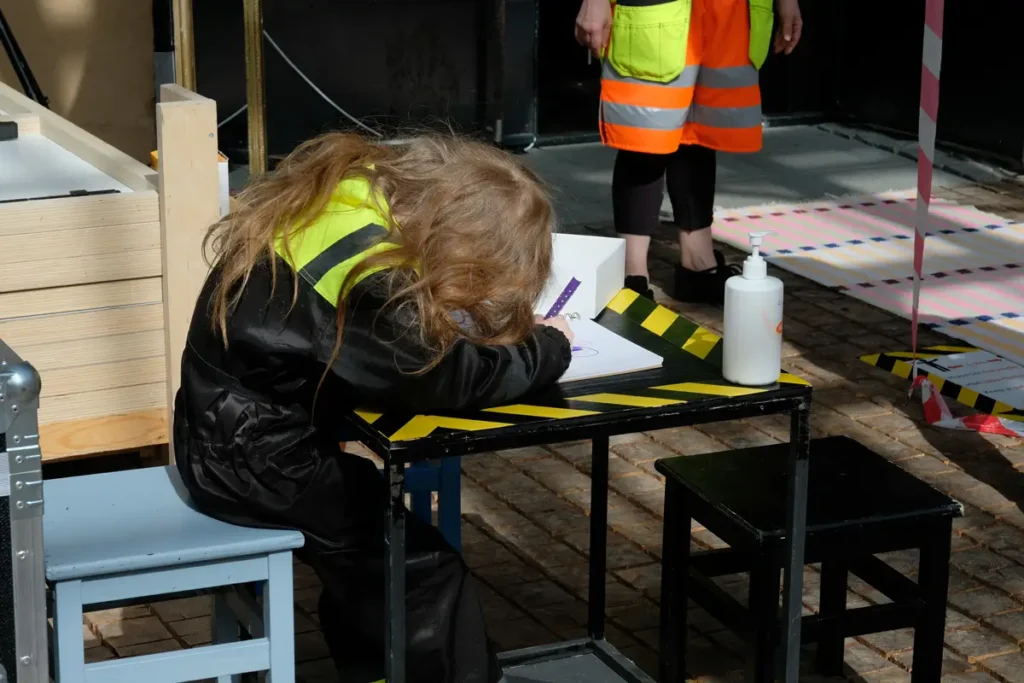
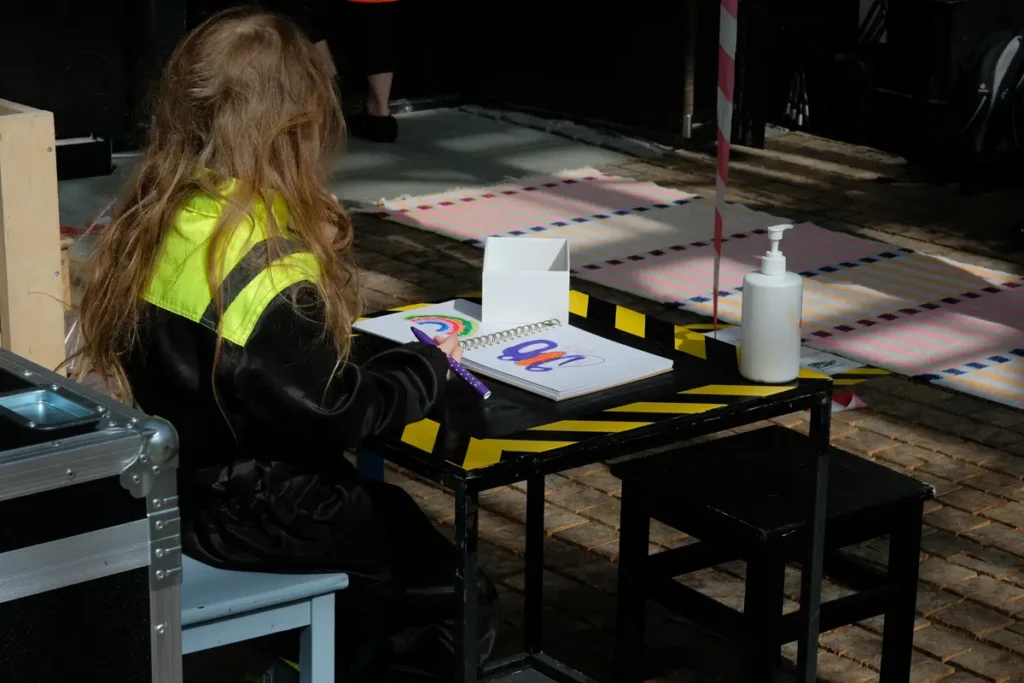
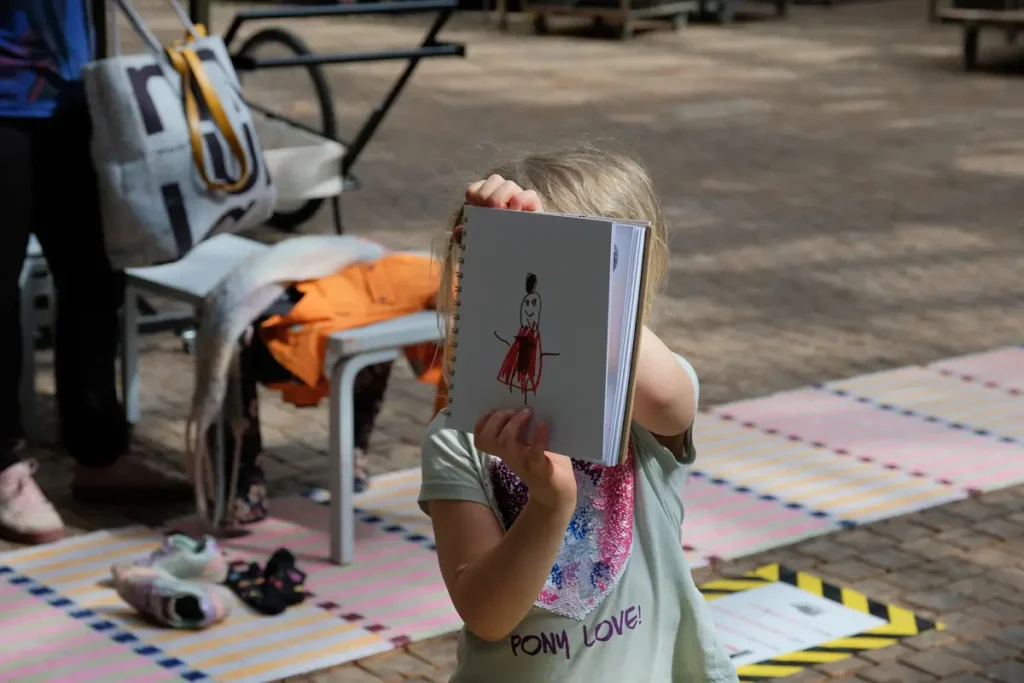
After the event, participants were invited to share their reflections by drawing or writing in a guest book placed outside the studio, near the preparation area. This practice provided a concluding reflective moment before they left the event, with each child getting a Kille balloon as a souvenir to take with them.
Note
1 Kille was my playful translation of the name Gilles Deleuze. For me, it also visualised and reminded me of the practical guidance of the abstract thoughts of Deleuze in my process.