I narrate my fieldwork diffractively through a set of propositions designed to foster a lateral rather than hierarchical organisation of analysis. Each proposition serves as a generative guide, orienting my thinking and opening distinct possibilities for meaning-making and for discussing what is ‘at play’ in these encounters. Through this process, I seek to move beyond the theory–practice divide by allowing events to invite a range of theories and concepts into dialogue, expanding and enriching the analysis while simultaneously reflecting the complexities of the research. Such a diffractive approach cultivates a disciplined openness—one that resists pre-structuring, categorising, or rigid systematisation. This mode of working is my initial step toward practising diffractive reading. However, here the theoretical texts were not selected prior to the analytical phase but emerged in response to the practical events themselves.
The propositions thus aim to create space for multiple pathways to thinking about and practising dance pedagogy, foregrounding the relational dynamics that unfold in the moment. They have helped me attune to the emergent flows of events and to the movements that open up. From these guiding propositions arose numerous discoveries, the most significant of which I present in the following chapters.
4.2.1 Allowing Time for Discovery
Quiet Time activities with the Spring group at 1.22 p.m.
17th December 2019
Fieldwork day 21/46
Research year 3/8
Cars – flying vehicles – children – an invisible world of roads – ramps – movements – events
Bruum bruum
… I like to move it, move it…
… pambadidaa…
Oho!
Ouch!
Bruum…
PRRRRRR!
The bell rings and cleaning begins. In no time, toys are transformed from living playmates into objects that are trivially just picked up off the table and dumped in a drawer.
Time in ECEC
In exploring how dance might serve as an integrated and inclusive activity in the daycare centre, it was necessary to consider the temporal structures that both constrained and enabled dance within the daily routine. Life in ECEC is organised around time, generating specific ‘time-space paths’ that move people from one place and activity to another in a continuous flow, leaving limited room for flexibility (Gordon, Holland, and Lahelma 2000). The existing research highlights how timing activities can limit the agency of children in ECEC, illustrating the influential power of adults (Kyrönlampi and Uitto 2022) and that routines often create a constricted environment for child-led activities (Emilson and Folkesson 2006). The daycare centre’s schedule was, however, repeatedly stretched to accommodate dance, just as our bodies and minds were stretched through immersion in its practice. The extensive preparatory work for my fieldwork also produced a heightened sense of time’s urgency and the pressure to use it efficiently, a perception that contrasted sharply with the mundane rhythms of everyday life in the daycare centre.
I draw on Barad’s (2007; 2017) agential realist view of time, which emphasises multiplicity and indeterminacy rather than a linear progression. This idea contrasts with educational framings of time as clock-measured and sequential (Murris 2020a). While scholarship highlights children’s resistance to structured time (da Rosa Ribeiro et al. 2023; Murris and Kohan 2021; Pacini-Ketchabaw and Kummen 2016; Tesar 2016; Tesar et al. 2016), children also internalise time governance, adapting quickly and often unquestioningly, as evident in the opening scene of this section.
Time has been associated with capitalism and colonialism (Barad 2017), influencing understandings of education and educator–child roles (Pacini-Ketchabaw 2012), and preparing children for neoliberal working life, which emphasises competition and individualism (Murris 2020a). All of these aspects may be true, and yet none of them alone is sufficient to describe the diversity that the perception of time through the clock produces. However, I believe it is crucial to consider the consequences of adopting a linear perspective on time in education.
Time in Dance and Childhood
Childhood and dance improvisation offer perspectives on time that resist clock-based measurement and linear temporality. While dance often engages with measured time through rhythm and music, improvisation enables freer temporal exploration, as shown, for instance, in Hermans’ (2018) work. In my pedagogical approaches to improvisation, time becomes an experiential phenomenon, shifting into an entirely different mode of bodily perception that I refer to as Embodied Listening. Nordstrom’s section in Tesar et al. (2021, 3) notes, that in both improvisation and childhood, time is lived as an intensity of ‘a series of nows’. This childlike time further resonates with the Ancient Greek notion of aion, a duration linked to children’s play (da Rosa Ribeiro et al. 2023; Tesar et al. 2021). I discuss my translation of this concept within my collaborative, play-based methodological approaches, which I detail in the section ‘Warming Up’ with Methodology.
Viewing time through aion encourages educators to reconceive both childhood and dance as practices that transgress institutionalised, clock-driven temporality, embracing presence grounded in curiosity, creativity, and playfulness—a perspective consistent with alternative understandings of childhood (Tesar 2016). Approaching dance improvisation in this spirit positions childhood not merely as a biological stage but as a way of being, one that can disrupt rigid schedules and age segregation. As Kohan notes in da Rosa Ribeiro et al. (2023), such an approach fosters moments of breathing, sensing, and recovery, reframing education as a shared process in which both children and educators nurture and sustain this spirit.
The Concept of Discovery
The origin of the verb discover is in the Latin word discooperire, which means to remove the cover. Nowadays, the verb refers, for example, to an encounter with something that already exists but was previously unknown to the discoverer. What is most relevant to my research is the idea of discovery as a process of engaging with what already exists and is available in the moment, also considering material agencies, as illustrated in the following research story about a material discovery.
Fieldwork dance memory
11thAugust 2021
Research year 5/8
An assemblage of dance–sea–creatures–music–bodies was in full becoming when another assemblage took shape: Styrofoam ball–hand–stillness, sparked by a child’s discovery of a Styrofoam ball on the floor. Fascinated, the child paused to study it closely, the ball resting on their palms. As the daycare teacher moved to remove it as unnecessary, I intervened, and together we shifted our focus to this unexpected object, which immediately began to transform our collective assemblage. The ball, light and volatile, carried the exhilarating risk of bouncing away at any moment. This fragment of trash reshaped our sea dance, offering an impulse to bounce lightly and silently, our bodies echoing its movements. Only later did I realise that the Styrofoam ball was not merely a prop in a fictional scenario, but reflected the material realities that permeate our oceans.
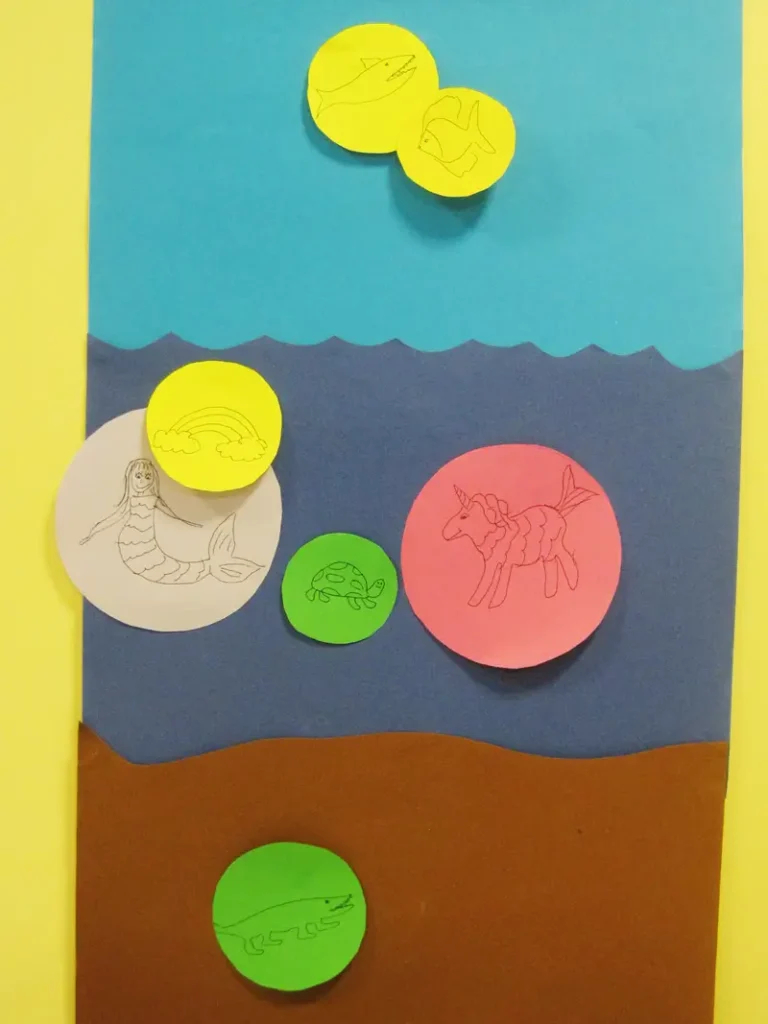
As well as narrating a child’s concrete discovery during a dance, this research story illuminates the potential dynamics of children’s collaborative contributions to this research. Drawn by the material’s irresistible glow, the child stopped dancing and stood still with their fist clenched protectively around their discovery. I interpreted this stop as their previously active embodied voice falling silent, and my swift pedagogical decision turned the moment from a potential problem into a playful adventure. An educator might readily see the child’s withdrawal, halting shared activity over a seemingly irrelevant piece of rubbish, as an obstacle to participatory learning. Yet, committed to collaborating with children and material agencies, I reframed this interruption as a potential opening through my playful attunement.
My child-like curiosity prompted the child to reveal their discovery, leading to its accidental drop and unpredictable bouncing. This view provided me with an impulse to interpret the Styrofoam ball as a dance teacher, sparking novel movement explorations. This way of working aims to amplify children’s voices in dance education and research while affirming their role as collaborators through the authentic enactment of childing, expanding their contributions beyond prescribed participation. For the children, this approach may create an opportunity to learn that their matters actually matter, that their responses are valid and respected, and that their needs are recognised, even when this process involves negotiation and compromise.
Research Discovery: Drawing as a Dance Pedagogical Approach
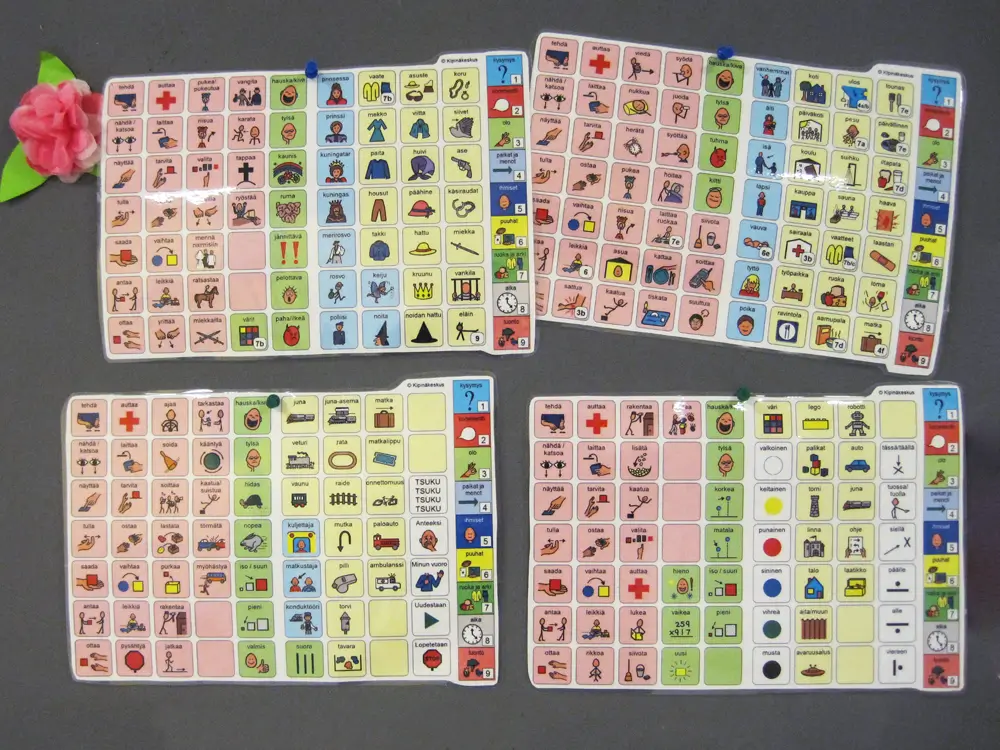
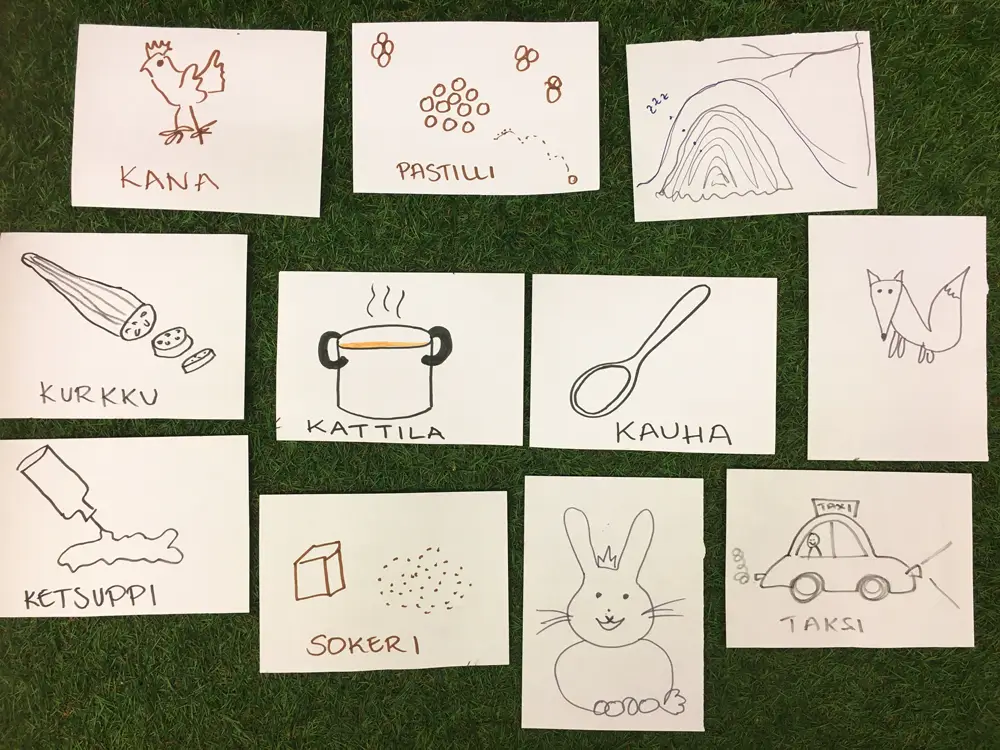
One of the key discoveries in my fieldwork was the emergence of drawing-based methods as a dance-pedagogical approach. During the dancing sessions, it became evident that images were needed to complement verbal and bodily communication. While the daycare centre already employed picture cards for communicative support, my emergent working method required a more creative approach. I therefore adapted Merikoski’s (2001) Rapid Picture Communication method, drawing images in real time as our dance ideas unfolded.
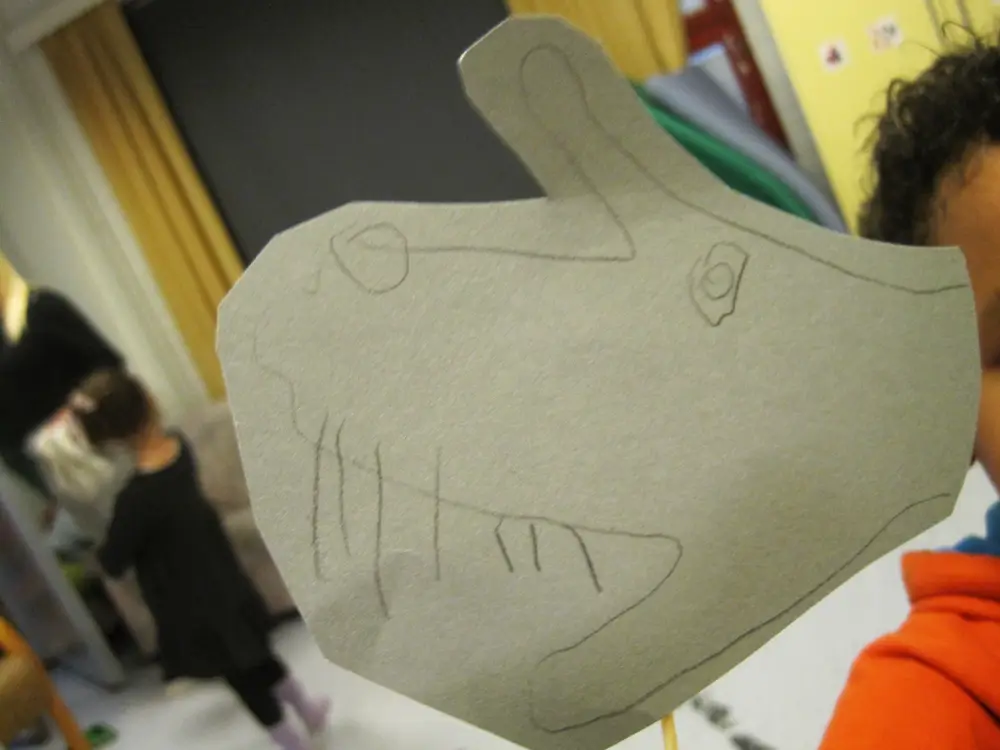
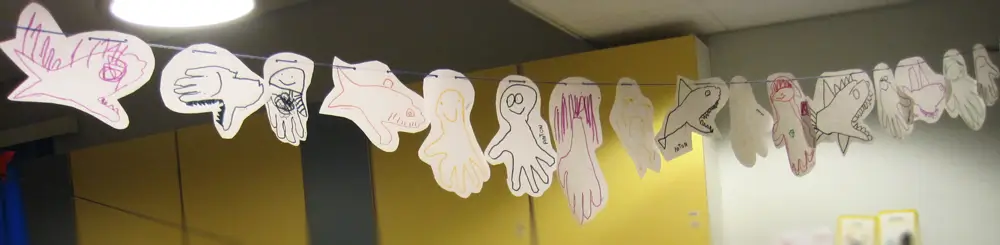
In another drawing experiment, I explored how the body’s potential for transformation could be made visible through art. Together with the children, I traced the contours of their palms, which they then transformed with eyes, teeth, fins, and other imaginative features. The resulting figures were cut out and displayed, highlighting both the transformative nature of play and the parallels between drawing and dance. This activity was further translated into a dance of shadow play in my pre-examined artistic component.
During my deep hanging out in the daycare centre, I remained available to the children outside of the dancing sessions, which led to opportunities for various artistic experiments. One day, a drawing workshop spontaneously emerged, utilising small pieces of paper, markers, and my mobile phone to observe emoji models, resulting in an art exhibition set up under a bench. In this process, playfulness merged with artistic creativity, generating a shared enthusiasm to create an exhibition that not only prioritised children’s access over adults’ but also became a secret place, open only to those invited into the experience by the proud artists. This experience was later translated into an art exhibition under a bridge as part of my pre-examined artistic component.
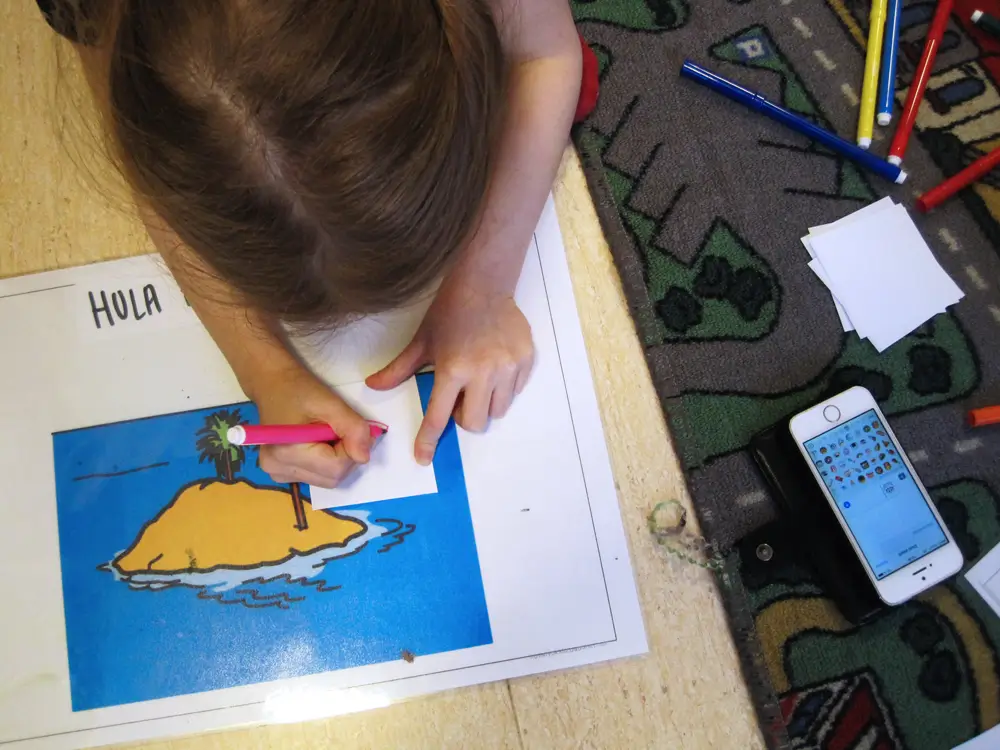
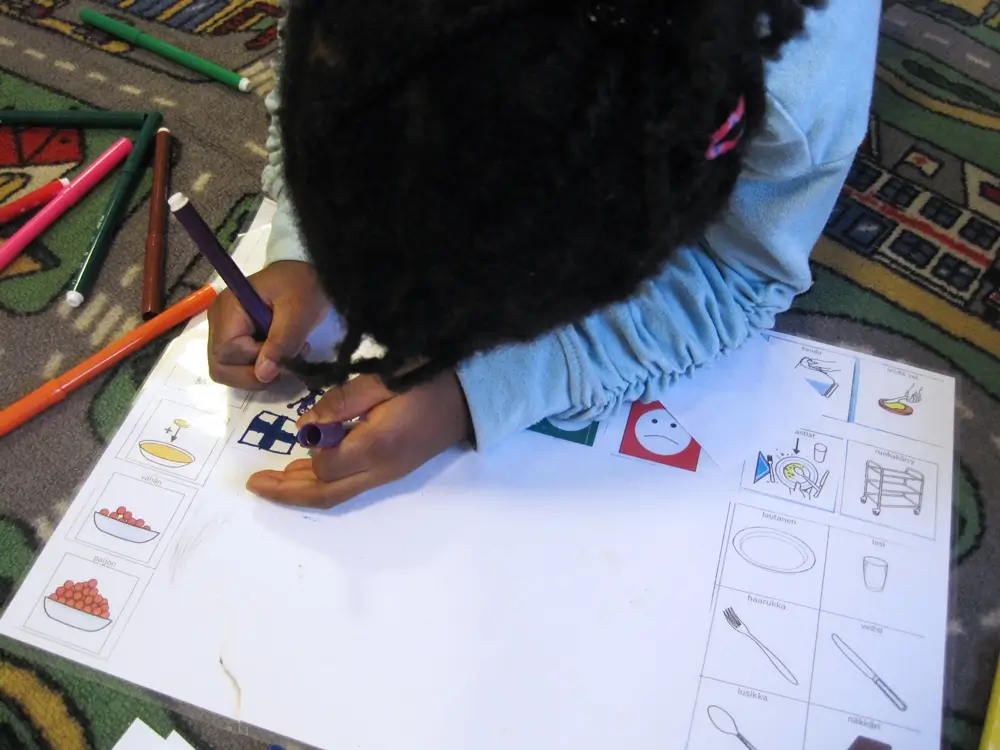
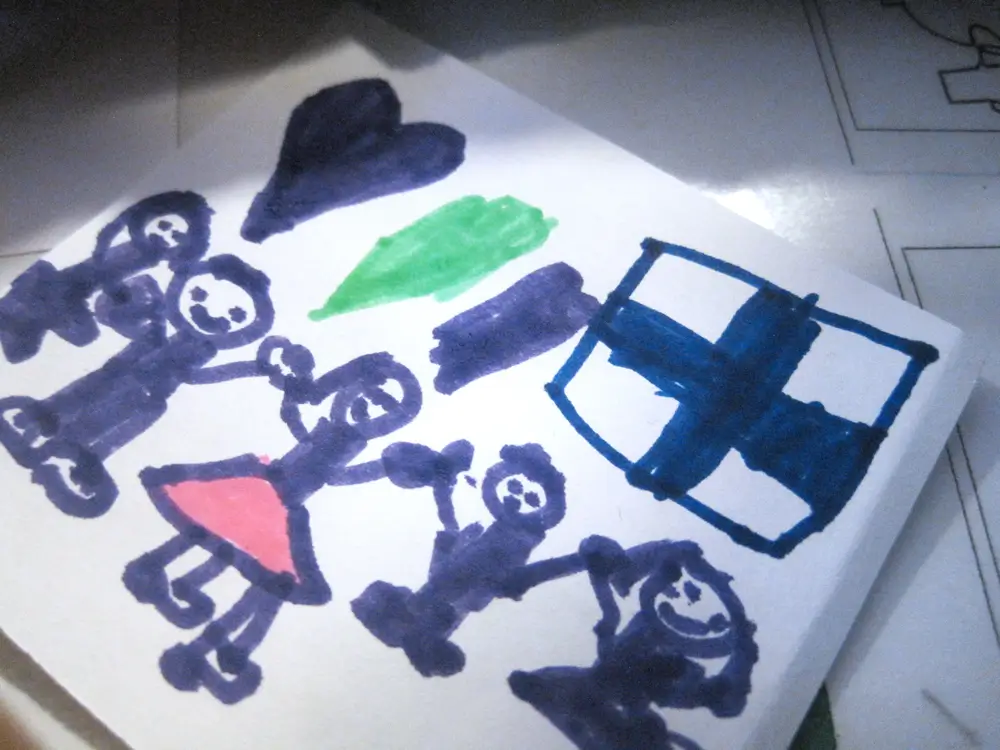
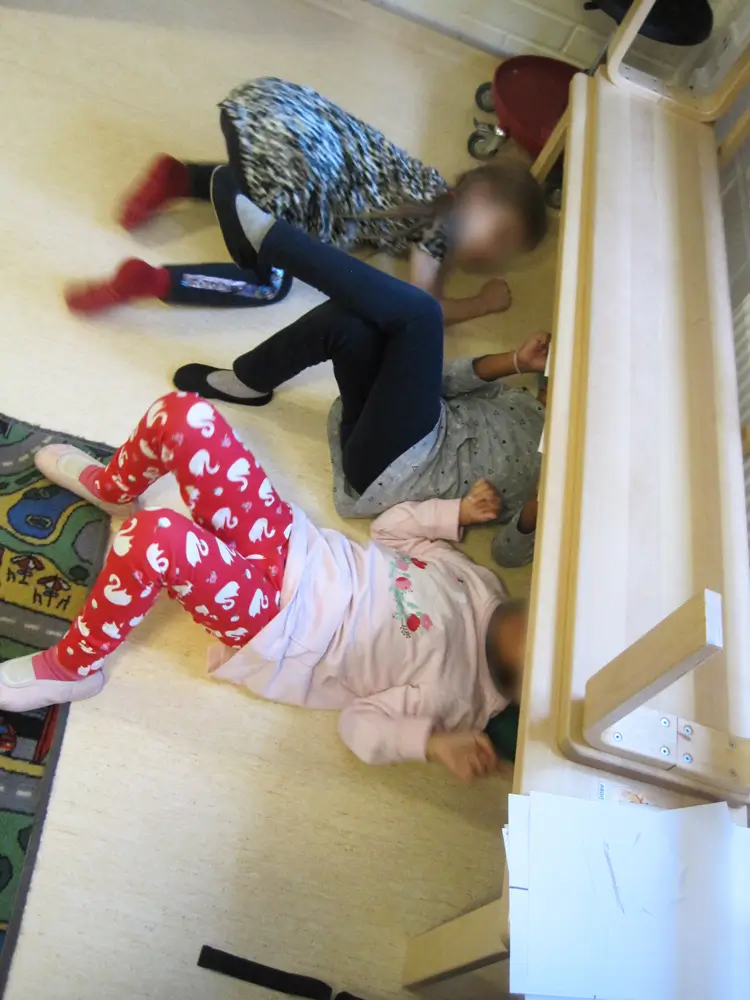
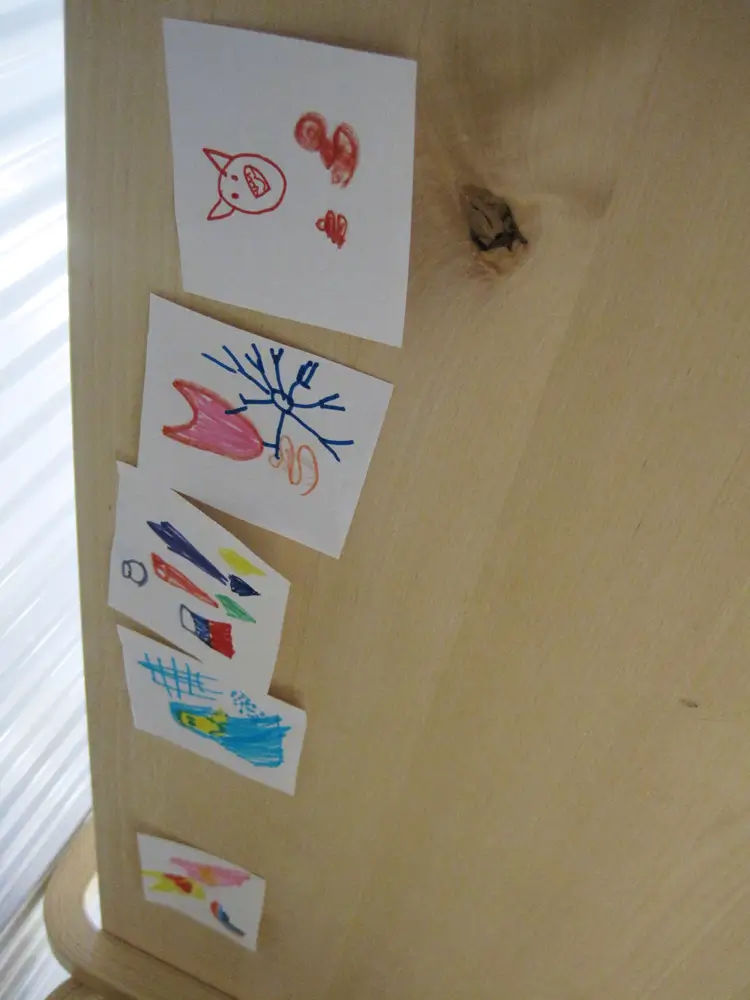
At times, the drawing moments turned out to be surprisingly dynamic and embodied.
28thJanuary 2020
On the metro at 3.50 p.m.
Fieldwork day 19/46
Research year 3/8
I enter the room with a large sheet of paper, and am immediately surrounded by children eager to participate. We spread the paper and markers on the floor in the emerging chaos. I demonstrate drawing a hand that becomes a bird’s tail, but my example matters less than the children’s eagerness to make their own marks. There are complaints about missing colours, pencils that don’t work, about one’s artistic vision not working, and about what someone else is doing. There are escaping markers and escaping caps. There is a mixture of joining in, meandering, pushing, forcing one’s way into the activity, irritation, settling down, focusing, laughing, leaving, and returning. I try to direct the process but soon surrender, instead observing, praising, and admiring. The outcome is a messy, vibrant artwork, which I photograph. For the children, the photo is more interesting than the paper in the real world next to us. They zoom the photo in and out, moving here and there, and especially to their own contributions. In the end, I roll up the paper, only to forget it at the daycare centre—but the photo remains.
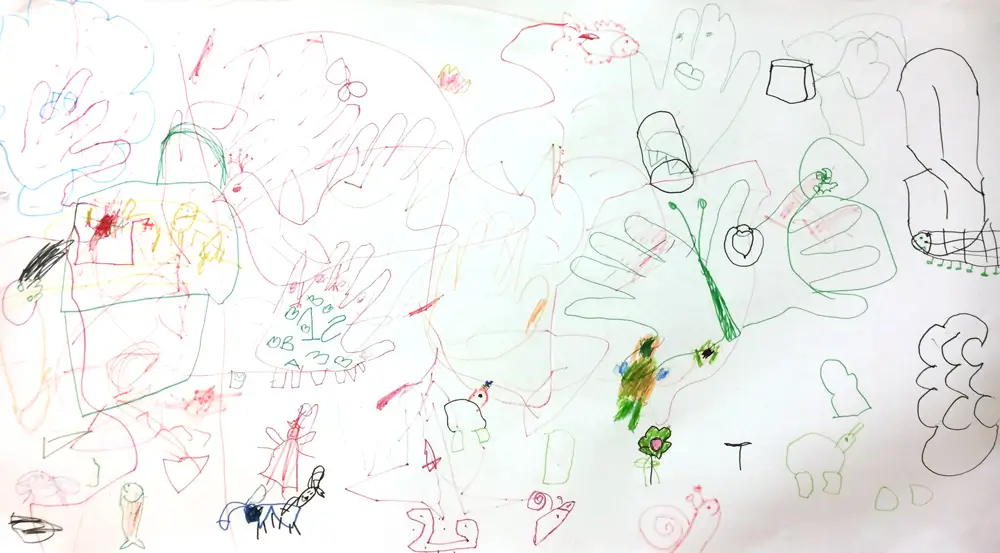
Description of the video: The video shows a large collaborative drawing, viewed by zooming in, out, and across its details. The video was recorded by filming a phone screen while a child examined the drawing.
Here, I decided to follow the flow of the event to lead the process, rather than adhering to my initial plans. This choice led to open-ended experimentation, where the specific content was not my primary concern, but I was interested in exploring what this mode of working would enable. I interpret this messy moment as a process of creating a shared artwork within a collaborative community, which functions as a translation of dance pedagogical approaches into the context of visual art: finding, giving, and taking space among others, creating through movement, and responding to both visual content and social relations in an evolving assemblage. For the children, this setting provided flexible opportunities to join, withdraw from, and rejoin the activity—a space in which they could negotiate their participation not as something imposed on them, but as a matter of their own will and agency.
4.2.2 To See and to Become Seen
17th January 2020
Coffee room at 11.30 a.m.
Fieldwork day 17/46
Research year 3/8
LOOK! LOOK! TUIRE! LOOK AT ME!
Their need for acknowledgement is profound and never-ending.
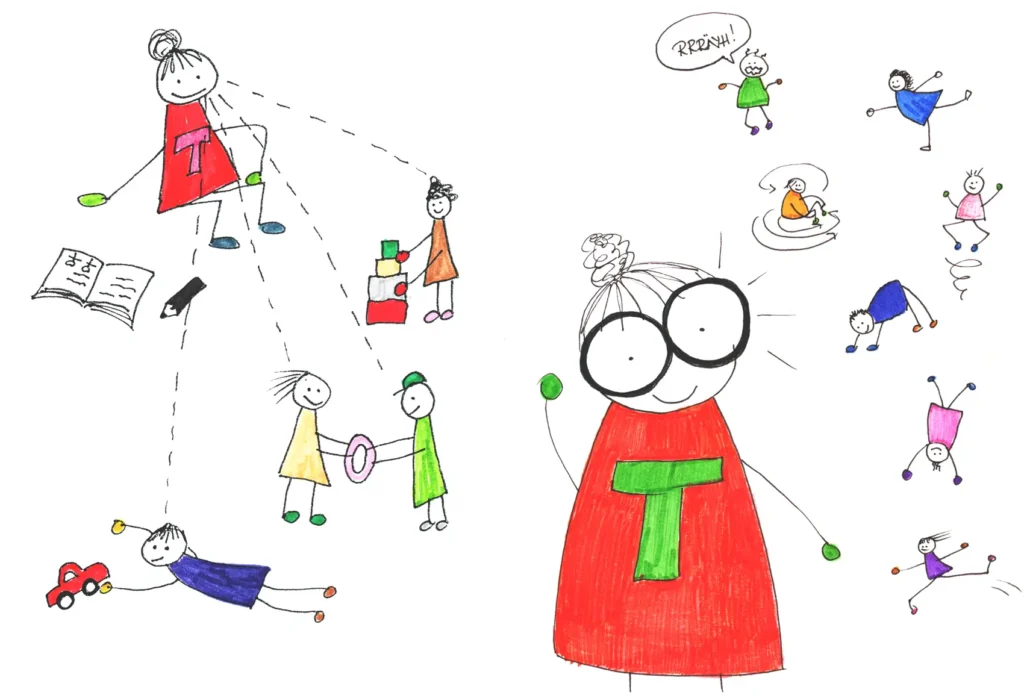
My initial observation that children have a profound need to be seen in daycare resonated with me throughout the entire period and characterised the dance sessions. Often, the volume of sound matched the intensity of their expressions. For me, these responses indicated that embodied ways of working were unfamiliar to the children. Dance provided a space for sharing and showing, thereby increasing the possibilities of being seen in new ways. The bodily dimension is a valuable mode of thinking, expression, and learning that can serve as an alternative to verbal and visual modalities. In this sense, dance can expand the dimensions of being and learning together, contributing to a more holistic understanding of the community.
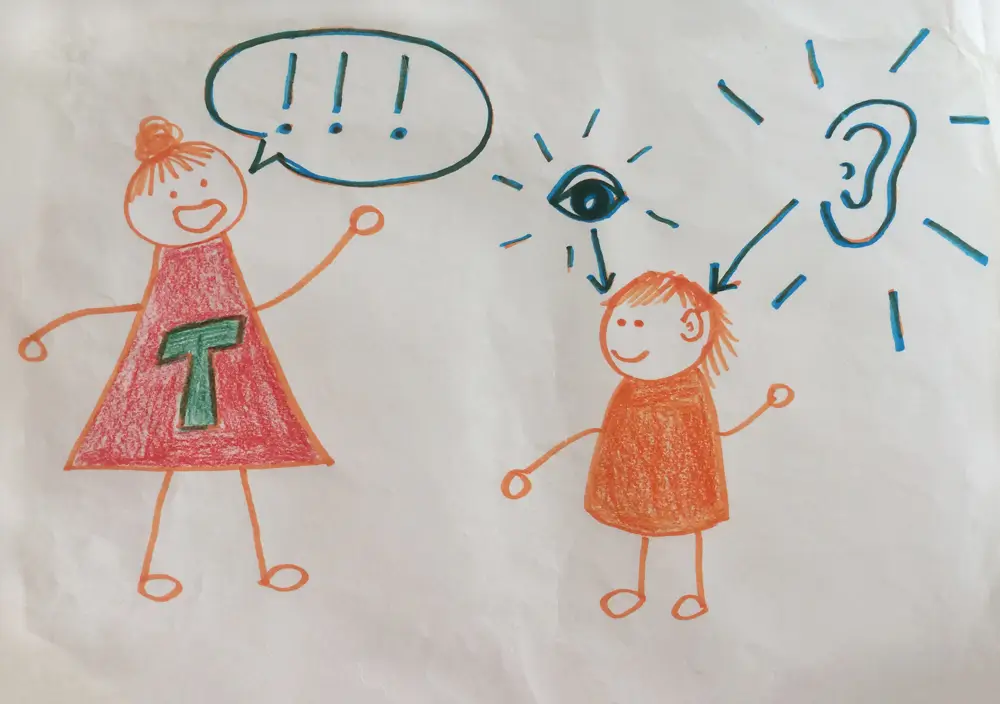
Recognising their fundamental need to be seen, I aimed to balance my attention across all participants, not only those who were most verbally skilled or loudest, a common risk in ECEC group settings identified by Ylikörkkö (2024). When I drew some of my insights for the children at the end of the fieldwork period, my transformation into a dancer–pedagogue–researcher, adapting to the need to be seen, also came to the fore in my drawings.
Embodied Aspects of Seeing
For a dancer–pedagogue–researcher, seeing is inevitably a form of more holistic sensing, encompassing not only the visual dimension but also engaging the whole kinaesthetic and sensory system of the body.
On lunch break, 29th October 2019
Re-turned to during a later visit, 18th May 2022
Fieldwork day 3/46
Research years 3/8 and 5/8
Daycare centres are all different, yet in many ways similar. For me, the differences manifest in the atmosphere created by the material framework, together with the children and staff. I have experienced very different atmospheres in different groups in the same daycare centre, even though we have all been under the same roof. There have been hopeful and warmly cheerful atmospheres, and, at the other end of the continuum, rooms saturated with a bleak, perpetual sense of heaviness. However, there’s always a sense of activity and liveliness, thanks to the children (of course, there are also quiet and withdrawn ones).
From a posthuman perspective, seeing is a relational activity that unfolds with and in the world, shaping both the seer and the seen (Giorza and Murris 2021). Giorza and Murris (2021, 19) argue that noticing and sensing are more holistic than simply looking and seeing, describing this view as engaging ‘the “eyes” of the body and the skin.’ In this sense, seeing merges with listening, allowing encounters with others even without direct visual contact—unlike the fixed gaze, which is often tied to monitoring or control. This understanding resonates with my conceptualisation of listening as a relational practice, which I refer to as Embodied Listening and discuss under the proposition To Listen. Here, I examine how the proposition To See and to Become Seen extends into the interplay between embodied and digital modes.
Digital Seeing: Threat or Possibility?
Overall, the audiovisual documentation reflected the intensity and complexity of the daycare centre as a research environment. In the following section, I draw on my diary notes, observations, and audiovisual materials to further explore these complexities in dialogue with existing scholarship.
Reflections on fieldwork
20th September 2020
Research year 4/8
Since the cameras were not with me from the beginning, they were not standard equipment for me as a researcher. The children did not get used to me working with a camera, and neither did I. They became an additional material aspect, affecting the situation regardless of my intentions.
My documentation relied most on my research diary—a notebook I carried with me—where I recorded thoughts and reflections as text and drawings. At first, the absence of video or photo documentation made it seem as though I was not documenting at all, forcing me to rely on my pedagogical documentation when deciding what to record and how to express it. This limitation underscored the nature of pedagogical documentation as partial and selective rather than neutral or comprehensive. Rautio’s (2014) account of embodied memories as research resonates with my view of the body as a multichannel recording device—an idea that freed me from equating audiovisual documentation with truth and encouraged trust in the body’s capacity to be affected and to remember.
Video recordings were rare, as arranging them proved more difficult than anticipated. Children’s groups were organised on pedagogical rather than consent-based grounds, and the fast-paced daycare environment often left me with a sense of inadequacy. I continually navigated the assemblage of dancer, pedagogue, and researcher—roles that were frequently in tension. While the dance sessions demanded holistic attunement and creativity, the researcher in me was preoccupied with consent protocols and the practicalities of documentation. Digital devices, moreover, emerged as agential forces in their own right, resisting full control and complicating the process: I failed to charge and the battery ran out, or I accidentally shut down the device without realising it. There were also a few instances when someone who had not given consent to audiovisual documentation unexpectedly joined the dance session, preventing me from documenting it. These challenges highlighted the friction between the children’s fluid everyday lives in daycare and the rigid framework of research documentation practices. Consequently, the children’s right to participate in dance took precedence over my right to document the research.
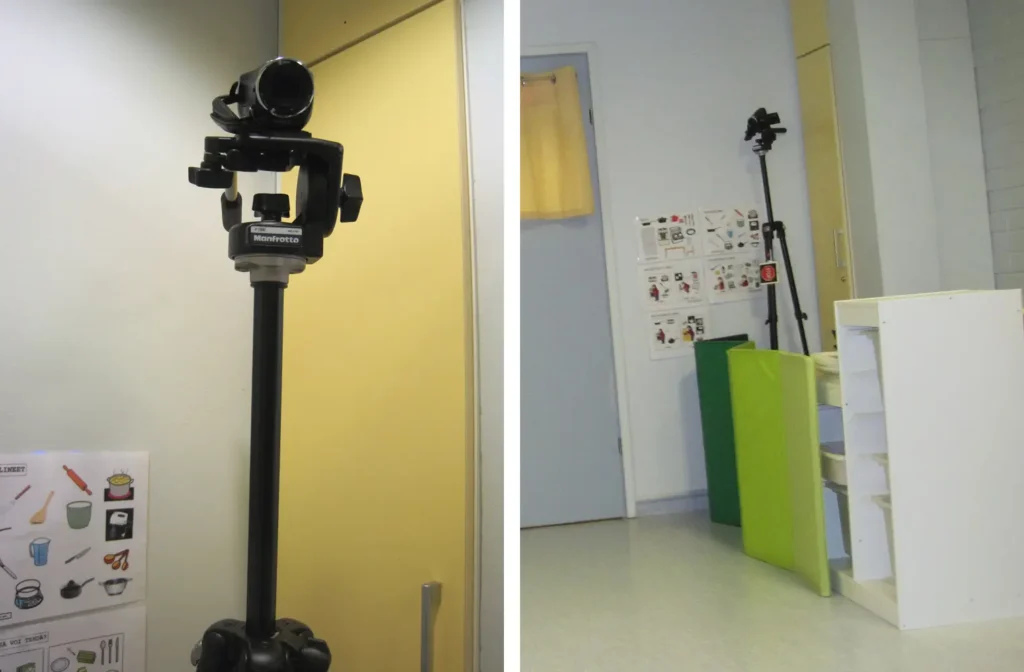
The video camera’s presence strongly affected the children, quickly drawing their attention and prompting performances for the lens. The effect was particularly noticeable when they could see themselves on the screen, using it as a mirror to observe their facial expressions, postures, and movements. Such moments recall the end of the drawing workshop, where the photograph of an artwork proved more captivating than the artwork itself—an indication that digital modes of viewing often hold greater allure than embodied ones. Reflecting on these observations made me reconsider the necessity of documentation, given its capacity to actively shape events. As Davies (2014) notes, technology in research carries the risk of altering contexts and constraining what might otherwise emerge. Although the device had an impact, in practice it was often forgotten as sessions progressed.
Building on Tesar’s (2017) work with children documenting their daycare experiences, I adopted a co-researching approach by providing old digital cameras for the children to capture their own perspectives. Treated as toys due to their second-hand status, the cameras invited playful and low-stakes engagement, with only minimal agreed guidelines. While the cameras and the photos taken by the children were fun and engaging, the activity also had its share of problematic aspects. From a dance pedagogical perspective, the cameras caused more harm than good.
11th February 2020
Metro station at 11.50 a.m.
Fieldwork day 27/46
Research year 3/8
I wish I had been able to record the session on video. The children’s use of cameras caused the dancing to stop, and any movement to freeze. To top it all off, the cleaner popped in unexpectedly and got excited about the photographing. They seemed amazed at the children holding such valuable items so freely. I put a camera in their hand. They took some photos and didn’t want to give the camera back to the kids.
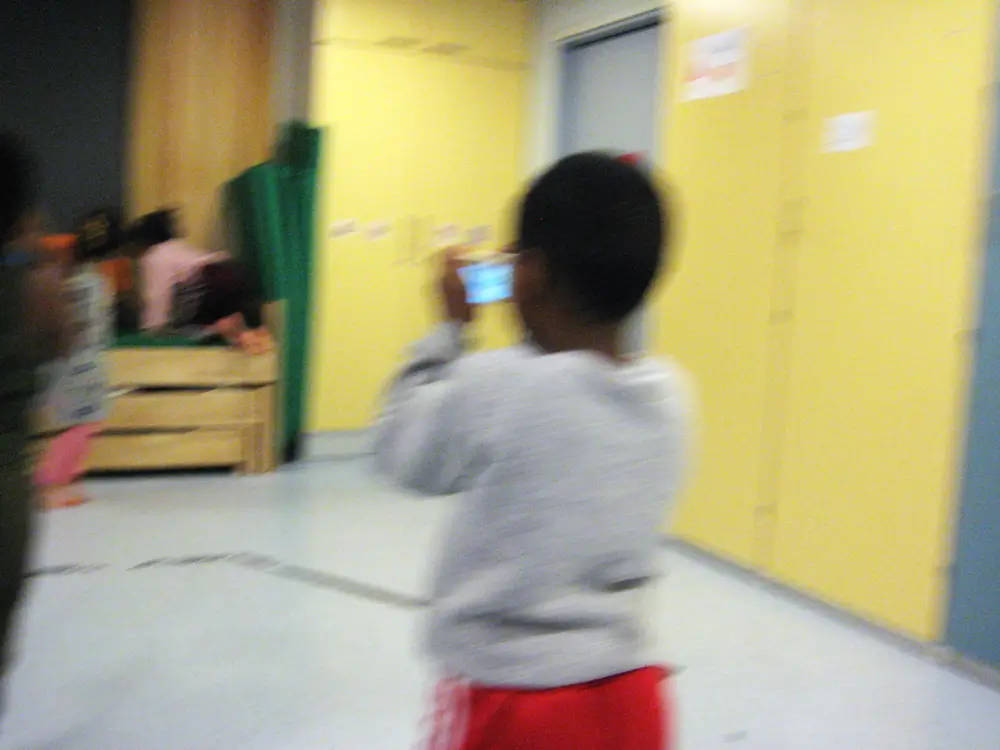
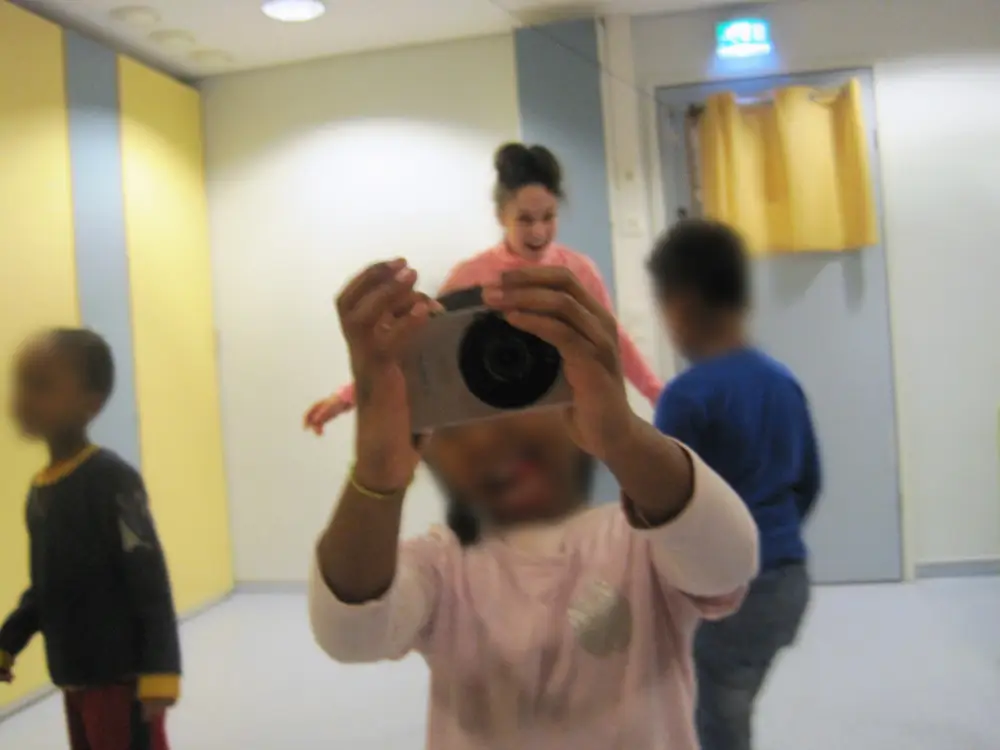
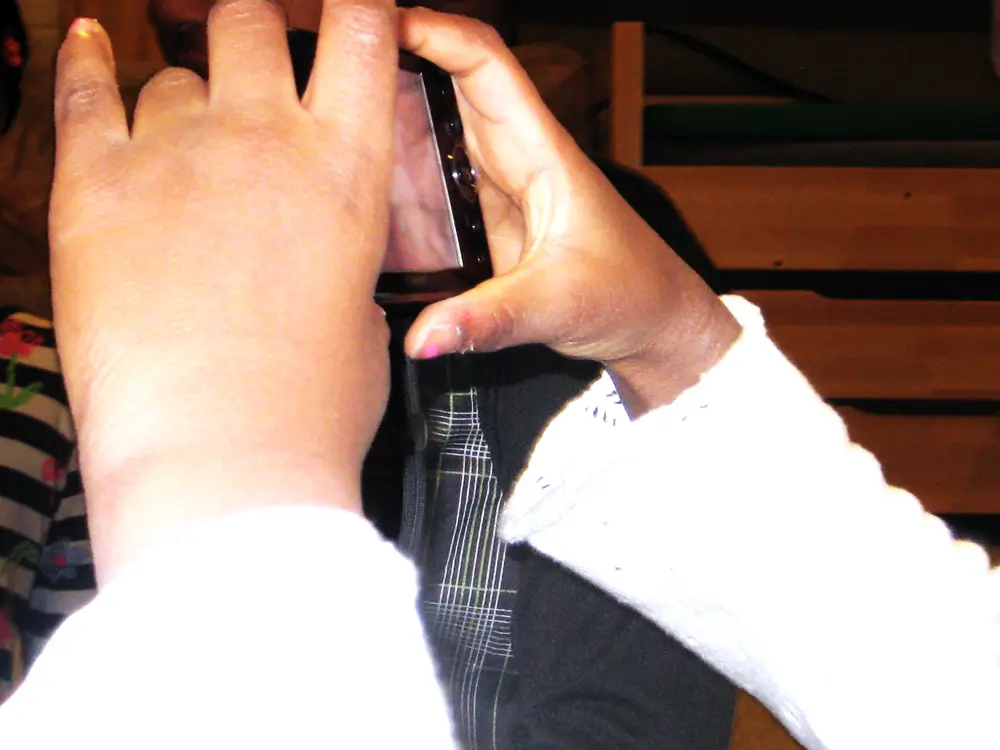
The adults were mostly concerned about the value of the cameras and the risk of the children breaking them. For the children, however, this approach was a rare opportunity to participate in documenting daycare events, which is not the usual approach and is most often reserved for adults. As valuable as this was, it would have been beneficial to spend more time helping the children learn the technique and learn to trust that everyone would have the opportunity both to dance and to document.
Inevitably, situations grew somewhat chaotic with the cameras, resulting in a vast number of miscellaneous photographs. Since the cameras were passed quickly from one child to another, it was difficult to determine who took which picture, and ultimately, no one was quite sure which photo belonged to whom. There simply wasn’t time to label the pictures, even after the dance, as we were always rushing to reach the lunch table, head outside, or make space for the next activity.
However, the allure of the images was truly magical during the rare moments when we could admire the photo gallery together. The pictures were captivating, and interestingly, the less flattering the photo of an adult, the funnier and more enjoyable it seemed to everyone.

I planned to work with the children on the photos, collectively choosing which ones to print. We aimed to rework these images for the exhibition for the artistic component, incorporating layering techniques to create collaborative pieces of art. Unfortunately, due to the pandemic, this project could not take place.
22nd September 2020
Research year 4/8
Now the photos serve as memories, capturing specific moments, moods, events, sounds, people, and spaces. They affect me differently than other materials from the fieldwork, I remember differently through them than through my own photos, videos, drawings and writings.
From a posthuman perspective, this experience elucidates how materials possess the capacity to attune, evoke, and sensitise us to affective resonances associated with past experiences and events (Barad 2007; Bennett 2010). This understanding further highlights the importance of multimodal documentation, as it enables more dimensions for analytical engagement.
4.2.3 To Listen
Relying on internal observations instead of audiovisual recordings compelled me to practice active listening, engaging my body as a living recording device. From this way of working emerged the concept of Embodied Listening—a holistic process of kinaesthetic attunement during dance pedagogical events that enhances creativity and sensitivity in improvisation. Furthermore, these aspects of listening align with intra-active pedagogy, which entails ‘being in a state of a listening dialogue with children as well as with matter, artefacts and environments’ (Lenz Taguchi 2010, 61). Through this approach, it may become possible to become more inclusive of children’s diverse ways of thinking and strategies of doing through their embodied modes of activity, as well as to make space for the materials and environments to participate as active agencies in our practices. Below I outline the steps involved in practising Embodied Listening and its methodological assemblage with the Hunting–Gathering approach.
Methodological Steps towards Embodied Listening
Tuning into the body and embodied sensations offers profound insights, constituting a radical approach to knowledge production. As a dancer–pedagogue–researcher, I understand listening as part of a holistic framework where multisensory experience, participation, embodied practice, ethics, and interpersonal encounters are deeply interwoven. Listening extends beyond what is already known, supporting the ethical stance of embracing not knowing (Davies 2014). Here, listening is understood as openness to being affected by difference ‘in all its multiplicity as it emerges in each moment in between oneself and another’ (Davies 2014, 1). Svendler Nielsen (2012) similarly describes kinaesthetic empathy as listening with the whole body. Cultivating such practices can strengthen communication and may be more widely integrated into educational frameworks (Pape-Pedersen 2022).
To make space for embodied knowledge and to deepen my sensorial attunement during the fieldwork, I began actively listening to and noting my body’s sensations. Adapting Cameron’s (1999) idea of morning pages, I used my working diary not to spark creativity but to attune to my primary research tool—my body—and sharpen my perceptual sensitivity. The 16-minute metro rides to and from the daycare centre provided a regular frame for this practice, during which I recorded sensations ranging from happiness and strength to stress, tension, tiredness, and the subtle flows of breath and energy.
15th November 2019
On the metro at about 8.55 a.m.
Fieldwork day 9/46
Research year 3/8
For today’s work, I instructed myself to take it easy. To pull back a little from the surface of events, towards the centre of my bubble. To hear and see better and have time to react to others, not myself.
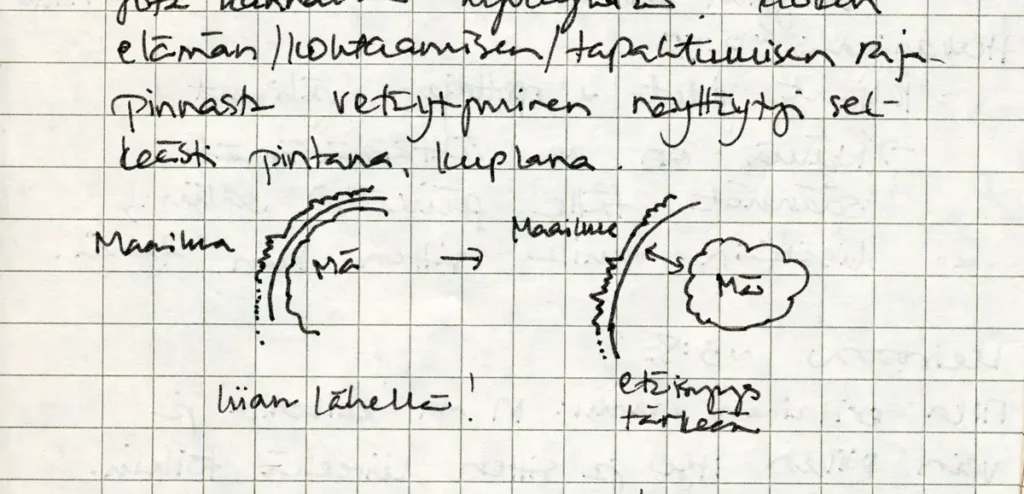
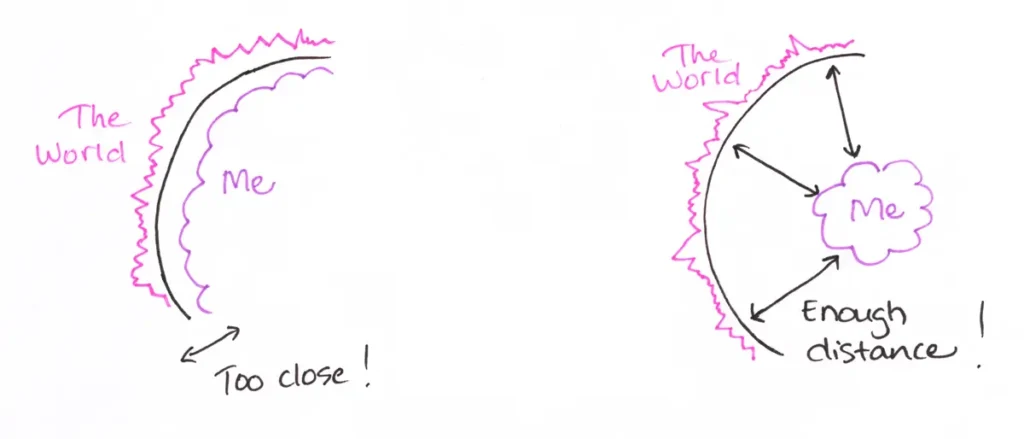
This withdrawal within the entangled research assemblage of events and encounters became clearly visible as a surface, a bubble. This note reflects my concern about my tendency to look for quick solutions and to help the children too eagerly, which might counteract their opportunities for discovery, problem-solving, and creativity. Simultaneously, this experience constituted one iteration toward a practice of writing–drawing–thinking as a methodological assemblage, extending thought beyond verbal expression through drawing, a practice I detail in the section ‘Warming Up’ with Methodology.
In the afternoons, I often wrote down my last insights on events and my observations of the day, but occasionally I also listened to my transformed body. I sought to attend to the bodily traces and echoes of the day, understanding these layered experiences as an important mode of knowing that complemented my observational insights. I was struck by the contrast in my embodied states between the morning and the afternoon. The time in the daycare centre produced not only tiredness, but a heightened embodied alertness and sharpness, which became distinctly evident in my body on the way home.
5th November 2019
On the metro on the way home, at 3.15 p.m.
Fieldwork day 5/46
Research year 3/8
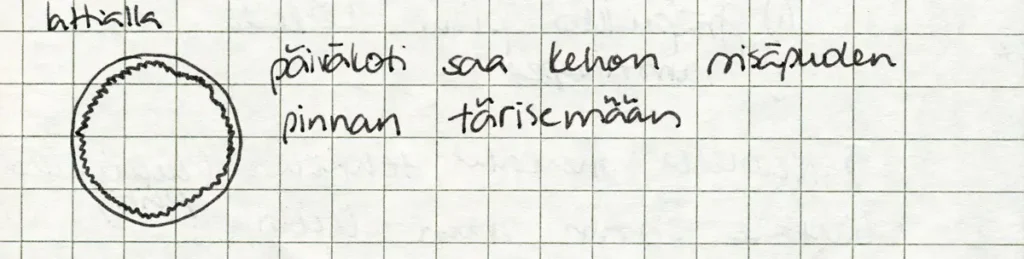
Daycare makes the inner surface of the body tremble.
Although listening to the body and translating those findings into written form can be quite challenging, this writing practice fosters an artistic and aesthetic approach. It allows different modalities of expression—dancing, listening, writing, and drawing—to complement one another. In addition, this practice offers a way to challenge the dominance of words over images, a dynamic deeply ingrained in Western culture, by suggesting that words and images are inseparably linked, functioning as equal partners in meaning-making and knowledge construction. This aim aligns with Sousanis’ (2015) creative work, which explores how knowledge, perception, and scholarship emerge through the interplay of text, visual metaphor, philosophy, art, and science. The key aspect of Embodied Listening and writing–drawing– thinking as forms of expression is their ability to open pathways of understanding that extend beyond my usual comprehension. This approach embodies my cognitive processing as a holistic practice while also producing tangible outcomes. Over time, it became an important method of meaning-making within this study.
Hearing the Material Agencies
For the children, listening to spoken instructions and engaging in dance tasks proved more challenging than I anticipated. Retrospectively, I recognised these difficulties as stemming from a clash of different educational cultures. To support communication and safety, I supplemented my speech with instant drawings and pre-made signs reminding children to listen, avoid touching equipment such as the laptop used for music, and refrain from unsafe actions like climbing shelves. Rather than adopting an authoritarian approach, I used these signs to share authority and maintain a balance between structure and freedom.
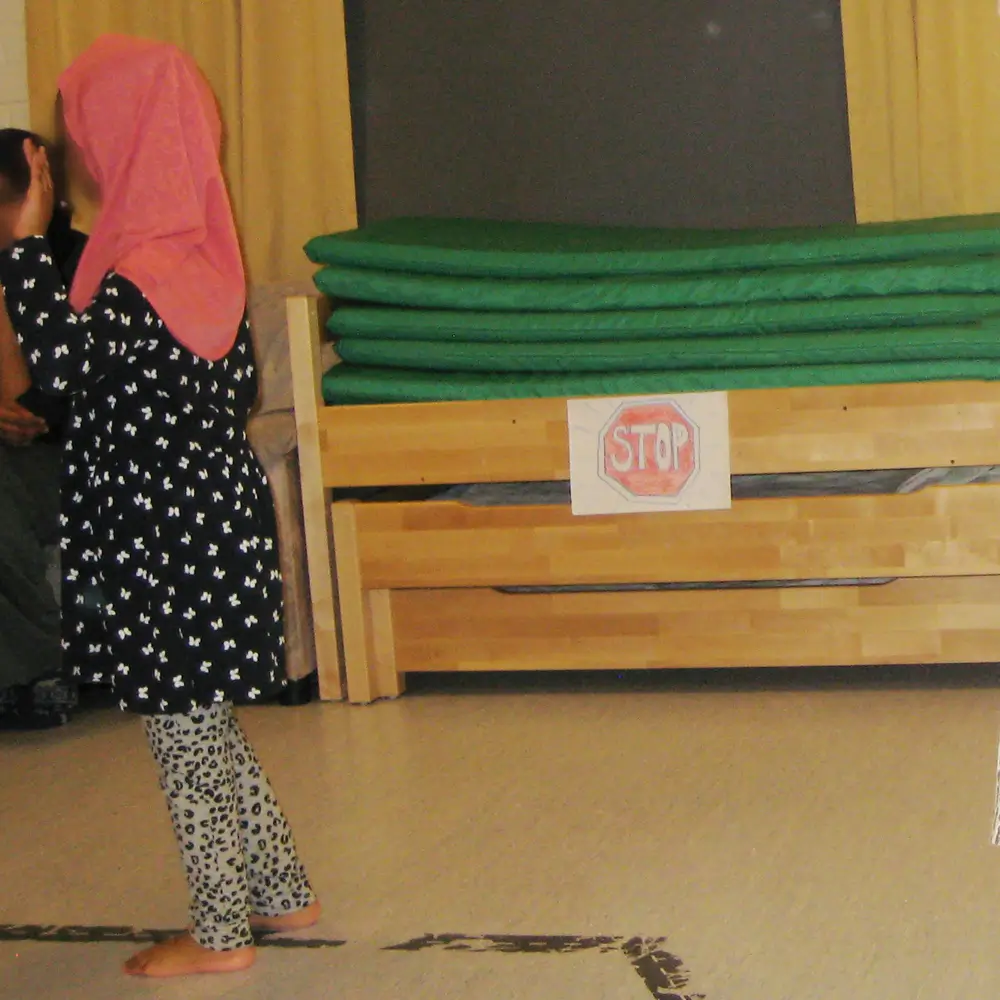
To support the aspect of listening and to avoid the excess of a loud voice, I started using music as a guide for our dancing, which was one of the familiar practices I used to apply in the Basic Education in the Arts (BEA) framework. Through clear music that guided actions and supported the movement of the dance, the children were able to take ownership of the exercises, to perceive and understand the connection between the action and the music. For example, children easily grasped the idea of dancing on slippery ice to accompanying music—balancing, falling, getting up, and sliding again. Tumbling together created a joyful sense of losing balance and meeting the floor, not through strict synchrony but through shared focus expressed in individual ways. Music played a crucial role in shaping this collective process, guiding us to dance through listening and to listen through dancing. Next, I will discuss how listening can extend beyond music to include a holistic attunement to the body and its entanglements through an assemblage of my Hunting–Gathering method with the Embodied Listening approach.
Research Discovery: The Methodological Assemblage of Hunting–Gathering with Embodied Listening
Embodied Listening as a dance pedagogical approach emerged from my practice of morning pages, the challenges of listening I encountered in the daycare centre (Colliander 2024a; Colliander and Anttila 2022), and my intra-active orientation. Embodied Listening became further entangled with my Hunting–Gathering method to form a methodological assemblage, which I also elaborate on in a separate publication (Colliander 2026, forthcoming). I refer to this entanglement as a methodological assemblage because it involves the entanglement of two dance pedagogical methods that extend into a research methodology. In the context of this commentary, my aim is to enter into dialogue with my earlier theorisation and to extend it with a stronger relational emphasis, drawing on Deleuze’s conception of learning as becoming to develop my practice of dancing-with, aligned with my objective of shifting from dance pedagogies for children toward dance pedagogies with children.
Conceptually, my approach to Embodied Listening draws on the Reggio Emilia philosophy’s ‘pedagogy of listening’ (Rinaldi 2021), reinterpreted by Davies (2014) through an intra-active lens as ‘emergent listening’. This line of thought is further theorised by Murris (2016) as ‘listening without organs,’ building on Deleuze and Guattari’s (1987) notion of the body without organs. Aligned with what I frame as embodied listening or ‘becoming all ears’ (Colliander 2026, forthcoming), Murris (2016) emphasises listening as a process that exceeds organ-centric perceptions. Both perspectives foreground listening as a holistic, embodied practice that transcends conventional, instrumental understandings and opens possibilities for more ethical relations, resonating strongly with intra-active dance pedagogy.
The emergence of Embodied Listening prompted me to integrate it with the Hunting–Gathering method, thereby shifting the emphasis from visual observation by an external spectator to the embodied sensation of an active participant. This orientation cultivates somatic sensibility, an essential resource in dance education, enabling one to ‘feel the movement from the inside’ (Stinson 2010, 140). It involves gathering movements by ‘trying them on’ or ‘tasting’ them—both metaphors that evoke a material, sensory engagement with practice. Such an approach resonates with Svendler Nielsen’s (2009) observation that the researcher’s bodily engagement intensifies communication, as children tend to participate more fully compared to situations where the researcher remains a distant observer. The methodological assemblage of Hunting–Gathering with Embodied Listening transforms encounters into embodied learning for both children and researchers alike. This dynamic parallels Deleuze’s critique of imitation as mere reproduction:
We learn nothing from those, who say: ‘Do as I do’. Our only teachers are those who tell us to ‘do with me’, and are able to emit signs to be developed in heterogeneity rather that propose gestures for us to reproduce. (Deleuze 1994, 23)
This passage strongly resonates with my thinking. Deleuze’s conception of teaching as a process of doing with constitutes the core of my methodological assemblage of Hunting–Gathering with Embodied Listening. The dimension of dancing-with, in which the educator engages in dance improvisation as an active artistic learning partner, creates conditions in which the teacher can foster playful exploration as an embodied gesture of emitting signs, as Deleuze writes. Beyond gathering and transforming children’s dance movements, the signs I emit in practice consist of subtle forms of relational connection—such as offering encouraging eye contact, establishing close bodily proximity, smiling, nodding, or verbal expression. This approach reconfigures dance pedagogy from mimicking movement as reflection aiming to repeat—what Deleuze terms doing as I do—into mimicking with a difference, aimed at doing with as in diffracting. This shift underscores my understanding of dance pedagogy as not primarily an educational practice but an artistic one (Colliander and Anttila 2022). Furthermore, this process—what I regard as a mutually inclusive and intertwined practice of reflective diffraction—connects this hands-on artistic practice with my research method of diffractive reading.
As the directions and qualities of movements vary, new movement patterns begin to emerge, creating a diffractive listening experience that resonates throughout the entire body. The insights derived from this practice depend on openness, sensitivity, and a mindful attunement to the body–mind connection, fostering situational knowledge and a deeper understanding. This process is inherently intra-active, because ‘what is being selected and formed is not completely of your choosing, because the world is improvising too; and that dance, your interaction with the world, forms you just as you form the world’ (De Spain 2003, 37).
During the article writing process (Colliander 2026, forthcoming), I not only engaged with the video footage through external observation using the Hunting–Gathering method, but also through dancing-with by engaging with the material through the methodological assemblage of Hunting–Gathering with Embodied Listening. Finally, my process culminated in reflection through the Verbs and Lines method. I narrate this re-turning to the turtle dance—previously discussed as an example of the Hunting–Gathering method in the ‘Warming Up’ with Methodology section—in the following paragraphs.
Improvisational dance exploring the theme of turtles
Re-turning to research material: Outside observations on video footage
Spring 2025
Research year 8/8
Children form small, round shapes on the floor, swaying and rocking. The bodies start moving on their knees, hands and forearms gliding on the floor. ‘These are slow!’ One child sits, pointing to another child’s movements and exploring them with their hands. A medley of rising arms, waving heads, legs extending far back, and feet in the air. (Colliander 2026, forthcoming)
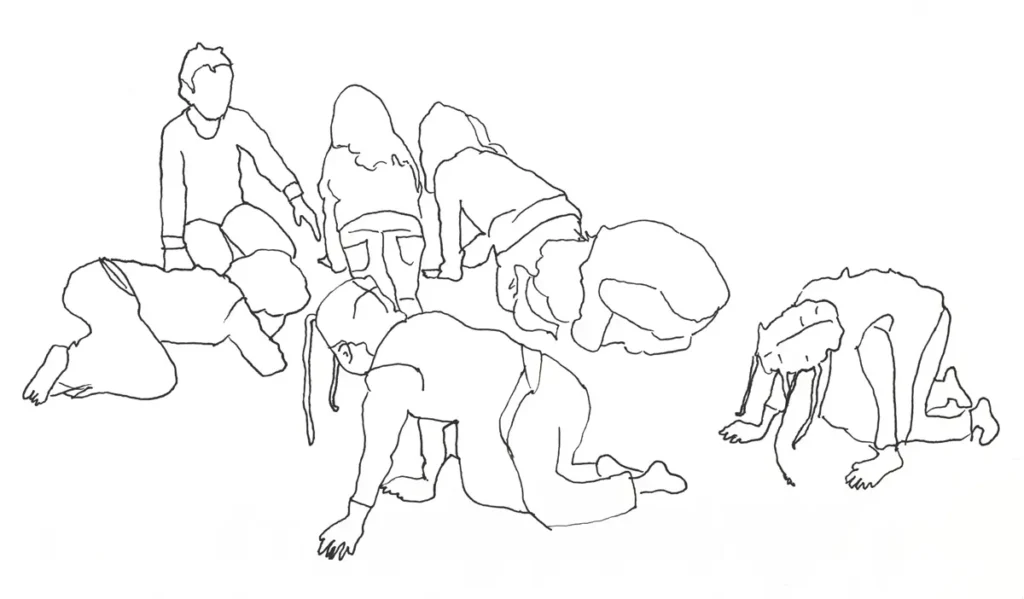
Drawing on MacRae’s (2022) drawing-based method, this image was created by drawing multiple successive paused moments from the video footage on a piece of paper placed directly on my laptop screen.
Watching the Turtles dance through the video, I sensed the potential of gathering movements such as rocking and gliding as impulses for collective exploration. Yet the most glowing movement was the simple act of pointing, not a dance movement in itself but rich with possibility. I imagined how pinpointing could evolve—extending from the hand to the legs, head, and beyond—opening reciprocal opportunities and relational pathways for further exploration.
Thereafter, I felt the need to dance with the video and apply the Verbs and Lines exercise to reflect on the experience.
Embodied Listening to video footage of the ‘turtles’ dance
Spring 2025
Research year 8/8
My shins and forearms rest effortlessly on the floor. Rounding my back and exhaling with a sigh helps my head reach the floor. My spine and head move in a gentle, swaying motion. ‘These are slow!’ Hearing this reminds me to move in space. The weight shifts to my palms. A child’s demonstration with their hands inspires me to play with walking arms. Stretchy, persistent lifts and weighty, slow landings on the floor.
Right after dancing-with the video, still on the floor, I revisit the experience using the Verbs and Lines approach. As I reflect on the experience of rounding my body at the beginning, a collection of curved lines emerges on the paper. The energy within my body–pen assemblage transforms as the experience of moving with my hands produces up-and-down shifting lines. The grounding sensation I felt when my hands connected with the floor makes me complete the curves, with a heightened intensity in the form of small ovals. The verbs emerge one by one, and with ease I drop them on the paper, crossing the drawing like my thoughts in my body–mind during the dance. (Colliander 2026, forthcoming)
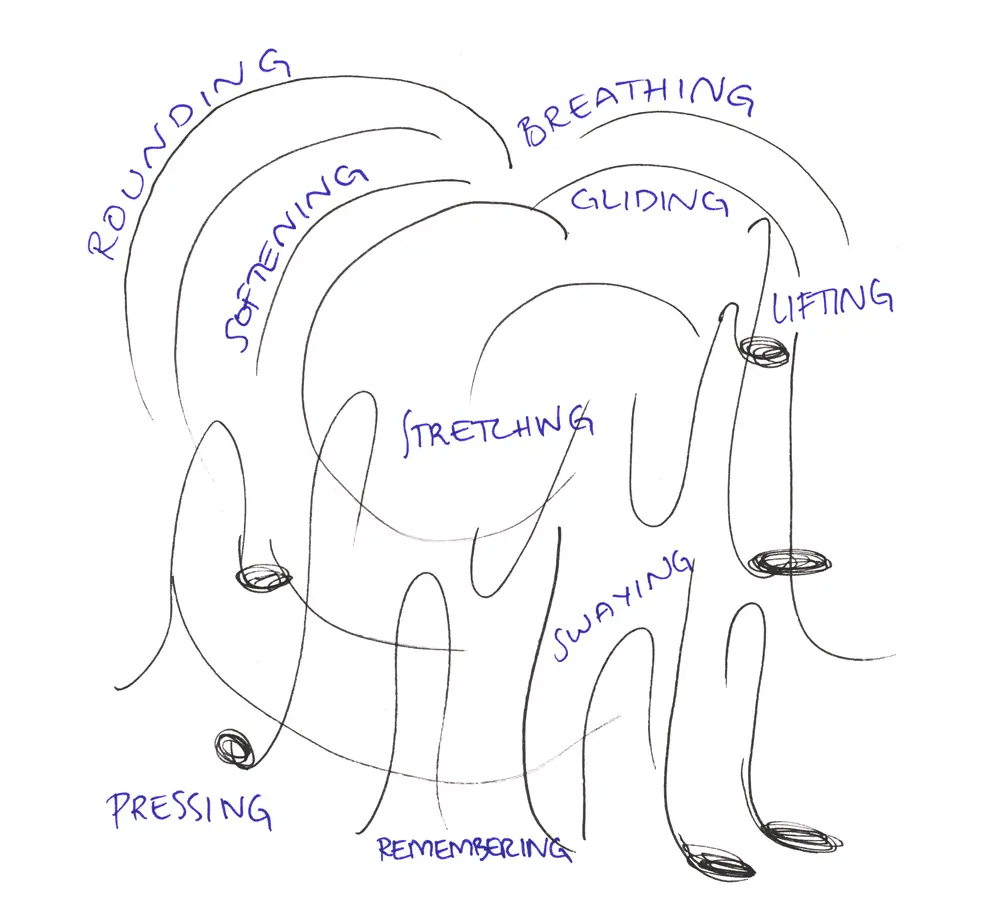
During the first phase of my re-turning, I engaged in dancing-with the session, imagining through active participation what I could gather from that moment and propose to the participants. I imagined gathering the quality of slowness through an exploration of shifting between movement, slowing, and stopping, which might have unfolded into a playful practice of attuning to other bodies—everyone pausing when one person stops and resuming movement when a collective decision to continue arises.
The Verbs and Lines exercise offers a means to visualise and conceptualise the experiences of dancing. In this way, embodied experiences within the processes of learning and knowledge-building are rendered shareable through documentation that carries both aesthetic and pedagogical value. Moreover, these visualisations can be further activated through a diffractive approach, for example by using them as points of departure for dancing by drawing the lines into space with our bodies.
Embodied Listening—especially when combined with the improvisational method of Hunting–Gathering—constitutes an epistemic practice of knowing-in-moving, foregrounding relationality and the sensorial capacities of the body. In this approach, listening is multisensory, integrating perception into a process of simultaneous doing and knowing. Such practice resonates with ethico-onto-epistemological thinking in that it collapses the dichotomy between knowing and doing, producing situated knowledge entangled with situated action (Cozza and Gherardi 2023).
For a dancer–pedagogue–researcher working with improvisation, Embodied Listening provides a concrete approach to attune to and amplify children’s sensorial imagination. Pollitt, Blaise, and Rooney (2021) identify a similar bodily listening in their exploration of dancing with the weather in early childhood education and care. What is significant here is that learning becomes relational, as children begin to recognise themselves in others by perceiving their own movements through the movements of others’ bodies (Svendler Nielsen et al. 2020; Svendler Nielsen and Samuel 2019). Similarly, in analysing the pre-examined artistic component, I was unexpectedly struck by the recognition of myself in the movements of the children in the video footage—an embodied experience that offered me an insight into intra-active relationality.
4.2.4 To Move and to Be Moved
In this section, I explore the interplay of moving and being moved, focusing on how material invitations act as active, agential forces (Bennett 2010) and partners to think-with. I examine dance pedagogical approaches through the intersections of ideas, experiences, events, and materials within an educational setting where humans are not privileged over other agents. This perspective aligns with new materialist thought, supporting the intra-active lens of my inquiry and highlighting the possibilities that emerge when diverse materials are invited into dance pedagogy.
Moving with Materials
Most of the daycare spaces served multiple purposes, with each activity reshaping the room to meet its needs. From the perspective of spatial sociology, Fuller and Löw (2017) describe this dynamic as a relational view of space, according to which activities both shape and are shaped by their spatial contexts. It resonates with Manning’s (2009, 13) idea that ‘we move not to populate space, not to extend it or to embody it, but to create it.’ At the same time, Rutanen, Raittila, and Vuorisalo (2019) stress that institutional spaces are not neutral but socially prestructured and shaped by conventions—conventions that, nonetheless, can be reconfigured by those who inhabit and use them.
A single group area could function as a morning circle, host parallel playworlds, transform into a nap area after lunch, and later become a dance studio. I was struck by these seamless transformations and how the atmosphere shifted throughout the day in relation to the activities taking place. At the same time, the daycare spaces posed significant challenges to dancing. The multi-purpose rooms were small and crowded with stimulating materials such as toys, costumes, sofas, and chests, while the shared gymnastic hall contained numerous structures that shaped the children’s engagement: benches inviting sitting and climbing, stall bars encouraging hanging, and a shallow space beneath the stairs that drew children in more than the open floor. Since these spatial elements could not be excluded from the activities, I chose to work-with and think-with them, rather than against their active invitations and continual redirection of the children’s attention during the dance sessions.
A flexible response-ability to the suggestions of the environment seemed central to working intra-actively. Co-operating with material agencies in a dance context involved balancing the creation of collective experiences with allowing the space to shape individual expressions, enabling new and unexpected directions—lines of flight—to emerge. For example, the sofa could function as a retreat supporting autonomy and consent, as a launching pad for movement, or as a site where gravity and spatial relations were experienced differently than on the floor. Similarly, by allowing children to climb and jump from shelves, I transformed these ordinarily restricted elements into vantage points and creative extensions of the dance.
Rautio and Winston (2015) discuss how children often perceive furniture and other more/other-than-human elements as active participants alongside humans. This tendency emerges during their playful improvisation, allowing them to navigate and sometimes defy the socially expected behaviours within a space (Rautio and Winston 2015). The flexibility of my dance pedagogical choices supported the agency of children and materials in a way that is not common in daycare settings. However, it also complicated my work, as moments when children climbed onto or settled into the sofa sometimes disrupted our collective experience and broke the connection through dance.
Becoming receptive to the material agencies within spaces deepened my understanding of intra-active dance pedagogy. I began to see how materials shape movement, while simultaneously recognising how children’s bodies in ECEC and dance contexts are often viewed primarily as entities to be educated, tamed, or structured (Alonso del Casar 2025). These explorations underscored that agency does not reside solely within individuals but emerges through the complex intra-actions between entangled assemblages of children and their environments (Rautio 2013). My expanded understanding of the agency of materials has enriched my engagement with the ideas and works of choreographer William Forsythe. Forsythe (e.g., 2009) introduces the concept of a ‘choreographic object’ to elucidate how certain material objects or configurations can influence and direct an individual’s movement through space in specific ways. He frequently designs environments that foster movement and necessitate active participation within the artwork to facilitate the generation of knowledge. My explorations with material agencies culminated in a spontaneous experiment in which a , crafted by a child and found by chance, initiated a process of transforming the space into a choreographic object through the image of a spider’s web. The following section details this process, showing how material actors were integral to the preparation, planning, and enactment of the dance session.
Research Discovery: Thinking-with Materials
At the heart of this narrative lies a misplaced spider crafted from a ball of paper pulp and pipe cleaners.
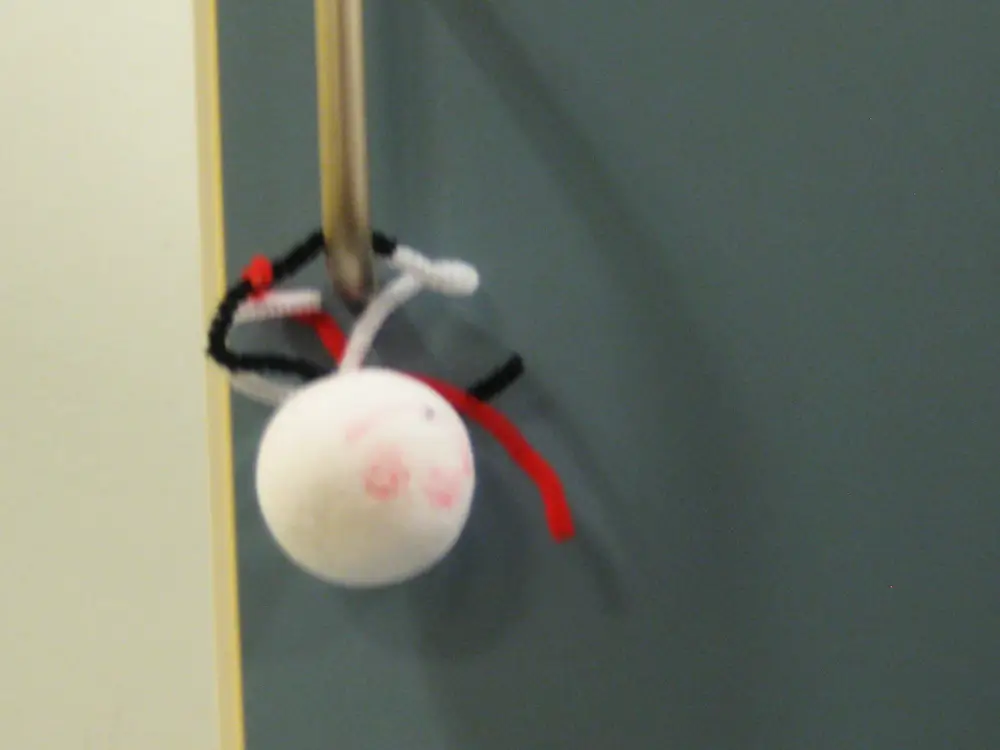
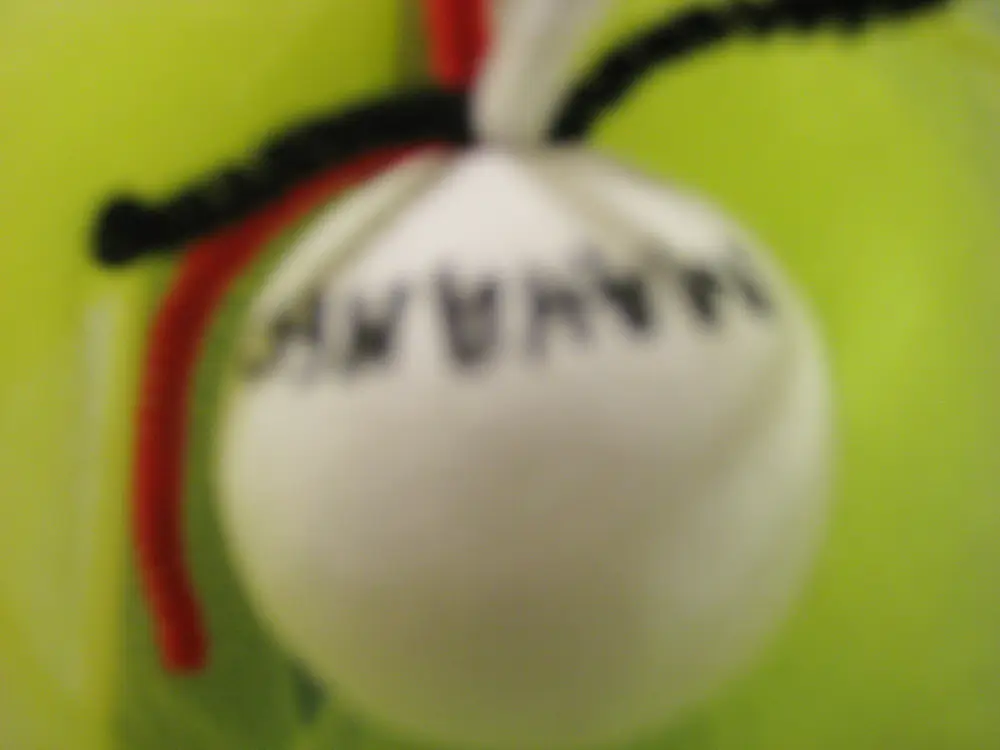
It lies on the edge of the sink, its twisted legs protruding in the air. Its situation is critical. It is perhaps forgotten and lost, teetering on the brink of getting wet and turning into trash. That’s what can happen if you fall out of the flow of activities in a daycare centre, where things and people are frequently transported like bundles from one situation to another along predetermined paths. Any deviation from this choreography typically leads to trouble. Here lies living proof of that—though not living in the literal sense, it is certainly viable within this context. Unable to ignore its distress, I decide to give this poor creature another chance, lifting it into my hands. The work is titled after its creator, and I recognise the artist by name—a clever kid skilled at creating disruptions in routine. While this spider’s biological counterpart would evoke a strong sense of horror in me, I find this material variation delightful. Our encounter immediately starts to glow (MacLure 2013) and triggers an unplanned series of events where one thing unexpectedly leads to another.
The creature feels light as it rests on the palm of my hand, yet it weighs heavily on my mind. It unlocks something within me, allowing my creativity to flow freely, like a ball of yarn unwinding. The lost spider and I become an assemblage, which creates a source of various ideas, entwining biological spiders and their webs, my experiences in dance pedagogy, the challenges I’ve faced recently in the daycare centre, and the artwork ‘Collective Strings,’ created by Karoline H. Larsen in 2014 in Kansalaistori Square during the Helsinki Festival.
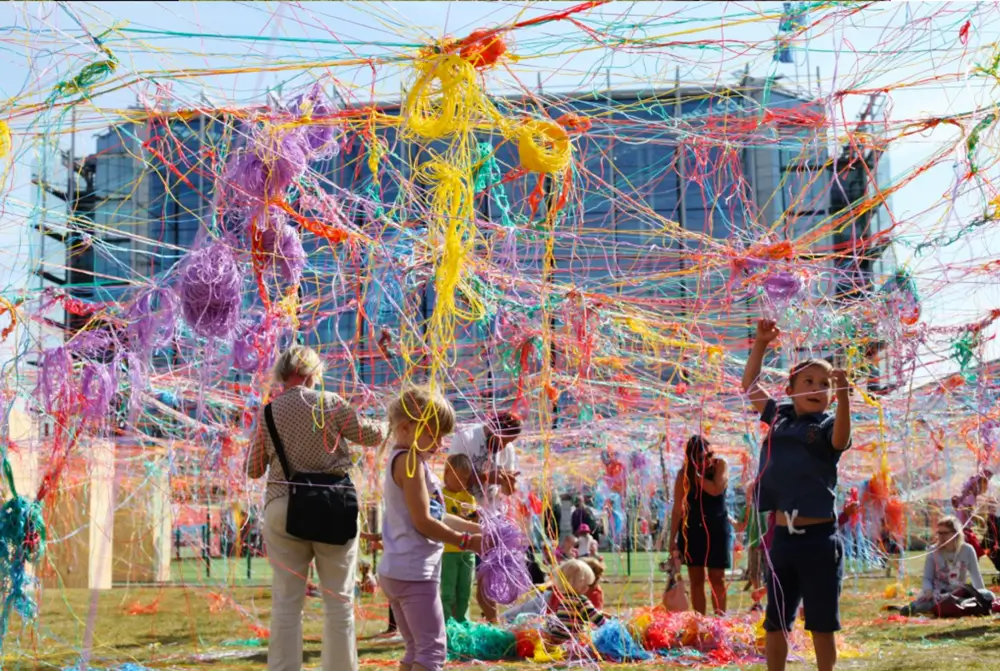
The creative stream continues to flow, entangling Forsythe’s works and thoughts, and theoretical texts that have stayed with me, such as those by Lenz Taguchi, Barad, Massumi, Rautio, and others. It also encompasses action films like ‘Entrapment’ (1999) and ‘Ocean’s Twelve’ (2004), in which a character in a catsuit elegantly navigates a maze of red lasers, risking their life through acrobatic manoeuvres.
The spider compels me to search the storage space for balls of yarn with which to craft a web. As I weave the yarn in a multi-functional group space, the strands transform into a web, inviting me to view the surroundings with fresh perspectives. The shapes and contours of the area acquire new significance, allowing me to see things differently than I typically do when I work in this space. Through a process of trial and error, I discover various attachment points for the strings of the web. Guided by the yarn, the shapes of the space, and my discerning eye, the room gradually transforms into a spider’s realm, crisscrossed with threads.
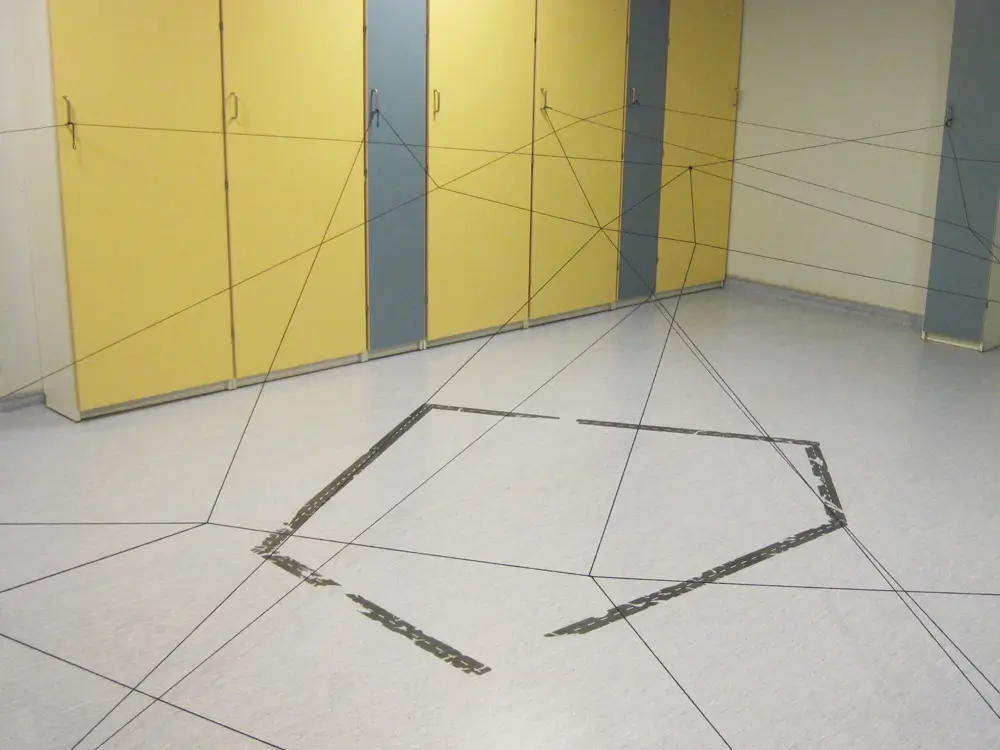
As I weave other available materials—such as colourful scarves— into this network, a narrative begins to form: a spider hiding in its web, dreaming of a more vibrant creation and a nest to call its own. I translate this story into a drawn score to convey the idea of the dancing session to the children.
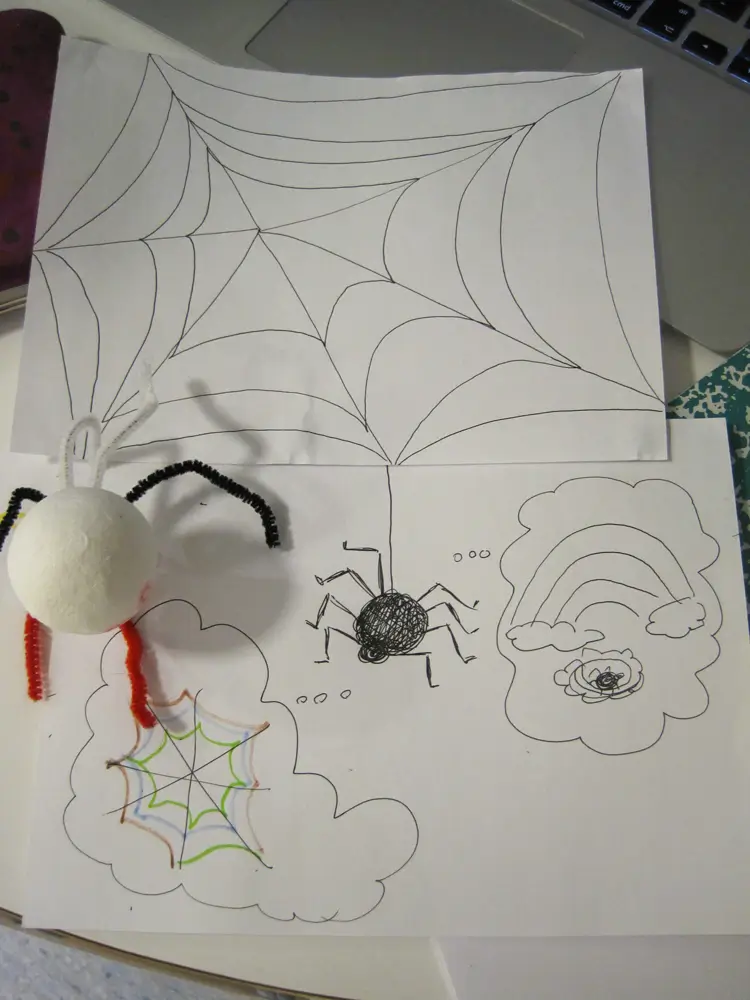
The limits of the available light and sound technology—including fluorescent tube bulbs, a desk lamp, a torch, and my laptop’s music library—supports the dramaturgy of the workshop. I realise I feel as nervous as I always do before performing as a dancer. My enthusiasm and excitement seem to spread to the children like the norovirus that recently circulated through the daycare centre. As I gather them behind the door, I prepare us for the transition into the world of the spider.
As we open the door to a dark space, the soundscape enhances the sense of entering the mysterious realm of the spider. What was once a place for napping has transformed into a world of its own. I first let the light from the torch illuminate the room, and the children accompany me, moving quietly and carefully as we explore how best to navigate through the web. The web, combined with the dimness of the space, sets the stage for shared challenges, guiding our movements towards a common experience. Ascents, descents, and sneaking through the openings formed by the web become a choreography of our bodies. This space presents a unique task for dance that, through its tangible elements, fosters a collective choreography and shared meaning among us. It connects us in a way that differs from our usual creative dance exercises, which typically rely on images and concepts interpreted through our embodied thinking. Now, we are more dynamically propelled towards a shared experience, led by a material agent that acts as our choreographer.
I turn on the main light, and as day breaks in the spider’s realm, it illuminates the entire space. The hidden spider is found alongside the colourful threads that we will use to colour the web. The initially tenacious and deliberate movements transform into a lively, bouncy energy, and colourful balls of yarn fly through the air, momentarily overshadowing our respect for the space and its inherent rules. Yet our choreographing yarn never ceases its work. It weaves various intertwining patterns, entanglements, and discontinuities, turning the normally invisible complexity of life into a tangible reality.
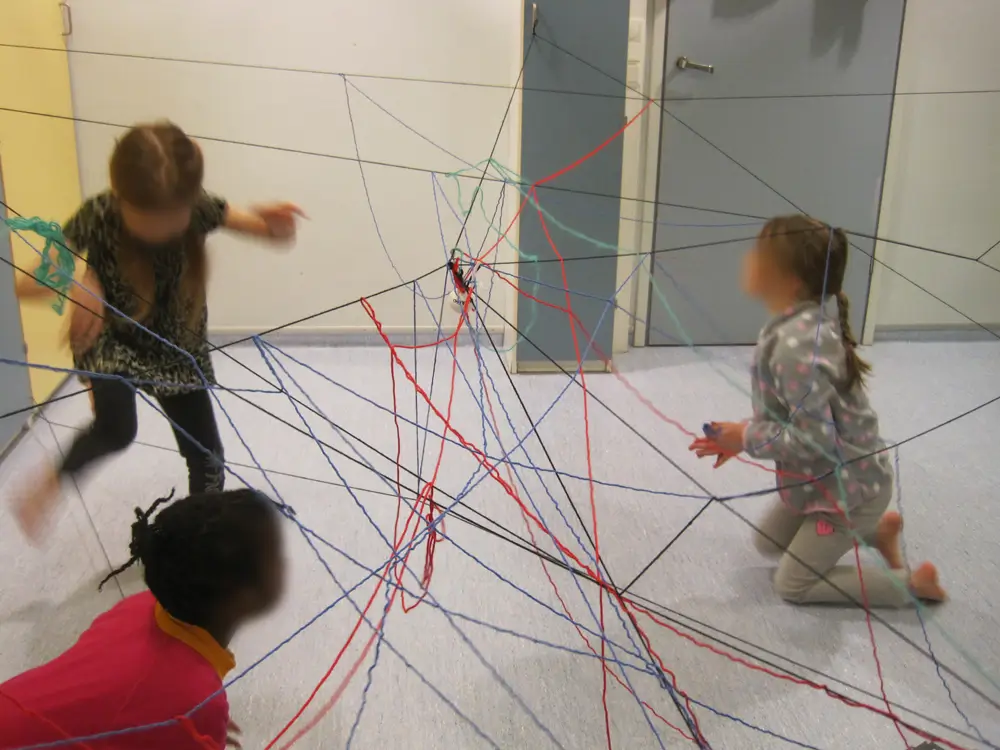
Help is required to untangle the knotted bodies, and broken threads are reattached using diverse forms of cooperation. As I can’t be everywhere at once, the children begin assisting one another, collaboratively solving the challenges that arise. When I introduce the nest-building scarves, a dance led by the scarves ensues, creating a vibrant energy. I simultaneously follow the activities as I guide the nest-building process toward completion, and once the spider’s nest is finished, we embark on constructing another nest tailored for us.
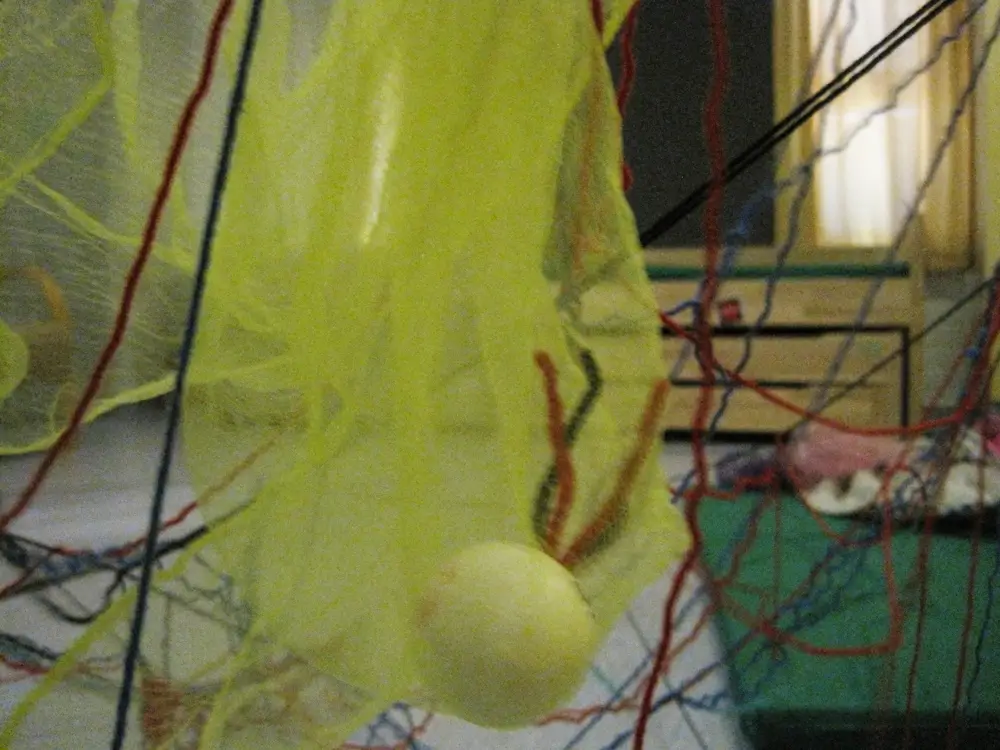
The dancers take a moment to rest beneath their scarves and shawls on a patchwork of mattresses we arranged. I dim the lights, bringing us back to the peaceful soundscape of the beginning. When the lights illuminate the space again, they reveal the spider’s colourful and chaotic realm, transformed from its initial dark and neatly arranged state by the vitality of life and dance. We wave goodbye to the spider in its nest and exit the space. Later, I return to tidy up the chaos, filled with joy and wonder.
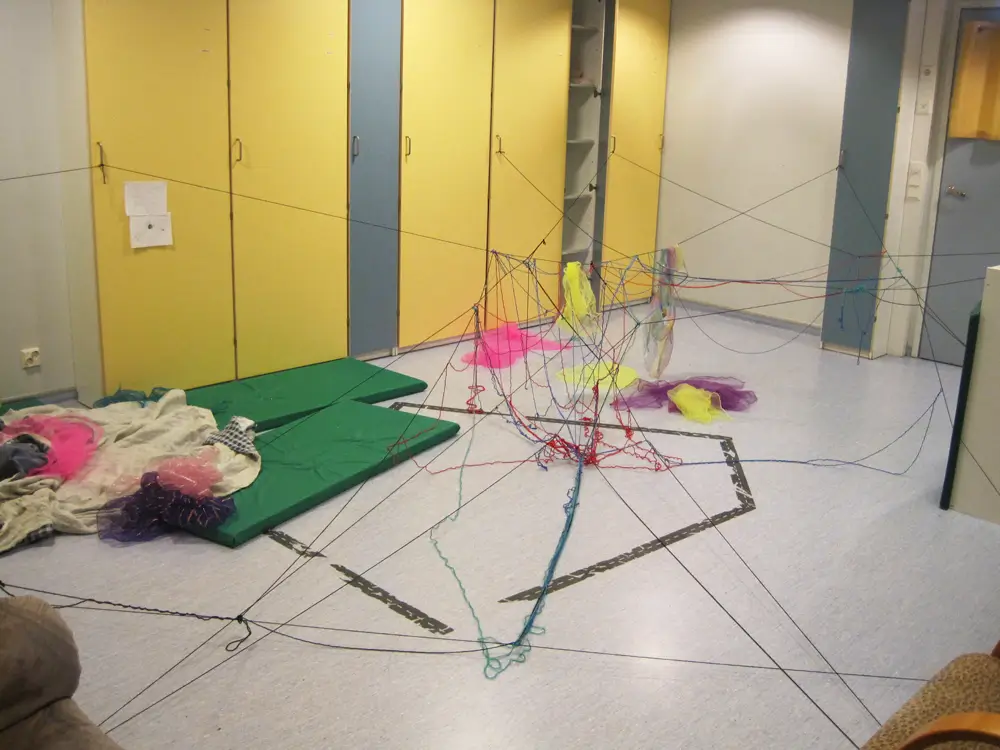
Encountering a paper-pulp spider was an unexpected moment that allowed me to share responsibility for that morning’s dance workshop with its material agency and respond to its invitations to incorporate yarn and scarves into our interplay. This process can be viewed as an embodiment of Bennett’s (2010) theorisation on the vibrancy of everyday materials, as I engaged in the process by ‘following the scent of a nonhuman, thingly power, the material agency of natural bodies and technological artefacts’ (Bennett 2010, xiii). In doing so, the material world is not viewed only as a backdrop for human activity, but constitutes a web of lively, intra-acting forces that all participate in shaping reality (Bennett 2010). Additionally, materials offer an abundance of creative possibilities for shaping activities that emerge from intra-active thinking-with processes.
This experience not only offered a tangible way to weave dance playfully into children’s daily lives but also illuminated, for me, the web-like entanglements central to relational ontologies, thereby deepening my theoretical understanding. The spider, an artwork created during an earlier group project and thus familiar to everyone, acted as a collaborator, inviting in balls of yarn and other materials essential to construct the spider’s world. The spider’s web was a continuation and expansion of my earlier work with material agencies in the daycare centre, as I had already experimented with sharing choreographic agency with material participants, such as music and drawn signs.
Here, the yarn became our choreographer, transforming the area into an installation-like space. This approach moved beyond traditional children’s dance settings and led us into a realm of shared exploration, where I, too, was uncertain of the answers. The unpredictable and uncontrollable events during our session illustrate Rautio’s (2013) view that humans have limited control over their interactions with the environment. Our responsibility lies in recognising that our actions are just one part of a complex web of relationships, where the outcomes and directions often remain beyond our understanding.
For the participants, the web presented a clear and tangible movement challenge: the yarn created striations that restricted the use of space, thereby shaping our choreographies and movements while simultaneously offering a smooth space (Deleuze and Guattari 1987) to explore possibilities and limits in the interplay between our bodies and the web. Deleuze and Guattari’s (1987) concepts of smooth and striated space offer both a conceptual and practical framework for observing educational spaces. The rearrangement of the multipurpose group space into an installation-like adventure using yarn seems to have made the space feel less familiar and more unusual. As Snellman (2018) notes, this kind of approach can create opportunities to experience space differently and enable extraordinary ways of working within it. As children instinctively navigate their environment by swiftly perceiving the dynamics created by various elements, materials, and forces, Snellman (2018) proposes a strategy to transform spaces with unfamiliar elements, suggesting this approach may cultivate a smooth space where affects can resonate effectively.
Throughout this process, I experienced an incredibly strong playfulness in my creativity and enthusiasm—a body memory that still resonates with me. This playfulness connects closely to the concept of play as an engaging and intrinsically motivating research practice, aligning with Wolgemuth et al. (2018), which I discuss in the section ‘Warming Up’ with Methodology. Here, I understand play as intra-actions in which emotions and bodily movements become distributed across the entire assemblage (Lenz Taguchi 2010; Rautio and Winston 2015). Within this framework, the interconnectedness is described through the spider–yarn–space–daycare centre–memories–dance–body entanglement.
The spider and its threads animated our actions, and in turn, our actions breathed life into the spider and the threads, allowing them to take on the role of choreographer. Scarves, mattresses, and blankets also became active participants in this process. The relationships between moving bodies and the complex patterns of intra-action became visible in the ever-changing constellations within our web. Our bodies become visibly entangled and connected through the yarn, creating encounters with tangible distances and directions with shared dynamic qualities. This reciprocal engagement of various materials and individuals created a self-sustaining cycle, fostering an intriguing and productive environment for our session. Shared agency may hang by a thin thread, sometimes requiring an unexpected disturbance—a paper–pulp spider on the edge of a sink—to reveal its presence. This approach was further translated in the pre-examined artistic component, where it became part of the explosion and the balloons.
4.2.5 To Dance
Conceptions of dance in society are diverse, encompassing understandings of it as an art form, a form of physical activity, entertainment, or a social practice (Anttila 2013). The fieldwork revealed that children begin shaping their own conceptions of dance from an early age, often influenced by digital media, with TikTok and other platforms serving as a source of inspiration for their dance activities (Burke, Kumpulainen, and Smith 2023; Hershkoviz and Vasile 2022). At the same time, I observed that ECEC educators’ conceptions of dance were largely shaped by limited or absent experience and expertise in the field, a pattern consistent with findings in current dance pedagogy research (Pastorek Gripson, Lindqvist, and Østern 2022). Against this backdrop, one of the pedagogical aims of my fieldwork was to expand these existing perceptions among both children and educators by experimenting with improvisation-based approaches to dance. In this way, conceptions of dance were de/re/constructed in and through our dancing, emerging as situational knowledge shaped in the moment (Colliander and Anttila 2022).
Most of the children had little prior experience with dance, yet they brought with them a variety of ideas, assumptions, and embodied experiences. I encountered both excitement and hesitation, attitudes ranging from enthusiasm to prejudice and from confidence to feelings of inadequacy. Although the daycare staff lacked formal expertise in dance, they valued its importance and warmly supported my work, making space and time for it within daily routines. My competence in dance was highly appreciated by both adults and children, positioning me as someone with skill, knowledge, and a certain distinction. This imaginary stardust surrounding dance culminated in my solo performance as a swan, presented in the gymnastic hall for the entire daycare community, as I describe in the following section.
A Magical Encounter: Dancing the Swan
The daycare centre organised a forest-themed art event with narration, puppetry, and music for the whole community, and I was invited to perform a solo dance. Together with the staff, we chose the theme of a swan dance, which I choreographed and adapted from movement material I was then developing for another performance. Dressed in a flowing white costume, feathers in my hair and glitter on my skin, I began hidden beneath a blanket, curled up in a nest. As the storyteller introduced the tale of the swan, I slowly emerged, to the astonishment of the audience. What followed was a performance characterised by an attentive silence unlike anything I had experienced before, with the audience’s focus profoundly affecting my performance. For me, the experience became multiple: touching, confusing, sensory, strange, and remarkable all at once. My movements resonated with the affective intensity of the space, where the air felt unusually dense, and the dance unfolded with a smoothness that left me deeply satisfied as an artist.
From that moment on, the children regularly commented on the performance: ‘You were the swan!’ ‘You danced the flamingo!’ Although I appreciated their enthusiasm, being positioned as a ‘specialist’ felt awkward and highlighted the unequal power dynamics at play. I did not want to stand above others in the educational hierarchy or emphasise dance only as a skill, but rather to show that dancing is part of everyday life, already present in the daycare centre and within each child. I sought to create pathways between everyday movement and the embodied expressions of dance as an art form. Yet the children were often most curious about whether I could do a split, or what other skills I had and how I learned them. This dynamic echoed Millei’s experiences of researching place-making from a global perspective in preschool, where—due to her accent and cultural background—an educator called her ‘the most global thing in here’ (Millei and Rautio 2017, 6). Similarly, I became ‘the most dancer in the daycare centre,’ a position I resisted. Instead, I wanted to be a catalyst for new thought—not someone bringing superior knowledge from outside, but someone joining an emergent process of discovery (Davies 2014). However, this catalytic role did materialise, especially in moments when dance and embodied expression wove naturally into everyday play. I return to these intersections between dance and play in the proposition To Play and discuss them also as part of my methodology in the section ‘Warming Up’ with Methodology.
A Clash of Cultures
During fieldwork, I encountered numerous situations that I interpreted as frictions and challenges in our dance sessions. In re-turning to these moments retrospectively, I accompanied my former self with empathy for the struggles involved, while also gaining a perspective which transcended the intense emotions I experienced. This iterative re-turning revealed a key contradiction: my evolving understanding of dance through research contrasted with my conception of dance culture rooted in my professional dance teacher training and experiences of teaching in the BEA school context. This internal tension, when combined with the traditions of ECEC, produced a clash of cultures that I examine in this section.
My dance training and professional teacher education are rooted in a Western tradition that frames dance as a performing art. In this educational culture, students listen attentively, follow instructions with focused concentration, and begin by centring mind and body in the present moment. From the beginning until the end of the class, dance practices emphasise cultivating control, strength, and power. (Shapiro 1998) Similarly, the dance teacher is expected to have a detailed plan for the session with pre-determined learning content. At its best, this approach creates a setting where the magic of dance is realised in shared, embodied experiences of movement, shaped by structured tasks and fostering creativity and imagination, where the dance studio becomes a distinct realm—a kind of parallel universe—set apart from everyday concerns.
Regarding ECEC, Tesar (2014) contends that it functions as an ideologically mediated environment in which children are shaped by both dominant and resistant discourses. I soon noticed this pattern, as ECEC practices appeared to prioritise regulating children’s agency to maintain safe, manageable learning experiences. This dynamic resonates with Anttila’s (2013) observation that education often reduces bodily expressivity, as children’s movements become increasingly ordered and constrained by predetermined patterns, thereby limiting the range of embodied dynamics and reflecting the modes of knowledge available to them in daily life. The environment seemed to be socially constructed through conventions that carried implicit knowledge about acceptable behaviours and practices (Viljamaa et al. 2017). Rules were clear, and while children’s ideas were acknowledged, they were expressed within established protocols, and children understood when and how to voice their thoughts.
As a dancer–pedagogue–researcher in the context of ECEC, I realised that the same attitudes, motivations, and understandings of dance as an art form cannot be expected from participants as in the BEA framework. The heterogeneity of the groups in ECEC inevitably brings additional challenges. Although I believed I valued diversity and embraced a broad conception of dance, the fieldwork revealed lingering traces of traditional dance class expectations within me. I did not believe that a detailed set of rules would align with the emergent and intra-active pedagogy I sought to develop. Instead, I aimed to balance structure and freedom, control and fluidity.
During the dance sessions, I sought to create space for embodied exploration and freedom of expression, shifting attention away from predetermined outcomes. Regardless of what we danced or the approach we took, I consistently strived to engage children in generating themes and movements. This approach yielded novel creations such as dino-sharks and ballet-dancing cats, alongside interpretations of how to respond if you are a candle on a birthday cake that is blown out. My dance pedagogical approach was grounded in openness, dialogue, and emergence. At the same time, I assumed that my instructions would be heard, understood, and followed. I also expected that attention would centre on the body and the dance itself, rather than on the affordances of the space or on fierce physical encounters in which testing relationships seemed to override artistic and aesthetic embodied exploration. Sometimes, children’s enthusiasm was expressed in unanticipated ways, dismantling my preconceptions and leaving me unprepared to respond with wisdom and clarity.
In retrospect, I realise that I did not fully comprehend that I was working with children who were less experienced in dance, in the active use of their bodies to create knowledge, and in embodied collaboration. This inexperience entailed the risk of their inability to participate in such activity, rendering my approach to shared artistic agency ineffective. Chappell (2007) discusses the same phenomenon in the context of creativity in education, particularly their efforts to successfully incorporate a range of possible collaborative dynamics without disempowering any children. Giorza and Murris (2021) also highlight the same problem that I encountered in my fieldwork, which hindered my experiments with collaborative pedagogy: children are not used to being included in decisions about things that matter in the community. In my work, the lack of embodied strategies for working and creating knowledge further deepened this problem.
Dancing-with children often produces intense flows of events, in which impulses move in multiple directions and generate new ones as they intersect. Their holistic sensitivity, speed, and embodied thinking vary considerably according to context, and it is regrettable when such qualities are suppressed—as frequently happens in education (Anttila 2013). This dynamic also surfaced during the dance sessions, where a recurring challenge stemmed from my tendency to interpret the space as unsafe when, in reality, it was simply charged with the energetic intensity of creative activity. Balancing structure and freedom felt like an unwinnable play: the level of structure that would enable the children to engage productively in embodied work appeared to me as too little freedom.
Rather than framing these tensions as problems, I have come to retrospectively understand children’s creativity and their unexpected approaches as forms of ongoing negotiation between them and me, enacted through diverse strategies. As Davies (2014) argues, the decomposition of established practices is not inherently negative but can in fact be necessary for something genuinely new to emerge. At times, habitual, striated ways of being must have their cohesion disrupted in order to open possibilities for new lines of flight. Likewise, attending to the moments when things go wrong—when familiar striations no longer sustain predictability or safety—invites the possibility of a line of flight, a new thought or mode of being striving to make itself heard (Davies 2014). It is important to acknowledge children’s ways of working, including the risk of not succeeding or of not reaching intended goals, if we want to enable unexpected lines of flight, respect children’s creativity, and take them seriously as collaborators.
Research Discovery: The Storyboard Method
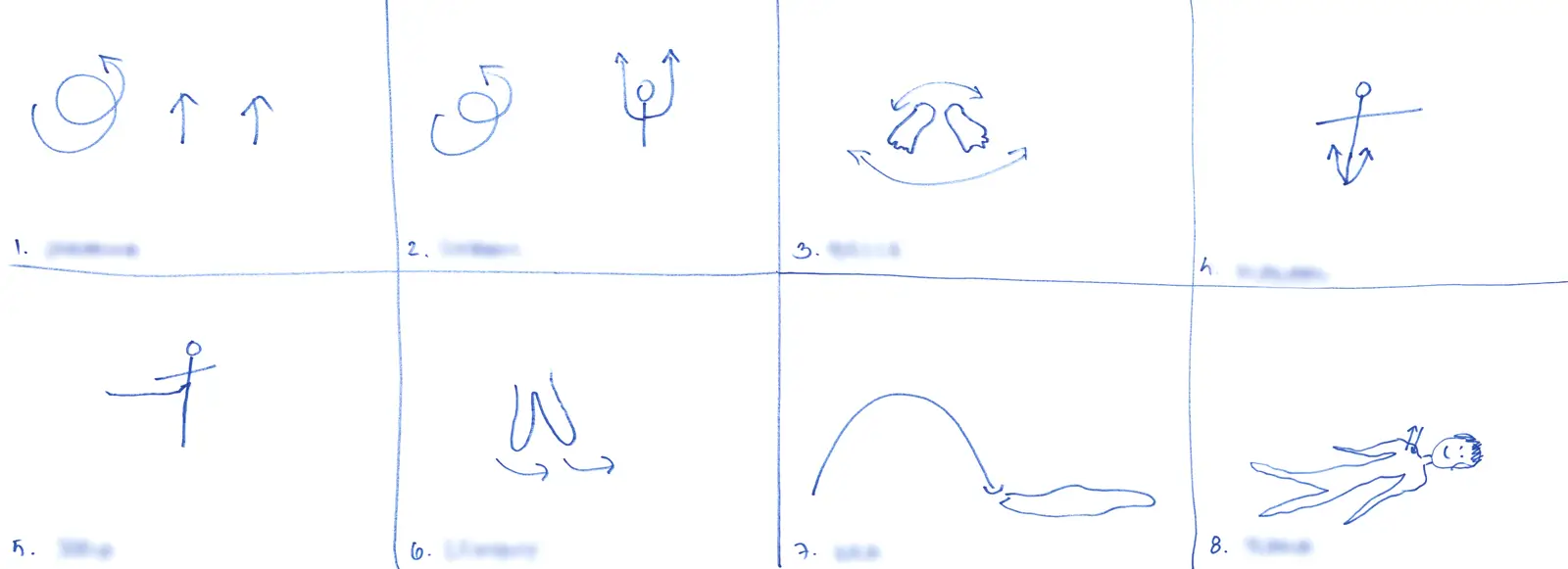
My rotation among the three groups created challenges for some children, as dancing only occurred when I was present, and they wished for more frequent opportunities. With some guidance from their teacher, they developed a drawing-based method for planning, memorising, and sharing choreography, which they called the ‘storyboard’ and which I later referred to as the Storyboard Method (Colliander 2024a). This approach enabled the children to assume roles as choreographers, dancers, and teachers. I was astonished by their first storyboards. The process began with drawing a numbered grid on paper, into which movement ideas were sketched, ranging from detailed drawings with numbers and symbols as instructions to abstract lines inviting interpretation through movement. Although I cannot reproduce the children’s earliest drawings here due to a lack of permission to document them, I include examples of other storyboards in the following sections.
During our dance sessions, we began applying and experimenting with the Storyboard Method in different ways. The first time I facilitated a co-created Storyboard, we worked within the small space of the morning circle, confined by chairs. I introduced the empty storyboard to the children, assigning each a single grid for their movement proposal. With energetic music, I invited them to explore their ideas freely. As the music ended, most children declared themselves ready to share. They demonstrated their movements one at a time while I sketched their proposals on the grid, and we named them collaboratively. The choreography began with a pirouette and two jumps, followed by another pirouette with an upward reach, along with further ideas. One child did not know what to propose, running their fingers absentmindedly along their head. I proposed translating the gesture into a running-fingers-in-the-air movement. Similarly, a hesitant shoulder shrug became a dance of leaping shoulders. The confined space fostered precision, producing more contained movements than I later observed when I continued working with this method in larger spaces.
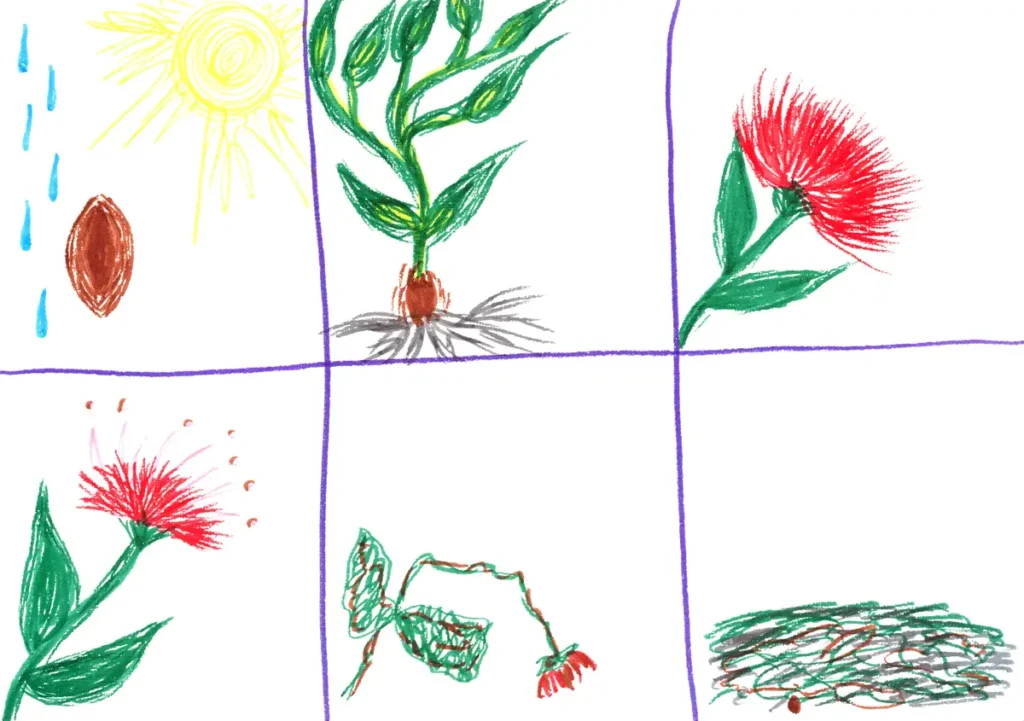
I also used the Storyboard Method to construct a narrative entity. I illustrated the phases of a solo performance for children, telling the story of a seed growing, becoming a flower, and finally transforming back into soil. Later, the children wanted to dance the same story themselves, and the storyboard served as a memory aid for recalling the phases. In this way, a solo choreography was transformed into a shared dance experience and a collective performance.
Most often, I found it easier to focus when I was the one drawing, though at times I also invited the children to draw.
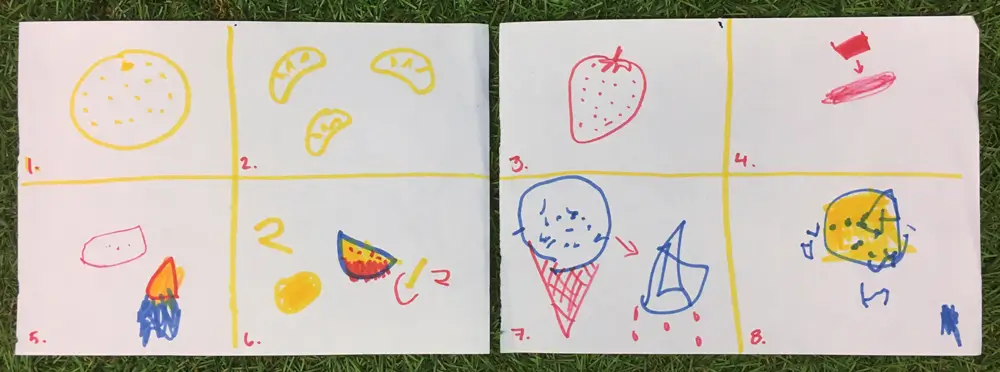
The opportunity to draw was especially valuable when I did not share a common language with a child, as allowing them to draw their ideas ensured equal participation in the activity. My own average drawing skills have underscored the idea that everyone works with their abilities. As a dancer–pedagogue–researcher, I am often placed on a pedestal, as discussed above, so I find it important for the children to see that I, too, cannot do everything. The drawings may become successful and admired or look quite different from what I intended or what the children expected. Yet even these surprises can generate new dance ideas—for example, when the Xylitol pastilles I sketched were interpreted as butts, leading the children to take the dance in an unexpectedly humorous direction.
The Storyboard Method can be productively examined through Deleuze and Guattari’s (1987) concepts of smooth and striated space. By providing a clear structure, the storyboard generates a striated space that establishes safety and predictability, while simultaneously allowing a smooth space to emerge within it—one in which creativity and experimentation can take place. Choreographic practice in this context becomes a structured process: each participant proposes a movement to be drawn into the grid, thereby contributing to a striated framework that organises the activity. At the same time, the relations between participants, tasks, and the material-discursive practices of knowledge production form an assemblage in which the movements of ideas, bodies, pen, and paper intra-act across both smooth and striated spaces. This interweaving of order and openness creates a smooth space in which participants can invent and later express ideas through dance, with varying degrees of improvisation depending on the drawings, thereby fostering creativity within the structured framework of the storyboard.
Typically, the phase of dancing the choreography follows the compilation of the storyboard, unless an earlier storyboard is revisited. In both cases, the dancing often leads to adjustments or additions, and with sufficient repetition, the physical storyboard ultimately becomes unnecessary as the choreography is memorised without visual aid. During the process, verbal or embodied ideas are translated into drawings, and these drawings are further translated into choreography. Even though the drawn storyboard creates striations in the form of structures of dance and choreography to be followed, the movements are interpreted differently every time the choreography is repeated, making the dance different in itself as in Deleuze’s philosophy on difference (1994). Lenz Taguchi (2010) discusses a similar phenomenon which occurs when children make music from the room, noting that in each repetition of the music something new is created.
4.2.6 To Play
In this section, I discuss how the research emerged as a fluid and relational way of being, characterised by a coexistence of dance and play, which gave rise to transformations and practical dance pedagogical methods.
Playful Dancing and Danceful Playing
The daycare centre’s play activities were organised and structured by theme, space, and time—a common feature of educational institutions (Rautio and Winston 2015). During playtime, children were generally not allowed to switch or combine chosen activities. Occasionally, dance was offered as one of the options, and in these cases, we explored themes proposed by the children, such as becoming animals. This approach is familiar in children’s dance (Korpinen and Anttila 2022) and can be understood as an aspect of play from a posthuman perspective (Bone 2010). I will next elucidate how I sought ways to connect through dance, which evolved into a practice of dancing-with, a perspective I re-turn to in the section ‘Reflecting’ through Discussion and Openings.
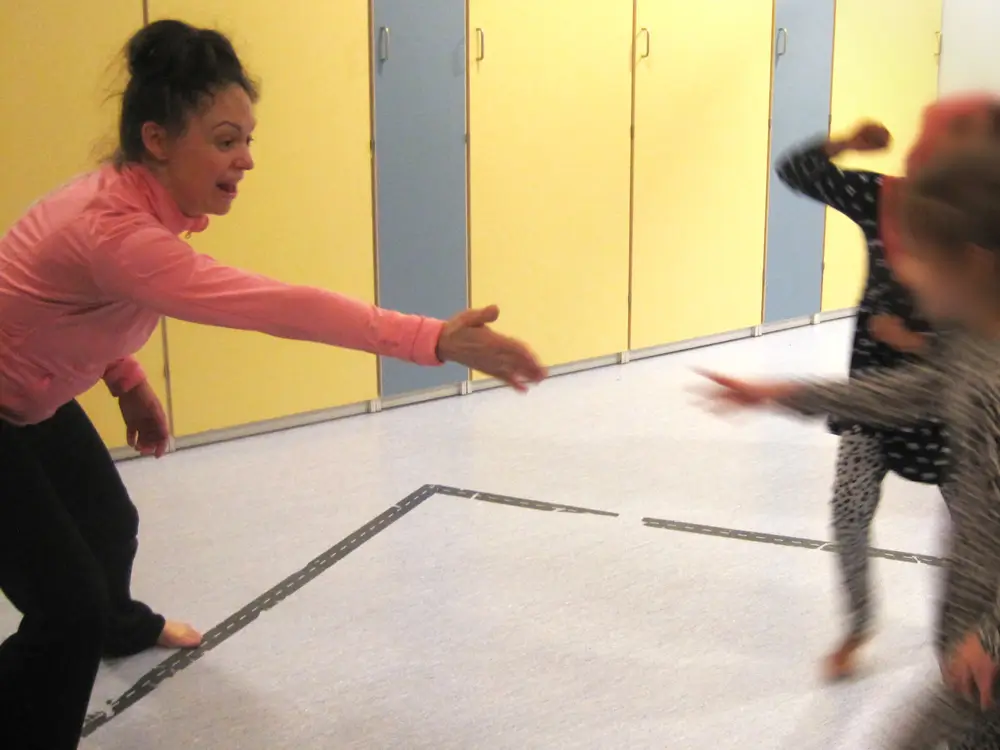
Through my approach of deep hanging out, I also engaged in play with the children. I sought to make myself available for whatever the children might need, often positioning myself at floor level. This positioning felt more natural to me than sitting above them and created easier opportunities for the children to approach. On the floor—even within a small space—I could draw on my skills as a dancer–pedagogue–researcher, experiencing the surroundings kinaesthetically and engaging through my tools as a dancer.
Once the children recognised my openness to participation, they readily invited me into play, sometimes verbally, sometimes by simply taking my hand. When engaging with children who communicated little or not at all verbally, I often felt I had entered an in-between space of play, contact improvisation, and artistic creation. These encounters were marked by deep bodily listening and connection, whereby spoken language gave way to shared movement, as I could move my body to suggest joint rocking, spinning, weight sharing, balancing lifts, or whatever the situation intuitively seemed to suggest. Research shows that educators often dominate interactions with speech, which risks overlooking children’s nonverbal ways of knowing (MacRae and Arculus 2020). To counter this dynamic, I consciously reduced my verbal communication and instead fostered interaction through music, movement, and object play. Rather than attempting to speak slowly or teach a child the correct words, I focused on connecting with their existing language abilities. My goal was to respond to their embodied expressions with my own embodied responses.
Becoming-other as a Researcher
Affects and emotions circulate between people and resonate within our bodies (Manning and Massumi 2014), and in the daycare centre I became deeply attuned to this flow. During the first weeks, I experienced a wide range of emotions—joy, confusion, anxiety—while the children’s feelings of delight, sorrow, disappointment, and contentment permeated my body. Over time, the intensity of these everyday encounters grew heavy, leaving me with a sense of saturation in the world of children. This experience marked a shift in my role as a dancer–pedagogue–researcher, contrasting sharply with my previous work as a dance teacher, where my contact with children had been limited to weekly 45-minute sessions. Now, spending whole days together created a far more holistic and immersive experience than any isolated class could provide.
Rautio’s (2019) call to move beyond the ‘why’ question inspired my encounters at the daycare centre. Rather than seeking meaning, she attended to how children used her presence and how this approach shaped her identity. Following this example, I adopted the guiding question: ‘What is this situation asking of me?’ This shift redirected my attention from interpretation to attunement—toward how each encounter unfolded and evolved. In this mode of being, I came to imagine myself as a Barbapapa (Tison and Taylor 1974), a figure capable of changing shape and function in response to the situation, for instance into a climbing frame, chair, sofa, swing, or entertainment equipment. Furthermore, I began to feel the need for a protective layer around myself. These ideas inspired an imagined metamorphosis into a hairy, wide-eyed caterpillar, capable of shifting forms as needed. The idea emerged from encounters with caterpillars I observed with my children, whose protective hairs we learned serve as a shield. I realised I, too, might need such protection as a dancer–pedagogue–researcher. The children’s strong desire to be seen further shaped this image, prompting me to give the caterpillar large eyes to illustrate my transformation during the research.
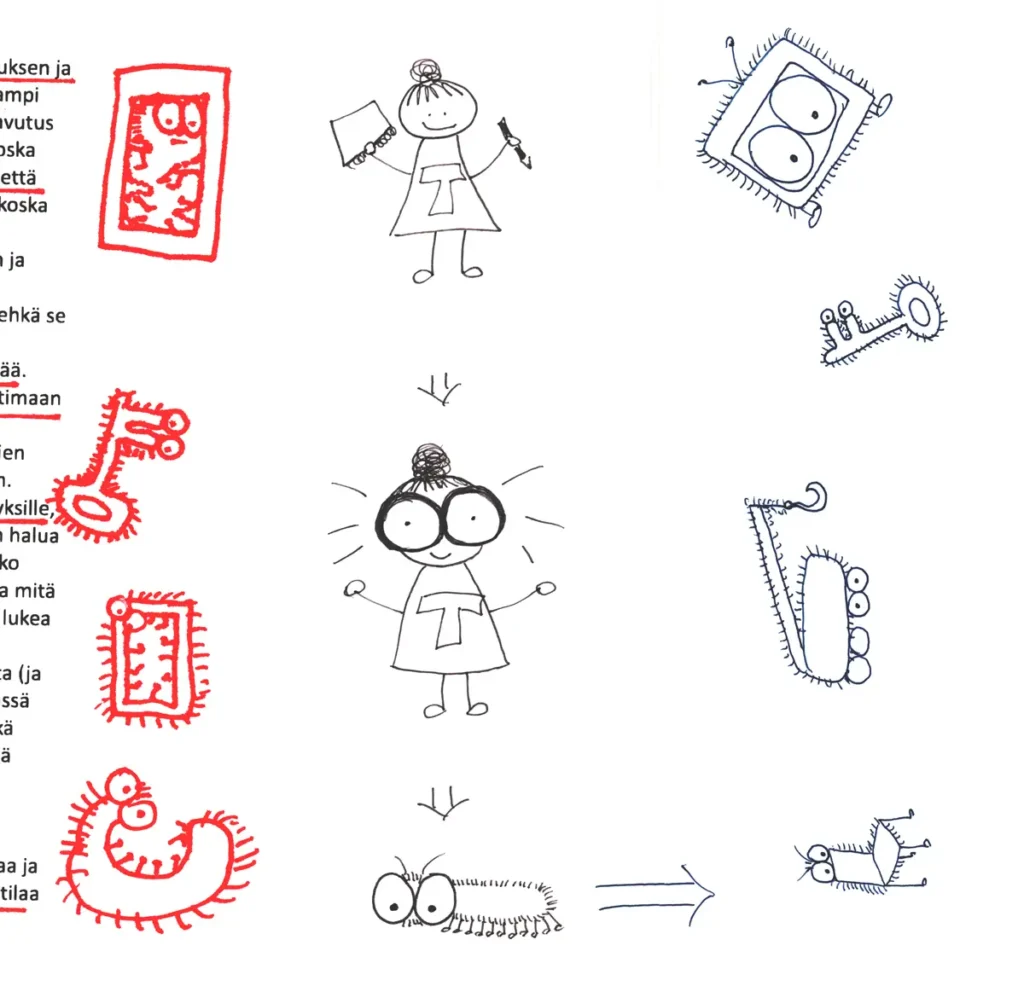
These reflections became part of my own transformation process, first appearing in sketches in the margins of my printed fieldwork diaries before developing into a prototype for the children’s version of the thesis, complete with sensory antennae. This experience highlights how imagination and play can act as sustaining forces and guiding principles in one’s work, both supporting the work itself and helping to identify its sustainable aspects.
4.2.7 To Be With
The proposition To Be With emerged as a complex entanglement, a dance–research–education assemblage. The idea stems from Heidegger’s (1978) concept of mitsein, which translates as being-with in English. Heidegger’s idea of being-with also informs posthuman and new materialist theories of relationality, which extend the concept beyond the human to include more/other-than-human agencies, acknowledging the complex entanglements of these various forces (e.g., Haraway 2008; Barad 2007; Braidotti 2013; Bennett 2010). Between the beginning and the end of my fieldwork, a wide range of experiences of being-with people, microbes, and materials played their part. In this section, I will focus on being-with the daycare community as a more/other-than-human community of agencies.
Being-with the Daycare Community
My intention during fieldwork was to become part of the daycare community, a commitment that shaped both the planning and structuring of the research. To develop my understanding of an intra-active view of community, I draw on Davies’ (2014, 6) definition of communities as ‘always emergent, experimental spaces in which a multiplicity of possibilities for thinking and doing coexist.’ This perspective resists fixed notions of community as bounded by geography or time. In this research, the daycare community did not end when the preschoolers of 2019–2020 moved on; rather, community is a continuous practice shaped by encounters, listening, and diverse forces—human, institutional, political, and nonhuman. From this perspective, the ECEC community appears as an assemblage of ongoing becoming, continually reshaped through openness, vulnerability, and responsiveness. My approach was to engage with the daycare community materially, conceptually, and ethically, participating in what Davies (2014, 20) describes as an intra-active process of becoming—a ‘relational, heterogeneous community-in-the-making.’
Being-with More/Other-than-Human Agencies
Being-with in the daycare centre also meant coexisting with numerous more/other-than-human agencies, such as invisible microbial inhabitants. Air can be understood as a conduct zone where sounds, light, dust, and microbes traverse bodily boundaries, their agencies carrying contagious force (Tammi 2019). During my fieldwork, a series of recurring symptoms suggested encounters with various microbes—viruses, bacteria, or mould. Tammi (2019, 31) proposes that such symptoms can be read as ‘knowing-with’ microscopic agents. As a dancer–pedagogue–researcher, I approached this embodiment through Embodied Listening, allowing knowledge of these unseen agents to emerge in my body, diffracting with my movement and physical activity. My negotiations with microbes remained ongoing throughout fieldwork, materialising in coughing, headaches, sore throats, runny noses, heavy lungs, and stomach flu.
Initially, I assumed norovirus would pose the greatest microbial challenge in the daycare centre. However, it soon became clear that COVID-19 was far more significant, although I did not personally encounter COVID-19 before Finnish society went into lockdown. This event marked the end of my fieldwork, leaving no opportunity to further negotiate modes of being-with the virus or the community. My experiences of being-and-knowing-with invisible nonhuman agencies that emerged during fieldwork, and later deepened through the Pre-examined Artistic Component as generative constraints I narrate in the section ‘Sharing’ in the Pre-Examined Artistic Component Käännöksiä – Transpositions, can be understood as a research discovery of the proposition of being-with.
4.2.8 To Not Know
In my research, I adopt the concept of embracing uncertainty as a strategy to honour dance improvisation as an emergent practice, whereby uncertainty functions not as a lack but as a creative force that generates unpredictable outcomes and sustains emergence. Embodied Listening similarly embodies ‘not knowing,’ requiring individuals to resist tendencies of control and domination while encouraging them to move beyond habitual practices and conventional limits (Malone, Tesar, and Arndt 2020). Cocker (2013) describes not-knowing as ‘an active space within practice, wherein an artist hopes for an encounter with something new or unfamiliar, unrecognisable or unknown.’ Within intra-active pedagogy (Lenz Taguchi 2010), this openness is understood as a foundation for learning and ethical responsibility, grounded in curiosity and emergence.
In practice, I work to resist hasty conclusions or fixed interpretations by avoiding labels or prioritising certain bodily expressions. Instead of directing outcomes through my own judgments of what is appropriate, I seek to keep space open for transformation and collaboration, where influence flows through collective encounters. In this approach, I draw on Davies’ (2014) concept of the ‘not-yet-known’ as an ethical condition for relational becoming and for the generation of new knowledge within the fluid dynamics of dance pedagogy.
Not-knowing is not a lack of knowledge but an acknowledgement that knowledge is always partial and situated, often relying on pre-conscious or conscious information. It fosters epistemological humility by recognising the limits of what can be known. This perspective connects to Embodied Listening and to Davies’ (2014, 20) notion of emergent listening, which emphasises continual openness to the not-yet-known while resisting the impulse to interpret or judge ‘with all the riskiness that that might entail’. Staying within not-knowing is inevitably a struggle, as it both depends on and resists the predictable patterns of life-as-usual—the repetitions and striations that structure daily practice (Davies 2014). Cocker (2013) further observes that not-knowing can provoke anxiety, embarrassment, or a sense of being lost, since from an early age we are taught to convert the unknown into the known, to name and classify. In educational contexts, this pressure often frames not-knowing as failure, obscuring its generative potential.
I seek to cultivate the capacity to tolerate not-knowing and embrace ambiguity in learning events. This approach challenges traditional models of education founded on certainty, control, and the transmission of fixed knowledge, instead foregrounding process over product. Not-knowing invites both teachers and learners to remain vulnerable to what may emerge, rather than adhering to predetermined guidelines and pursuing expected outcomes. A key prerequisite is the creation of safe spaces where learners can explore and be challenged without fear of failure. Cocker (2013) proposes ‘tactics’ for not-knowing—practices for staying with the unknown—that resonate with the embodied, relational, and emergent qualities of intra-active dance pedagogy. These include embracing silence and uncertainty not as shortcomings or unproductive gaps, but as pedagogically meaningful moments, as illustrated in my diary entry on a small and concrete instance of not-knowing.
21st November 2019
On break at 3.25 p.m.
Fieldwork day 11/46
Research year 3/8
The experience was good. While I didn’t make much external progress in just fifteen minutes, internally, I underwent significant change. There were moments during the activity when I found myself at a loss for what to do, but I simply chose to follow the children’s lead.
In moments like the one described above, I strive as an educator to restrain the impulse to direct—verbally or kinaesthetically—and instead trust the children’s ability to generate their own solutions, without prematurely imposing my ideas of ‘right answers.’ This approach is particularly valuable in our contemporary world, where we are required to make numerous decisions and encouraged to implement them rapidly. Through this restraint—which I identify, following Kokkonen (2017), as active passivity—one can allow oneself the possibility not merely of reacting, but of responding with conscious intention and an awareness of the direction of one’s actions. Developing such approach and trust to collaboration requires educators to first recognise their own tendencies to control and manage so they may learn to work with, and at times consciously act against, those tendencies. Also, I noticed how I tend to connect the state of not knowing with a sense of failure, especially if the situation surprises me in such a way that prevents my plans and expectations from being realised.
During the fieldwork, I sought to remain as open as possible in my approach to dance teaching, while also critically reflecting on my previous practices. At times, remaining in the terrain of not-knowing was difficult and frustrating, and I felt a strong pull toward the safer ground of knowing—occasionally reverting to familiar strategies, such as using music to guide the dancing, as a way to escape the uncertainty and messiness in the encounters.